The judgment, handed down on 22 June by Judge Andrew Reddy, confirmed an earlier interim order granting the Institute of Market Agents of South Africa (IMASA) control over the bank account into which proceeds from produce sales are paid. This followed a May judgment in which the court ruled wholly in favour of IMASA.
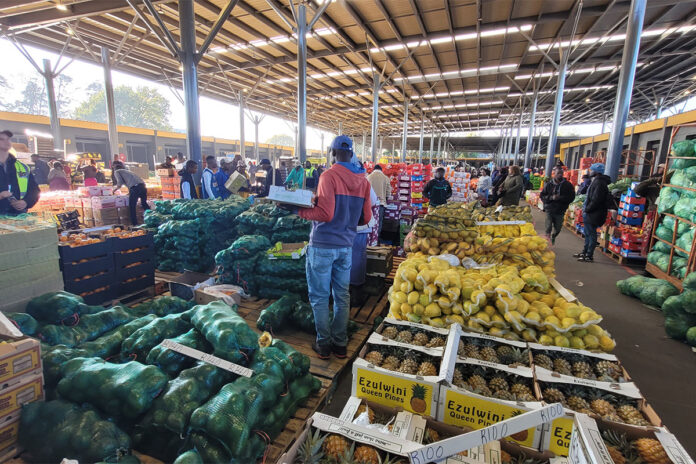
At the heart of the dispute was the handling of money generated through produce sales. Market agents sell produce on behalf of farmers, with buyers paying into a designated market account administered by the municipality.
While the municipality is entitled to a 5% commission, the balance belongs to market agents and, ultimately, the farmers whose produce is sold.
According to the judgment, the municipality had, since 2018, failed to pay funds due to market agents and producers and had also failed to comply with a previous court order issued in 2021.
The municipality argued that it should be allowed to appeal the May ruling and that the order should be suspended pending the outcome of the appeal process. The court rejected these arguments and ordered that the earlier ruling be implemented immediately.
The judgment carries implications beyond Klerksdorp, sending a strong signal to municipalities operating fresh produce markets that producer funds cannot be used to alleviate municipal cash flow challenges.
Although the City of Matlosana argued that it was operating under a financial recovery plan in terms of Section 139 of the Constitution, the court found that its financial position was irrelevant because the funds in question did not belong to the municipality.
Speaking to Farmer’s Weekly, IMASA President Gjalt Hooghiemstra described the ruling as a watershed moment for the fresh produce industry.
“We have proven that the money belongs to farmers, not the municipality. Importantly, this provides case law for other cases to be based on. Bit by bit, we are taking on all the markets who are failing to meet their obligations.”
The ruling forms part of IMASA’s broader effort to hold municipal fresh produce markets accountable. Last year, the organisation successfully obtained a court order compelling the Tshwane Market to address critical infrastructure failures, while a separate matter involving the Joburg Market is still before the courts.
Willie Jacobs, CEO of Potatoes SA, praised IMASA’s persistence in pursuing the matter.
“This victory makes it far easier to remove financial management from a municipality if they show they do not have the capacity to manage finances correctly.”
He added that the consequences of poor financial governance at municipal markets extend beyond delayed payments to producers.
“For years, income generated by the markets has not been ring-fenced and reinvested into maintaining the facilities. Infrastructure is not maintained or upgraded. As a result, the markets do not have the logistics in place to handle the produce coming in. This leads to a deterioration in quality and prices.”
Missing funds raise fresh concerns
While the judgment granted IMASA access to the Matlosana market’s bank account, Hooghiemstra said the organisation had uncovered a potentially more serious problem.
“It was hoped that once access to the bank account was granted, monies could simply be paid over to the applicable agents. However, it appears that all the money that should be in the account is not there. We now need to conduct a forensic investigation to determine where the money has gone.”
According to him, any shortfall will have direct consequences for market agents.
“In most cases, the agents have taken the knock and paid the farmers themselves in the hopes that the municipality would pay them what was due. Bigger companies have managed to absorb these costs, but smaller companies are struggling.”
Despite the concerns, Hooghiemstra said the ruling has strengthened confidence in efforts to protect the integrity of South Africa’s fresh produce market system.
“This judgment gives us more confidence for the way forward. It is in the interest of food security that we look after these institutions. We cannot afford a situation where producers’ money is not paid over. It is not the market’s money to keep,” he concluded.