Government insists the fight against FMD is gaining traction. However, many producers say the results remain out of reach.
At the centre of the issue is a widening disconnect: official updates point to increasing vaccine supply and a response gaining momentum, while farmers report that delivery is inconsistent and often too slow to contain the impact of the disease.
Government: supply building, rollout gaining pace
The Department of Agriculture maintains that vaccine supply is improving. Recent updates confirm the release of 20 000 locally produced monovalent doses by the Agricultural Research Council, alongside millions more secured through imports.
Steenhuisen has framed this as part of a broader recovery of production capacity, with a target of vaccinating 80% of livestock by year-end. Officials say more than 1,7 million animals have already been vaccinated, with further vaccine consignments expected to accelerate the rollout.
“Supply is central to the strategy,” Steenhuisen said in a media statement. “Vaccine availability is a crucial part of this strategy, and we will do everything to make sure there is enough vaccine to reach our target.”
The department stands by its position that supply constraints are easing and systems are scaling up to meet demand.
Farmers: delivery failing to match commitments
Producers, on the other hand, argue that progress cannot be measured in shipments or targets but in doses reaching animals.
In February, Farmer’s Weekly attended a stakeholder meeting at Colbourne Dairy Farm in Howick, KwaZulu-Natal. There, Steenhuisen made firm commitments to farmers, including that vaccines would arrive by the end of March and that a compensation framework would follow within two weeks of the meeting. However, neither has materialised.
“March has now come and gone, and the question remains: where are the vaccines?” farmer Thembelani Mkhize said.
Reports from affected areas indicate:
- Initial doses have yet to reach many farms
- Priority dairy herds remain unprotected
- Some producers are already dealing with repeat outbreaks
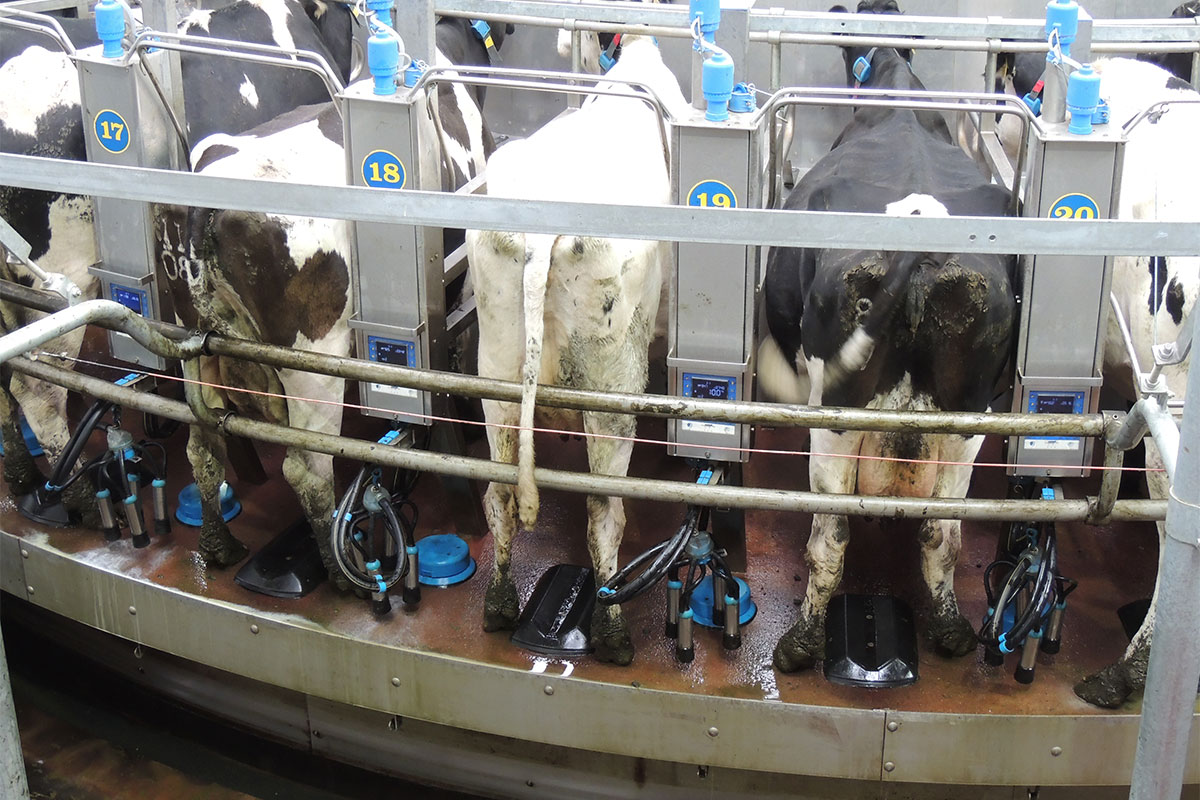
In KwaZulu-Natal alone, tens of thousands of dairy cattle are still awaiting their first vaccination.
From rollout challenges to trust deficit
What began as a supply issue is now viewed as a credibility problem. Farmers point to a growing gap between official communication and on-farm experience, particularly where timelines have slipped and commitments have not been met.
Key issues include:
- Timelines vs delivery: deadlines have passed without visible follow-through
- Availability vs access: national supply is improving, but distribution remains uneven
- Commitment vs accountability: assurances have yet to translate into outcomes
The result is a perception that progress is being communicated faster than it is being achieved.
Strategy under pressure
Concerns extend beyond vaccine supply to the broader FMD response. Producers argue that the current approach still reflects a containment model, despite the disease now being present across all nine provinces. In their view, systems designed for localised outbreaks are struggling to respond at national scale.
“The disease evolved, but the strategy didn’t,” said a farmer who asked to remain anonymous.
This view is echoed in political circles. ActionSA parliamentary leader Athol Trollip told Farmer’s Weekly that the crisis has exposed structural weaknesses in coordination and decision-making, warning that delays have compounded the impact on producers.
Rising pressure, limited margin for error
And the fallout is no longer confined to farms.
In recent press releases, agricultural organisations, including AgriSA and the Red Meat Producers’ Organisation, have warned of growing strain within the livestock industry. At the same time, the FMD response is increasingly seen as a test of leadership under pressure.
Trollip noted that the recent court intervention compelling government to act underscored the urgency of the situation, rather than signalling progress.
Others caution that Steenhuisen inherited a weakened system. Even so, critics argue that crisis leadership is defined by the ability to respond decisively and with speed to rebuild confidence.
Where the gap lies
At its core, the divide is not over whether progress is being made but over how it is experienced. For government, it points to supply, planning, and scale-up; for farmers, it points to access, speed and protection.
Until these experiences align, trust is likely to remain fragile.