

Growing a good crop is only part of building a successful farming business. Farmers also need to know who will buy it, what those buyers want, and whether the selling price will cover the cost of getting it to them.
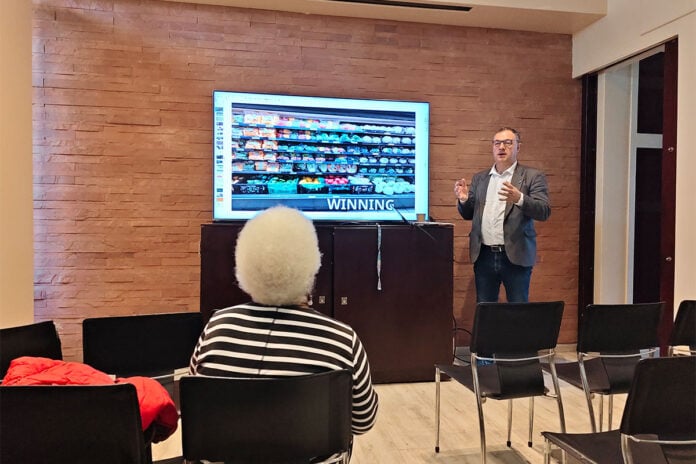
These questions were central to Farmers Day at Cape Town Market on 13 November, which opened the training component of the Imbewu Supplier Development Programme, established by Freshmark Systems, the Agricultural Produce Agents Council (APAC), and online fresh produce store BSomebodySA.
The programme combines mentorship and practical business support, with one month of training followed by two months of trading through the BSomebodySA platform.
Bukho Dem, founder of Cape Town-based BSomebodySA, said Imbewu, which means ‘seed’ in isiXhosa, aims to help growers supply markets consistently and sustainably by planning production around demand. This requires growers to identify potential customers and understand their requirements before planting.
The first training event included market information and market trends, with input from the Western Cape Department of Agriculture. Further sessions will cover production planning, risk planning with Land Bank Insurance Company, and pricing using the TechnoFresh platform.
A proven route to commercial growth
Speaking at the event, Dr Justy Range, business development and projects manager at Freshmark Systems, said South Africa’s fresh produce markets had helped many small growers become larger commercial producers by providing them with an organised route to buyers.
Figures he presented showed that the markets trade about 250 products and attract around 80 000 buyers each week. He estimated that produce moving through the system helped feed about 45 million people across South Africa and neighbouring countries.
Range said the same opportunity exists today, but while large producers use the markets to reach buyers, track prices, and sell across provinces, many smaller growers lack the knowledge, logistical support, and trading relationships needed to participate effectively.
He called for structured support to help these farmers enter the system, understand how trading works, and meet buyers’ requirements, giving them a foundation for growth.
What makes the system different?
Range described South Africa’s fresh produce market system as distinctive because it combines access to a broad range of buyers, publicly available trading information, and an established, regulated way of selling produce.
Farmers supply produce to agents who market it on their behalf, with prices negotiated according to supply, demand, and the characteristics of each consignment. Producers can therefore benefit when prices rise, although they also face the risk of achieving lower prices when supplies are plentiful.
Range said this arrangement could help farmers retain some of the value that would otherwise go to an intermediary buying their produce outright at the farm gate.
However, he explained that growers needed to compare their returns after costs. In his example, market service charges amounted to approximately 12,5% of sales, with farmers also needing to take packaging and transport into consideration.
To illustrate the potential benefit of a better selling price, Range calculated that a 20% increase on monthly turnover of R500 000 would generate an additional R100 000 in revenue, before accounting for differences in costs.
He added that achieving better returns required farmers to work with their agents and make informed decisions about where and when to sell.
Understanding buyers and finding opportunities
The buyers include retailers, wholesalers, and informal traders, each with different requirements for produce, grades, and packaging. This variety creates opportunities for smaller growers whose consignments might not meet a direct retail supply agreement’s volume or consistency requirements.
Range encouraged growers to visit markets to see these preferences for themselves. Spinach producers could examine how bunches were packed and presented, while tomato growers could see how sorting fruit by size and colour could attract buyers and fetch better prices than mixed, unsorted consignments.
Daily price and volume information helps farmers assess these opportunities. Looking at prices alongside volumes gives them a better understanding of supply and demand, helping them decide when and where to market their produce.
The national network offers further scope to expand. A farmer who learns to supply Cape Town Market can use that experience to approach markets elsewhere in the country operating on similar principles, while accounting for transport costs and local demand.
Range contrasted this with supplying retailers directly, where growers may need to negotiate separate agreements and commit to volumes and delivery schedules that smaller operations struggle to maintain.
Success takes different forms
Range cautioned against defining success only by farm size or whether a grower supplies supermarkets or export markets. A small farm that turns a profit serving local customers, including informal traders, can also be a successful business.
For those who want to expand, establishing that profitability is an important first step. A larger operation requires more capital, stronger management skills, and the ability to handle greater risk, making a proven trading history valuable when seeking finance.
Fresh produce markets can help farmers build this history through records of deliveries, sales, and income, giving potential financiers evidence of how the business performs.
Range recalled how Land Bank had previously approached market agents for farmers’ trading records when assessing funding applications. This history gives financiers evidence of a business’s performance and can strengthen its case for expansion funding.
Getting the crop to market
Access to buyers means little if transport costs eat up a farmer’s returns. Participants identified this as a major obstacle, particularly for growers with small quantities to deliver.
Range suggested co-ordinating collection routes and combining loads so that several farmers could share transport costs. Each grower’s produce would still need to be clearly identified and accompanied by the appropriate delivery information.
Francois Knowles, registrar at APAC, cautioned against relying on government to provide the solution. He said farmers first needed to organise their businesses and know their production volumes and costs so they could approach transport providers with a workable proposition.
Predictable loads could give an entrepreneur a reason to establish a collection service, creating a business opportunity while freeing farmers to concentrate on production.
Range similarly stressed that shared transport required a practical plan showing where farms were situated, how much produce would be available, and when it needed to be collected.
He added that better co-ordination between farmers, government, and private businesses could help, but the service ultimately needs sufficient volumes to make financial sense for both growers and transporters.
Protecting the farmer’s hard work
Getting produce to market does not guarantee a return. Its condition on arrival, how it is handled, and the conduct of the agent selling it all affect what the farmer earns.
Knowles emphasised the importance of careful harvesting, suitable packaging, and reliable transport. He said poor handling could damage otherwise good produce, while sending spoiled produce to market would not rescue its value.
“Markets are not hospitals for sick food,” he said.
Knowles encouraged growers to check that their agents were registered and in good standing with APAC, and to report concerns about agents’ conduct to the council. Agents also needed to communicate honestly about the condition of consignments, particularly when produce could not be sold.
He said growers needed to understand their costs and see themselves as commercial producers. He added that if they worked the soil and grew crops, they were farmers and should not let terms such as ‘subsistence’ or ‘upcoming’ limit how they saw themselves and their businesses.
According to Range, practical support could help turn those ambitions into viable businesses. The market infrastructure already exists; the challenge is to help smaller growers use it effectively, build reliable trading relationships, and establish a foundation for growth.