


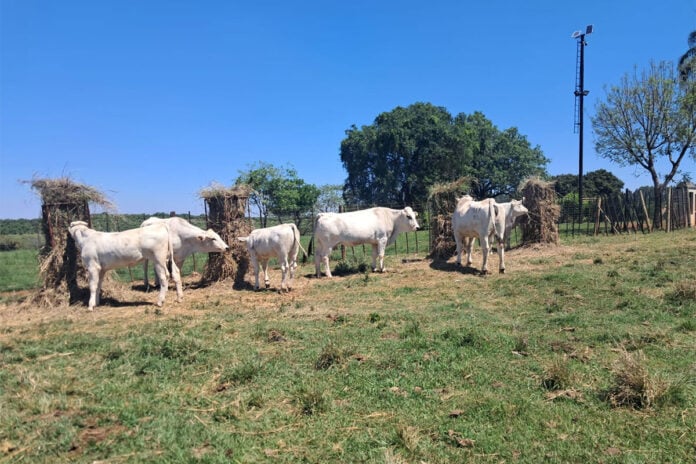
The Ariano Chianina stud is run in Politsi near Tzaneen in Limpopo. The stud is owned by Riaan du Plessis, with Bernard Mohale as an animal production consultant. The seven bulls and 10 females, including two heifers, are farmed within an intensive management system. The Ariano team is dedicated to the constant genetic improvement of each animal in the pursuit of highly profitable cattle.
The stud was established in 2021 when the first heifers were acquired from Christiaan de Jager’s O-la-la Chianina stud in Badplaas, Mpumalanga.
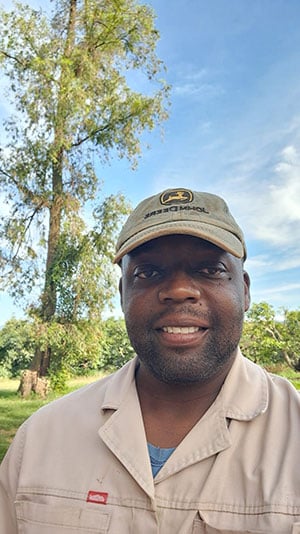
The Ariano Chianina stud, situated in Politsi near Tzaneen in Limpopo, is owned by Riaan du Plessis, with Bernard Mohale serving as animal production consultant.
Established in 2021 with heifers acquired from Christiaan de Jager’s O-la-la Chianina stud in Badplaas, Mpumalanga, Ariano currently runs seven bulls and 10 females, including two heifers, under an intensive management system.
The stud focuses on genetic improvement, with particular emphasis on growth, feed efficiency, fertility and carcass yield.
Feed efficiency and carcass yield
According to Mohale, the Chianina breed was selected for its feed conversion efficiency, high dressing percentages of between 63% and 65%, and meat quality.
Unlike conventional extensive grazing systems, Ariano’s cattle are managed in smaller camps with easy access to water and handling facilities.
“We select animals that perform on supplemented feeding and pastures under subtropical Tzaneen conditions. We are also very strict in terms of an even temperament, sound legs and feet and easy calving. Our herd is small and meticulously selected, only the best remains. This is evident in our herd’s average daily gain of more than 2kg/day, which underscores the stellar feed efficiency of the Chianina,” says Mohale.
The Chianina’s white coat, black skin and short hair contribute to its suitability for warmer climates. Mohale also points to the breed’s resistance to pests and parasites as an advantage under Tzaneen’s subtropical conditions.
The area receives an average annual rainfall of approximately 633mm, with summer temperatures reaching the high 30s and winter temperatures averaging around 17°C.
Planted pastures include white buffalo grass (Megathyrsus maximus, formerly Panicum maximum), Smuts finger grass (Digitaria eriantha), Rhodes grass (Chloris gayana) and weeping lovegrass (Eragrostis curvula).
Natural grazing on the 35ha farm is dominated by red grass (Themeda triandra), while woody vegetation includes marula (Sclerocarya birrea), wild pear (Dombeya rotundifolia) and mopane (Colophospermum mopane).
Although Chianina cattle are predominantly grazers, they also browse, particularly during periods of drought.
Artificial insemination and genetic improvement
Artificial insemination (AI) allows Ariano to introduce genetics from selected Italian sires without importing live animals, reducing costs and biosecurity risks. It is also used to improve traits such as growth, muscling and maternal ability while managing inbreeding within the small herd.
“We artificially inseminate approximately 30% to 40% of our top cows every breeding season with proven Italian sires. The balance of the herd is covered by our own stud bulls to maintain a high conception rate in our intensive system,” says Du Plessis.
According to Mohale, cattle not retained for breeding are backgrounded in the stud’s feedlot before being slaughtered to supply meat to the business’s butchery.
Ariano also supplies breeding bulls to commercial beef producers and plans to participate in private auctions in Limpopo and Mpumalanga.

Chianina cattle in crossbreeding
According to Mohale, Chianina bulls are well suited to terminal crossbreeding programmes aimed at producing heavier weaners for feedlots or finishing on the veld.
The breed has been crossed with Nguni, Brahman, Bonsmara, Afrikaner, Drakensberger and Tuli cattle. Mohale says these crosses can offer advantages in growth, muscling, carcass yield and adaptability.
“For example, using a Chianina bull and a Nguni or Brahman cow results in a hardy and fast-growing weaner with a high dressing percentage. The Chianina crosses are highly sought after by feedlotters because of increased weight and top carcass value,” says Mohale.
He adds that Ariano has also achieved positive results from its own Chianina-Nguni crosses.
Performance recording forms an important part of the stud’s breeding programme. According to Mohale, weaning weights range from 240kg to 320kg at 205 days, depending on the season. The stud aims for an intercalving period of 400 days.
Intensive grazing management
Ariano’s grazing system comprises 10 planted pasture camps, each measuring between 2,5ha and 3ha, as well as several veld camps.
Cattle are rotated between camps every three to seven days, with summer resting periods of 30 to 45 days. Stocking rates range from 1ha to 2ha per mature livestock unit (MLU).
Du Plessis says the intensive system is intended to maximise meat production per hectare while allowing the stud to select breeding animals for specific traits.
“The benefit of having seven bulls for 10 breeding females is that we can apply high selection pressure in order to breed functional animals. Our selection criteria are based on the typical Chanina phenotypical standards, namely a tall, long, and cylindrical body with a wide back and loins and long convex thighs,” says Du Plessis.
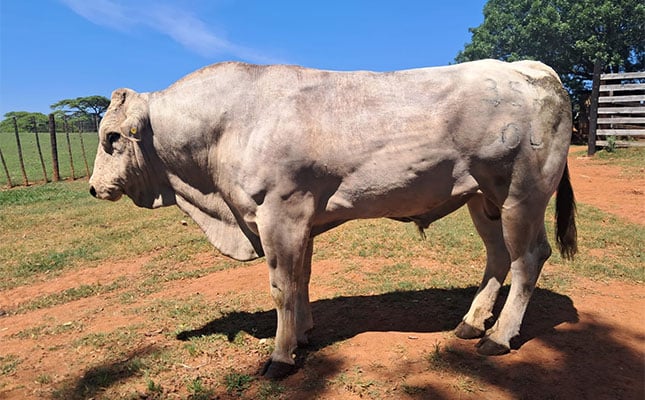
“The light skeleton of the Chianina is reminiscent of that of an eland, with long legs, a fine head, black nose, eyes, hooves and tail switch. We prefer moderately framed, well-muscled, even-tempered and balanced animals that are easy to handle. Our cows weigh between 800kg and 900kg, while bulls weigh between 1 300kg and 1 500kg,” says Du Plessis.
Maternal traits and calving ease
Chianina cattle are known for their maternal abilities, while the breed’s relatively small head and slender shoulders are associated with calving ease. However, birth weights can range from 38kg to 50kg, making appropriate sire selection important, particularly for heifers.
At Ariano, heifers are kept separately on high-quality pasture and are generally first mated at between 24 and 26 months of age. Du Plessis and Mohale select smaller-framed bulls with proven calving-ease traits and low birth weights for mating with heifers.
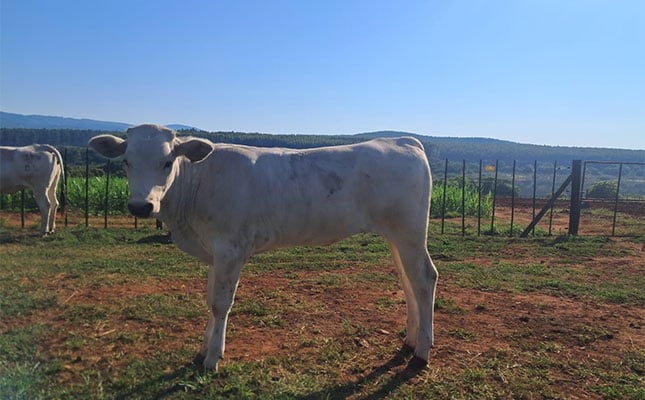
Through selective breeding and intensive management, Du Plessis and Mohale aim to improve the herd’s genetic performance and supply breeding animals suited to commercial beef production.
For more information, email Bernard Mohale at [email protected].