
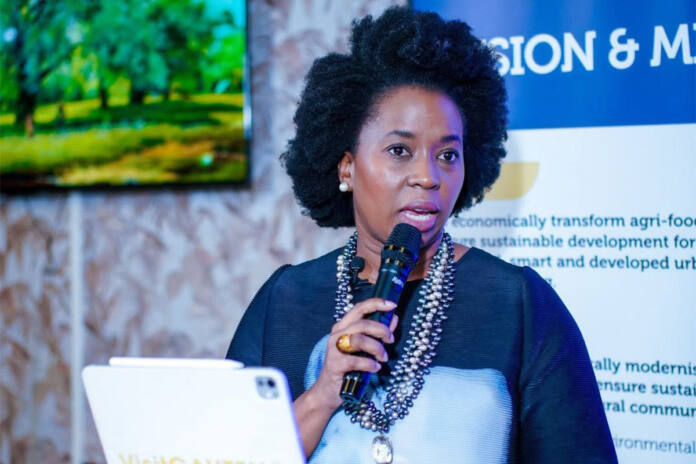
Presenting the department’s 2026/27 Budget Vote, Gauteng MEC for Agriculture and Rural Development Vuyiswa Ramokgopa said agriculture remained central to the province’s efforts to address poverty, unemployment and economic inequality.
The department’s budget increase of about R60 million, or 11% compared with the previous financial year, reflects not only growing concerns over the economic impact of animal diseases on households and producers, but also the province’s broader ambition to use agriculture as a driver of growth.
“Strengthening local agricultural production and supporting a modern, resilient agriculture sector is therefore not simply a rural development priority [but is also] an economic and social imperative,” she said.
A key feature of the budget is the dedicated R63,9 million allocation for FMD control measures, which will support disease surveillance, veterinary interventions, outbreak management and stakeholder coordination.
The MEC said disease outbreaks posed a serious threat not only to livestock production, but also to jobs, market access and trade opportunities.
“This investment will bolster disease surveillance, veterinary interventions, outbreak management and stakeholder coordination, protecting the provincial livestock economy while safeguarding food security and economic stability,” she said.
Veterinary Services will receive R174 million in total during the financial year, making it the department’s second-largest programme allocation after Agricultural Producer Support and Development, which accounts for R277 million to strengthen food security initiatives, support farmers and accelerate the commercialisation of small-scale producers.
Ramokgopa said the department would intensify efforts to help emerging farmers move beyond subsistence production and participate meaningfully in formal agricultural value chains.
“During the 2026/27 financial year, the department will continue to provide integrated support through farmer development programmes, extension and advisory services, market access initiatives and agro-processing opportunities,” she said.
Food security remains another priority area, with the department committing to continued support for subsistence and community-based food production initiatives, school and community food gardens, and programmes aimed at strengthening local food systems.
The MEC also highlighted agriculture’s role in job creation, noting that opportunities existed throughout agricultural value chains, from production and logistics to processing, distribution and retail.
The budget further allocates R66 million to Research and Technology Development Services, R35,6 million to Agricultural Economic Services and R20 million to Sustainable Resource Use and Management.
Together with allocations for agricultural research, market development and agro-processing support, the budget appears to give practical effect to the strategy unveiled by Ramokgopa at the inaugural Gauteng Agro-processing Summit in 2025. The strategy seeks to leverage Gauteng’s strengths in agro-processing, infrastructure and logistics while helping emerging farmers transition into commercial production.
“During the 2026/27 financial year, the department will continue to provide integrated support through farmer development programmes, extension and advisory services, market access initiatives and agro-processing opportunities. These interventions are aimed at strengthening productivity, improving competitiveness and enabling farmers to build sustainable and commercially viable enterprises,” the MEC explained.
Ramokgopa added that the department would continue working with organised agriculture, research institutions, municipalities and the private sector to strengthen agricultural value chains and improve opportunities for farmers and agribusinesses.
“This Budget Vote provides a practical framework for advancing a more resilient, food-secure and economically inclusive Gauteng. Through focused investment, strong partnerships and disciplined implementation, we will continue working to unlock the full potential of agriculture and rural development as drivers of growth, opportunity and shared prosperity,” she concluded.