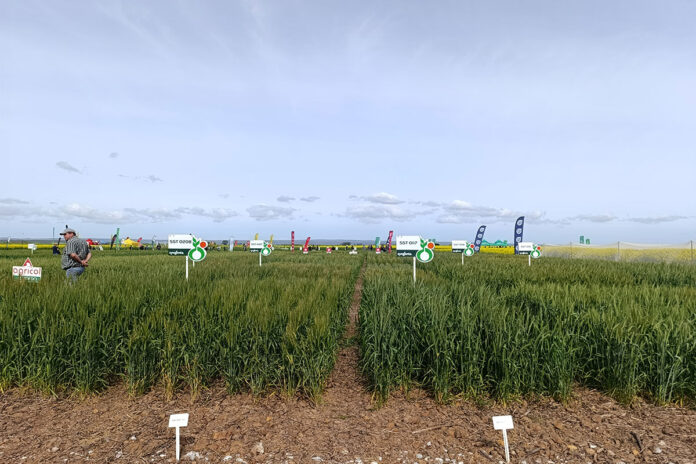
Some farmers in the region estimate that the dry conditions could reduce their crop potential by 25% to 30%, with follow-up rain urgently needed, according to the statement.
Dr Tobias Doyer, CEO of Grain SA, told Farmer’s Weekly that the current difficulties followed more than a decade in which the Swartland had experienced only two good production seasons. In only one of these seasons did favourable yields coincide with good wheat prices.
“Margins have been eroded over several years, production risks are increasing and producers have very little financial buffer left when the rain does not come,” he said.
The implications extend well beyond the Swartland. South Africa’s wheat area is already at a 97-year low, while the Bureau for Food and Agricultural Policy estimates that the wheat value chain contributes between R70 billion and R75 billion to the economy and supports about 90 000 jobs. Wheat-based products are consumed by about 96% of South African households.
Doyer also warned that the Swartland’s plight could foreshadow the challenges awaiting producers in some summer grain-producing regions, with the forecasted development of El Niño conditions.
“Combined with high fuel and fertiliser costs and pressure on commodity prices, this would leave affected farmers with very little margin for error,” he said.
Swartland production
The Swartland entered the 2026 season with encouraging rainfall. Data supplied by Overberg Agri showed that about 176mm was recorded during April and May, compared with a 10-year average of 66mm.
Farmers consequently planted, applied fertiliser and committed substantial expenditure. Conditions then changed dramatically. From June to August, the region received only about 43mm, against an average of roughly 202mm – a shortfall of almost 79%.
Farm-level figures supplied by a Swartland producer illustrate the cost-price squeeze. Direct input costs increased by about 65% between 2016 and 2026, while farm-gate wheat prices rose by only 36%.
According to the statement, producers have responded by adopting conservation agriculture, improving soil health and water-use efficiency, and investing in better genetics.
Producers, through the South African Cultivar and Technology Agency, contributed about R986 million directed towards breeding and technology, resulting in the release of 231 new varieties, including 66 wheat varieties.
However, Grain SA cautioned that better farming practices could not eliminate climatic risk: “Farmers can manage water better, but they cannot manufacture water.”
Crop insurance
Meaningful multi-peril and yield-based insurance nevertheless remains unaffordable or inaccessible to many dryland producers. In contrast, many major agricultural countries share production risk through subsidised insurance premiums and disaster programmes.
Grain SA stressed that it was not seeking protection from normal risks or guaranteed profits, but a public-private partnership to prevent exceptional climatic events from driving viable producers out of production.
Grain SA proposed affordable index-based and multi-peril insurance, public support for premiums, and better use of climate data. It also called for a responsive wheat tariff, continued investment in research and breeding, and markets that better recognise locality and quality.
“The question South Africa needs to answer is simple: Do we consider domestic wheat production strategically important, and what are we prepared to do to keep local producers in business?” Doyer asked.