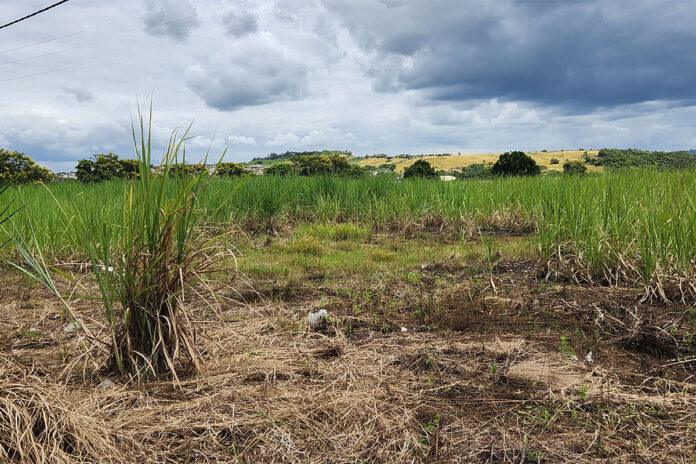
Speaking to Farmer’s Weekly, Pratish Sharma, a sugar cane farmer from Esenembe near Tongaat, SA Canegrowers board member, and Maidstone Local Grower Council chairperson, said the shortage is becoming one of the biggest concerns facing growers supplying Tongaat Hulett’s Maidstone Mill.
“The biggest challenge we’re dealing with at the moment is finding enough people to harvest cane. A number of growers are struggling to get their crops off the lands,” he said.
Sharma said he had managed to avoid disruptions by quickly replacing the workers he had lost.
“I employed eight foreign nationals and, after they left, I was lucky enough to find eight local workers the very next day. In my case, I was able to continue harvesting without interruption.”
However, he said many neighbouring growers had not been as fortunate.
“One farmer lost about 100 cane cutters and has only managed to replace around 20. He is still looking for another 80 workers. That shows just how serious the shortage has become.”
Although the labour shortage has not yet affected milling operations, Sharma warned that it could if growers were unable to replace workers.
“At present, [Maidstone Mill] is still receiving enough cane because deliveries are being supplemented from other supply areas. That has helped keep crushing on schedule. However, if growers cannot replace the workers they have lost, there is a real risk that the mill could eventually run short of cane.”
He added that delayed harvesting affects far more than individual farms.
“When cane isn’t cut on time, it disrupts harvesting programmes, transport arrangements, and the flow of cane into the mill. Every part of the supply chain relies on crops moving from the field to the mill without unnecessary delays.”
Tough work limits labour options
According to Sharma, the physical demands of cane cutting make it difficult to attract new workers.
“Cane cutting is extremely demanding work. It requires strength, stamina, and the ability to work long hours in the field. It’s not a job that suits everyone, and many people simply don’t want to do it.”
Despite advances in agricultural technology, he explained that manual harvesting remains the best option in many production areas.
“People often think machines can easily replace labour, but that isn’t always the case. In many fields, harvesting by hand with a cane knife is still the most practical and efficient method.”
Nonetheless, Sharma said that if the labour shortage persists, growers may have no other choice but to invest in harvesting machinery.
“Mechanisation may become necessary if we can’t secure enough workers. The challenge is that harvesting machines are expensive, bulky, and not suitable for every farm. They also add significant costs at a time when growers are already under financial pressure.”
He said most growers would prefer to continue employing people, but they need a reliable labour force.
“Farmers are looking for workers today, but greater mechanisation could reduce employment opportunities in the future. Most growers would prefer to continue employing people, but they need a reliable workforce.”
A growing concern
Other producers, who asked to remain anonymous, described the current labour shortage as unprecedented.
“We’ve traditionally depended on both local and foreign workers because cane cutting is one of the hardest jobs in agriculture,” one grower said.
“Many people don’t appreciate how physically demanding it is. Workers spend long days in the fields cutting cane by hand in tough and very unpredictable conditions, especially in KZN.”
He said foreign nationals had become an important part of the harvesting workforce over many years.
“Most came here looking for work and became highly skilled cane cutters. Many of them have now left, and replacing those skills has proved extremely difficult.”
Unemployed won’t cut cane
Many Tongaat residents looking for work said they would not consider cane cutting.
Mathonsi Nxumalo, a 28-year-old job seeker, said the work is too physically demanding.
“I can work hard, I have done casual jobs before, but cutting cane is back-breaking work. I’d rather wait for construction or factory work,” he explained.
Another job seeker, Clifford Khubisa, who works as a gardener in the community, said cane cutting would be a last resort.
“It’s hard labour in the sun all day. Most young people aren’t prepared to do that kind of work. I would do it to feed my family, but it would be my last option if I was really desperate.”
More pressure on a struggling industry
The labour shortage comes at a time when South Africa’s sugar industry is already under severe pressure.
Over the past decade, growers have had to contend with cheaper imported sugar, rising fuel and fertiliser costs, prolonged drought, destructive floods, and, most recently, uncertainty following Tongaat Hulett’s financial crisis.
The near-collapse of Tongaat Hulett created further uncertainty before a last-minute business rescue deal helped prevent the company’s liquidation and protected thousands of jobs linked to the industry.
For farmers, the shortage of cane cutters has become yet another threat to an already vulnerable industry.
“This isn’t something that could happen down the line,” another grower said.
“It’s happening now. Every day that cane stays standing in the field puts more pressure on farmers and affects everyone whose livelihood depends on the sugar industry.”