

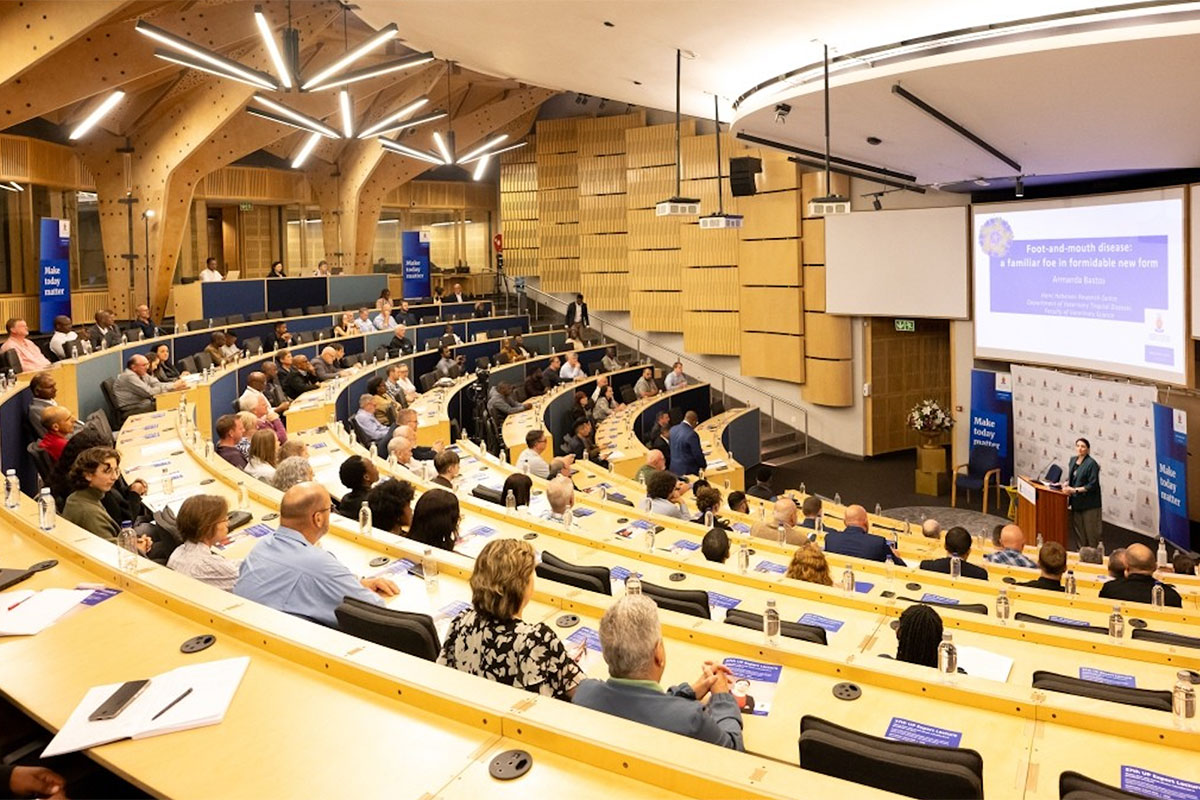
Speaking at UP’s 37th Expert Lecture, Prof Armanda Bastos, director of the university’s Hans Hoheisen Research Centre, said regulatory delays are contributing to the problem.
“The situation is dire, and the regulations are not keeping pace with the additional risk mitigation processes we are using,” she explained.
Her remarks come as FMD outbreaks continue across all nine provinces, disrupting trade and affecting the red meat value chain.
Bastos said regulations and administrative processes had delayed the start of the 5th Quarter Research Project by about eight months, slowing the generation of data needed to inform policy.
She emphasised the need for research timelines to better match the urgency of relevant disease outbreaks and advocated for prompt policy responses.
Methodology and study design
The 5th Quarter Research Project, launched on 25 August 2025, focused on parts of the carcasses of slaughtered cattle classified as higher risk under current regulations, including heads, feet, offal, and tongues.
The study involved 90 cattle from FMD-infected premises. All animals were confirmed to be infected and were vaccinated seven to nine days later to establish a defined ‘Day Zero’, the point from which recovery and risk timelines are measured.
Cattle were sent for slaughter at 16 days after Day Zero, in line with current minimum waiting periods. This allowed researchers to assess whether infectious virus was still present beyond the prescribed recovery window.
A total of 1 800 samples were collected and analysed using polymerase chain reaction (PCR) testing, followed by additional assays to determine whether any detected viral material was infectious.
Findings challenge current rules
“No infectious FMD was found in any of the samples we tested,” Bastos said.
The virus was not detected in bone marrow, a key finding given that current regulations require deboning, nor was it found in the spleen, kidneys, or mesenteric lymph nodes.
Although PCR tests detected viral material in one tongue and three lung samples, follow-up testing confirmed that the virus was not infectious.
The results indicate that cattle slaughtered from 16 days after Day Zero do not carry infectious FMD virus in tissues currently subject to strict processing requirements.
Based on the findings, Bastos called for changes to controlled slaughter regulations, including:
- Removing the requirement to debone and degland carcasses from recovered cattle
- Allowing the retention of tongue and offal under controlled conditions
- Introducing a single slaughter phase between 16 days and three months after Day Zero
“The regulations should be changed as soon as possible, based on science,” she said, adding that a faster regulatory response could help “stem the losses of an industry bleeding jobs and revenue”.
Ongoing research, next steps, and challenges
The next phase of the research will focus on sites in the head where low levels of the virus may persist in carrier animals. This work aims to further refine risk assessments and support targeted control measures.
Bastos said regaining FMD-free status in South Africa would require vaccinating 80% of the country’s 14 million cattle, expanding laboratory capacity, and improving disease control in wildlife and pigs.
She also highlighted the role of public-private partnerships in supporting faster responses.
“The 5th Quarter Research Project has shown that by harnessing collective expertise and will, public-private partnerships can deliver results.”
Bastos said delays in translating research into policy are increasing pressure on the industry and called for quicker implementation of evidence-based changes.