
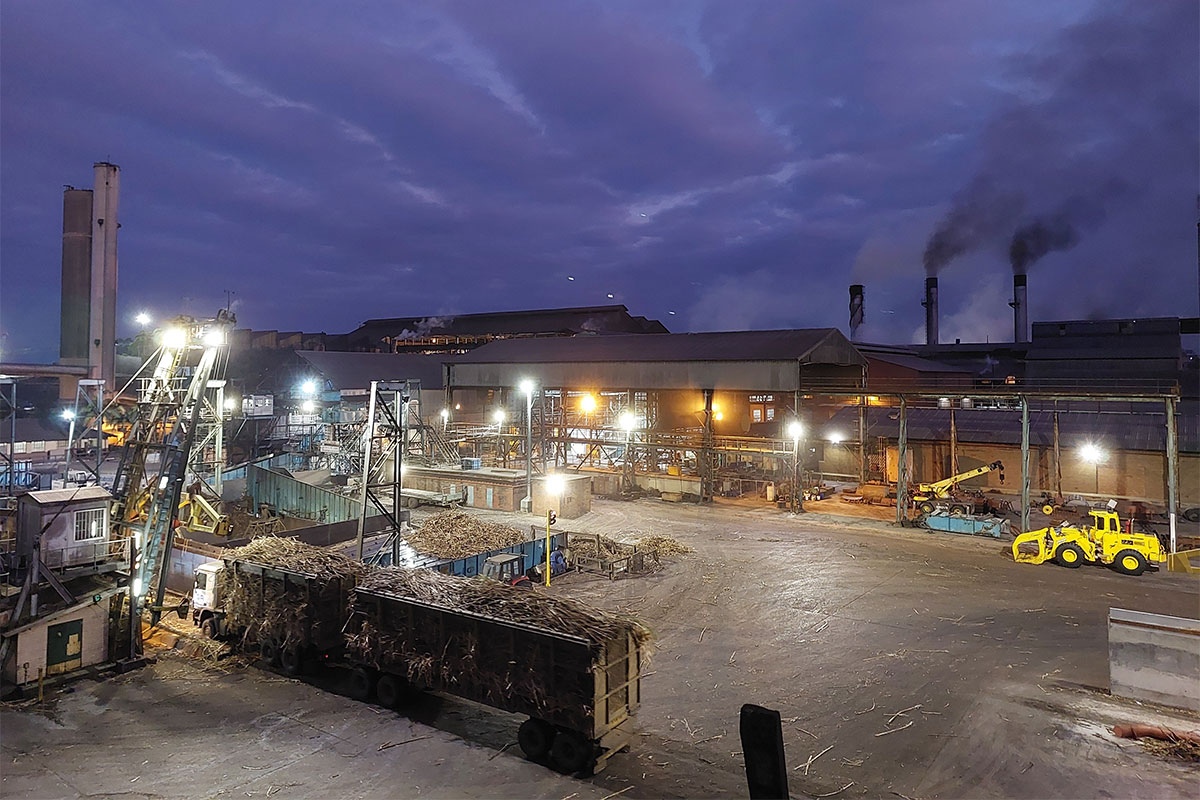
Speaking on 8 April at the mill’s official opening for the new crushing season beginning in May, Deputy Minister of Trade, Industry and Competition Zuko Godlimpi said the event signalled renewed confidence in South Africa’s sugar industry, following a nearly R2 billion investment by the Kenya-based Chatthe Group after a business rescue process in 2023.
He said the reopening of the mill has secured at least 400 direct jobs and will support an estimated 26 000 indirect livelihoods across the province’s sugar cane-growing regions, adding that it demonstrates what targeted investment and collaboration can achieve in an industry under severe structural pressure.
“Gledhow proves that there are positives that can come out of business rescue. What we are seeing here is not just the revival of a mill but also the safeguarding of livelihoods, the stabilisation of supply chains, and a practical example of how industrial policy and private investment can work together,” Godlimpi said.
He added that government’s engagement with the sugar industry is part of wider efforts to address challenges that include import pressures, declining mill feasibility, and uncertainty affecting key industry players such as Tongaat Hulett.
“There is a new investor on site who has shown me the technology being introduced to improve efficiency and reduce reliance on fossil fuels.
“Government is committed to ensuring that job preservation goes hand in hand with sustainability and transformation in agro-processing.”
Investment-led revival and expansion
The Chatthe Group acquired the Gledhow facility in January 2025 after nearly three years of business rescue.
The recommissioning follows a capital investment programme reported at between R1,8 billion and R2 billion, focused on full modernisation of the mill and refinery, infrastructure upgrades, and the introduction of renewable energy-driven systems.
Speaking at the event, Chatthe Group Managing Director Raghbir Chatthe said that as part of the upgrade, milling capacity is set to increase from 300t/hour to 450t/hour, raising annual sugar cane throughput from between one million and 1,5 million tons to approximately two million tons.
He added that construction and engineering teams remain on site as final preparations continue ahead of the milling season, with further phased improvements expected during operations.
More than 200 local contractors have been employed for the expansion phase, adding a short-term boost to local economic activity.
Circular economy model to drive sustainability
Chatthe said the investment strategy follows a circular economy model aimed at maximising value from every stage of sugar production while reducing environmental impact and operational costs.
“We [Chatthe Group] are already a global leader in the circular economy of sugar cane. At Gledhow, we are applying a proven international strategy to improve efficiency, reduce costs and diversify revenue streams.”
He added that the group’s plans include converting molasses into bioethanol; selling excess bagasse, steam, and co-generated electricity to neighbouring companies such as Sappi; and producing organic fertilisers from by-products for local cane growers.
“Our objective is to ensure that what was previously considered waste becomes a source of value for the entire supply chain.”
Chatthe added that the long-term goal is a complete transition away from fossil fuels: “By the end of the 2026/27 milling season, we aim to move away from the previous reliance on about 200 000t of coal annually and instead operate using bagasse as the primary energy source.
“This shift is expected to generate between 150 000 and 200 000 carbon credits annually.”
Government on sector stability
Godlimpi said government’s involvement in the sugar industry is focused on stabilisation, sustainability, and protecting rural economies that depend on cane production and milling operations.
Workers at Gledhow have been reassured that job preservation remains a priority alongside the company’s long-term viability.
“The government is dedicated to supporting the company’s transition to renewable energy resources,” he said.
According to him, the modernised plant will also contribute to local economic activity through the manufacturing and supply of spare parts for surrounding industries.
“The sale of parts to factories in the area will contribute to the local economy,” he said.