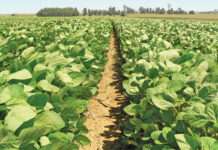

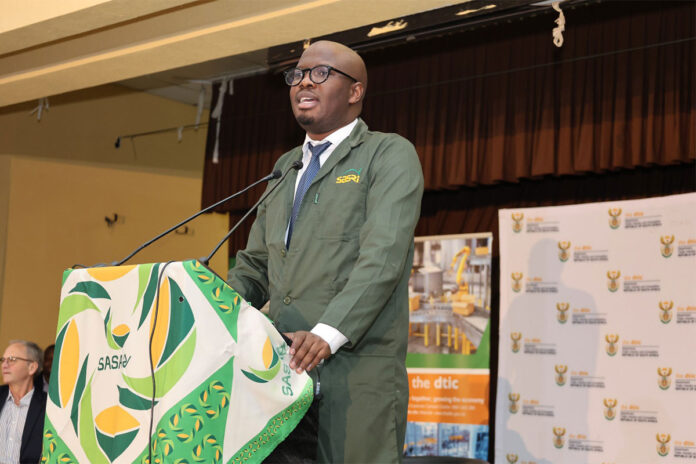
The two-day Grower Imbizo, hosted by the Department of Trade, Industry and Competition and the Department of Agriculture, in partnership with the South African Sugar Association, comprised farm visits on 17 September, followed by a grower dialogue the next day.
During the engagement, Deputy Minister of Trade, Industry and Competition Zuko Godlimpi addressed challenges around funding.
“There’s a whole lot of capital required to get the growers going, and part of the problem is that our funding institutions might not necessarily understand the specific circumstances that the sugar cane growers are facing,” he said.
Godlimpi added that government plans to bring development finance institutions, commercial banks, and sugar industry representatives together to explore a more suitable funding framework for sugar cane growers.
In addition, a capital-raising workshop would be convened with grower organisations and financial institutions to investigate how funding could be structured more appropriately.
At LV Sugar Estate, owner Vince Drew told Godlimpi that access to affordable capital could unlock considerable production potential among developing growers.
He cited a neighbouring operation where production had increased from about 2 900t to around 8 000t after replanting and support, with the funding reportedly repaid within two-and-a-half years.
Speaking to Farmer’s Weekly, Drew said finance alone was not enough, with financial management and practical farming knowledge among the main factors determining whether access to land translated into a sustainable farming business.
Godlimpi also said the farm visits had reinforced the need for longer-term practical support in land reform, including production knowledge, negotiating offtake and supply agreements, machinery maintenance, and mentorship.
Tariff certainty needed
The deputy minister also said there is a need to make sugar tariff reviews more predictable.
“We probably need to institutionalise a predictable tariff review period so that we could have this conversation in a much more structured way,” he said.
These comments follow the recent increase in the dollar-based reference price (DBRP) for imported sugar from US$680/t to US$785/t.
Manini Masithela, manager of customs tariff investigations at the International Trade Administration Commission of South Africa (ITAC), said during the dialogue that the ITAC had found the industry to be uncompetitive relative to imports and that, based on the information considered during the review, the US$785/t level would adequately cover production costs.
She said that the ITAC would continue monitoring production, prices, and market conditions, adding that the DBRP is due to be reviewed after three years, although the ITAC may review it sooner if market or industry conditions warrant.
Commercial sugar cane farmer Tim Crookes, managing director of Ellingham Estate, said policy certainty influenced whether growers replanted fields, replaced machinery, or committed capital to expansion.
“Capital follows confidence,” he told Farmer’s Weekly.
Crookes added that repeatedly deferring replanting, machinery replacement, and infrastructure investment eventually translated into ageing cane, declining yields, and lower production.
Diversification gains momentum
Diversification also featured prominently during the imbizo, particularly the long-discussed potential for sugar cane-based ethanol.
Dr Thomas Funke, CEO of the South African Cane Growers Association, said the industry had already undertaken substantial work on ethanol.
Funke told Farmer’s Weekly that Illovo-owned Sezela Mill, which crushes about two million tons of sugar cane annually, had potential for ethanol production. He said discussions included the legislative and regulatory changes that would be required, as well as whether subsidy support would be needed.
“It’s been a long time coming, but we as a sugar industry are ready to get [the bioethanol industry] off the ground and supply ethanol into the fuel market,” he said.
Crookes added that bioethanol and sustainable aviation fuel could provide additional markets for sugar cane, but said new downstream industries would only improve grower sustainability if part of the additional value ultimately flowed back to cane producers.