
Speaking at the Subtrop Marketing Symposium 2025 in White River, Mpumalanga, this week, Du Plessis said several improving indicators suggest South Africa’s economic growth could strengthen in the coming year.
“We’ve had five months without load-shedding, food and fuel prices and inflation are easing, and the rand is performing [better] against most currencies,” he explained.
Du Plessis added that South Africa’s recent removal from the Financial Action Task Force’s grey list is another boost for investor sentiment.
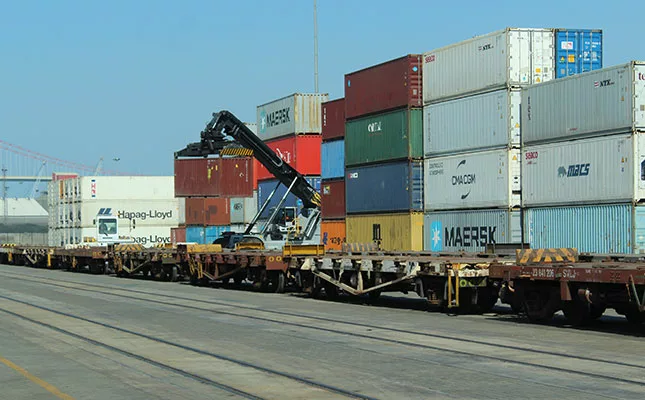
He highlighted that public-private partnerships in the railway sector are starting to materialise, which could significantly benefit agricultural and commodity exports. “There’s demand to move 250 million tons of freight, but Transnet can currently handle only half of that.
“Private-sector investment, expected to reach around R100 billion over the coming years, can help close this gap.”
While it may take two years for the full benefits of these investments to take shape, they signal investor confidence and mark a critical step towards improving export logistics and overall competitiveness.
US tariffs and the global market outlook
On the issue of trade tariffs, Du Plessis said it is still too early to assess the full impact of the 30% tariffs imposed by the US on South African exports.
“Although exports to the US have risen by 6% year-to-date, much of this was driven by ‘frontloading’, where companies placed higher orders in anticipation of the tariffs,” he said.
He added that, on average, US businesses currently absorb 51% of the increased costs that the tariffs bring, with the US consumer absorbing 37% and exporters only 9%. “The higher costs are, however, expected to be passed on to consumers next year, which will impact demand.”
The US Supreme Court is expected to rule this week on whether the tariffs are legally enforceable under the International Economic Emergency Act.
“If [the tariffs are] found to be unlawful, the US would have to refund roughly US$80 billion [about R1,4 trillion] in collected tariffs, and South Africa’s exports would revert to a ‘most favoured nation’ rate of about 3%,” Du Plessis explained.
Looking ahead, he predicted that oil prices could drop from US$64/barrel (R1 100/barrel) to US$60/barrel (R1 040/barrel) by year-end, resulting in further fuel price decreases. The rand is expected to stay in the R17,20/US$1 to R17,50/US$1 band over the medium term.
Du Plessis also predicted another 50-basis-point interest rate cut next year. He noted that agricultural production has more than doubled over the past 40 years.
With above-average rainfall forecast for the coming year, and economic indicators looking favourable, there is much reason for optimism in the agriculture sector and the broader South African economy, he concluded.