

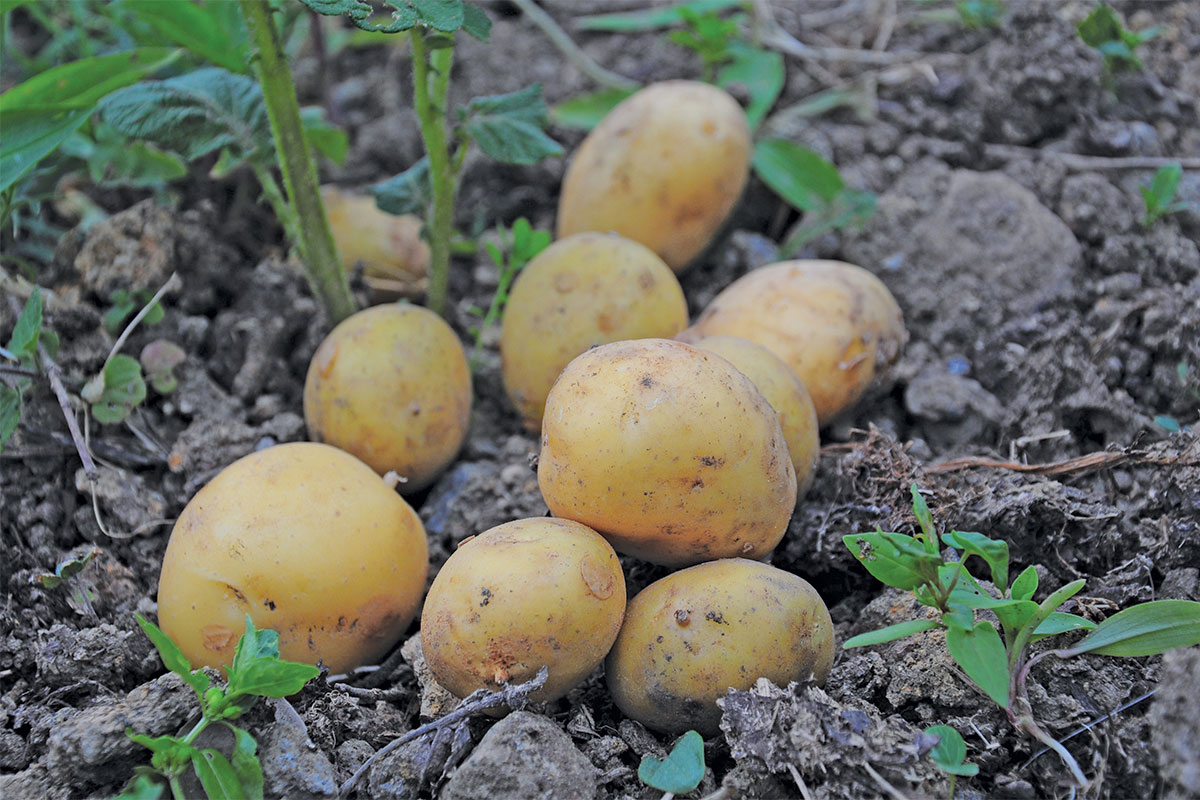
This year’s theme is ‘Where potatoes grow, livelihoods flourish’. The day draws attention to the contribution of local potato producers to the agricultural economy and the role potatoes play as an affordable staple food for many South Africans.
Speaking to Farmer’s Weekly, Sheila Makgato, marketing manager at Potatoes SA, said the day is an important acknowledgement of farmers and the broader agricultural value chain.
“International Day of Potato gives producers and the agriculture sector an opportunity to recognise the value that local producers bring to the economy and food security,” she said.
Makgato added that the industry contributes to both the formal and informal economy while also supporting food supply and employment.
Potatoes remain one of South Africa’s most important food crops due to their year-round availability and accessibility across both formal retail markets and informal trading systems.
“Potatoes are important for food security because they are available throughout the year in South Africa, are easily accessible because they are distributed to both formal and informal markets, and are an affordable staple,” Makgato explained.
She noted that potatoes also offer nutritional value: “When eaten with the skin on, they provide fibre and potassium, and are naturally fat-free.”
Production trends
The local potato industry has continued to grow despite pressure from climate variability and rising input costs.
Annemarie van der Merwe, research and innovation manager at Potatoes SA, said production volumes are increasing, while planted hectares have only expanded marginally.
“In 2025, 53 094ha were planted [to potatoes], with an average yield of 52t/ha,” she said.
Van der Merwe said the structure of the industry has changed significantly over the past few decades, particularly in relation to irrigation.
“Over the past 37 years, potato production shifted from a 50/50 split between dryland and irrigation to 86% of hectares planted under irrigation,” she said.
Production across all nine provinces
Unlike many potato-producing countries, South Africa’s climatic diversity allows potatoes to be produced across the country in different seasons.
Jodie Hattingh, agricultural business analyst at Potatoes SA, said this helps maintain a steady supply of fresh potatoes to consumers.
“South Africa is unique in potato production compared with its global counterparts, as all nine provinces produce potatoes in different seasons, ensuring fresh potatoes are available throughout the year,” she said.
Hattingh added that Limpopo remains the country’s largest potato-producing province, followed by the eastern and western Free State regions and the Sandveld production area.
Rising costs and climate uncertainty add to farmer pressure
However, the industry is facing pressure from rising production costs, volatile weather conditions, and weaker producer prices.
“Potato farmers are dealing with higher input costs, while producer prices remain under pressure,” Hattingh said.
She noted that potatoes are currently trading below the five-year average price, adding strain to producer profitability.
Weather-related disruptions have also intensified. “Climate conditions have been unpredictable, with high rainfall leading to losses for farmers,” Hattingh said.
Forecasts from major meteorological centres also point to the possible development of El Niño conditions during the 2026/27 summer season.
“Although these effects have not been felt yet, these are worrying developments with varying implications for farmers,” she added.
Climate change reshaping potato production
Climate change is reshaping potato production patterns locally and globally, affecting yields, quality, disease pressure, and planting schedules.
According to Van der Merwe, increased weather variability is exposing producers to higher production risks.
“Climate change is affecting potato production through increased weather variability, including more extreme temperature events and changing rainfall patterns. This also causes shifts in pest and disease pressure, while more frequent flooding and droughts increase production risk,” she said.
She explained that heat stress reduces tuber initiation and bulking, leading to lower yields. Drought conditions can result in smaller tubers and uneven growth, while flooding increases the risk of tuber rot and fungal diseases.
Climate change could also alter the country’s production areas over time. “Some warmer potato-growing regions may become less suitable due to higher temperatures, while cooler areas may become more favourable,” Van der Merwe said.
Farmers turn to innovation and adaptation
Despite these challenges, South African potato farmers are adopting a range of measures to improve resilience and sustainability.
Van der Merwe said producers are investing in improved irrigation systems, precision agriculture technologies, and more resilient potato cultivars.
“Farmers are also focusing on water-use efficiency due to pressure on water resources and the increasing frequency of drought conditions,” she said.
She added that many farmers are adjusting planting dates to reduce exposure to heatwaves, frost, and excessive rainfall.
Precision agriculture tools such as satellite monitoring, soil moisture sensors, and data-driven irrigation systems are helping producers improve efficiency and manage costs.
Research efforts are also focused on developing cultivars with improved resistance to heat, drought, pests, and diseases.
“In addition, improvements in seed quality management, regenerative agriculture practices, and integrated pest management are contributing to more sustainable production systems,” she said.
Supporting jobs and rural economies
Beyond production, the potato industry continues to serve as a major driver of employment and rural economic development.
Hattingh said it supports thousands of direct and indirect jobs throughout the value chain, including farming, packaging, transport, processing, and informal trade.