
For decades, proponents of regulated international rhino horn trade, including the late conservationist Dr Ian Player, have argued that legal trade is a way to flood the market, lower prices, reduce poaching pressure, and generate vital funds for rhino conservation.
According to the court, such an approach is consistent with the rules of the Convention on International Trade in Endangered Species of Wild Fauna and Flora (CITES) and South African law.
This ruling closely aligns with recent government findings. In March this year, then-Minister of Forestry, Fisheries and the Environment Willie Aucamp published a report by South Africa’s CITES Scientific Authority stating that government’s ongoing refusal to allow legal trade was creating an artificial monopoly that directly benefits poaching syndicates and encourages the slaughter of rhinos.
Wicus Diedricks, owner of Rockwood Conservation, said the latest ruling is an important step towards making private rhino ownership financially sustainable. Rockwood, a roughly 13 350ha privately owned nature reserve, protects one of the largest populations of southern white rhinos in the world.

“Keeping rhinos safe is extremely expensive. We have wildlife rangers patrolling 24 hours a day, and around 50 people are employed at Rockwood. There are also veterinary bills, fence maintenance, security costs, and feeding for the rhinos, to name just a few expenses,” he told Farmer’s Weekly.
“[Rhino conservation] is very costly and, at this stage, unsustainable. Approximately 70% of all rhinos in South Africa are currently privately owned, so the future of rhinos in our country depends on sustainable funding. This is one of the reasons why we pursued this court case – to be able to sell rhino horn and make the rhino industry financially sustainable.”
Through a system of import and export permits, CITES regulates international trade in wild animals and plants according to their conservation status and the level of protection they require. The convention recognises that there is demand for these vulnerable species and seeks to balance their protection with trade that does not place them under further pressure.
As a result, CITES has established rules that allow trade in species listed as threatened under specific circumstances. According to CITES terminology, Rockwood Conservation is registered as a “commercial operation for non-commercial purposes” and, as a result, the facility qualifies as an exception under the CITES ruling.
Export permit dispute
Diedericks said he first applied for permits to export rhino horn in 2021 but had still not received a response a year later.
“We then approached the High Court in Kimberley for a court order compelling the authorities to make a decision. If they intended to refuse the application, they were required to provide reasons.
“The export permit application was refused, and [then-Northern Cape MEC for Agriculture, Environmental Affairs, Rural Development and Land Reform Mase Manopole] provided reasons for rejecting it. The reasons given were that South Africa had never incorporated [the relevant CITES exception] into its domestic legislation and therefore could not comply with it,” he explained.
The matter was reviewed again last year, and this time the court found that the CITES exception does indeed form part of the convention and ordered that the export permits for rhino horn be issued.
Government then applied for leave to appeal the court’s decision, but the High Court recently dismissed that application.
“The court was so confident in its ruling that it also ordered that its judgment could not be suspended if government decides to pursue a further appeal. In effect, this means that the MEC in the Northern Cape must issue the permits within seven days or provide reasons why they should not be issued,” Diedericks added.
The cost of conservation
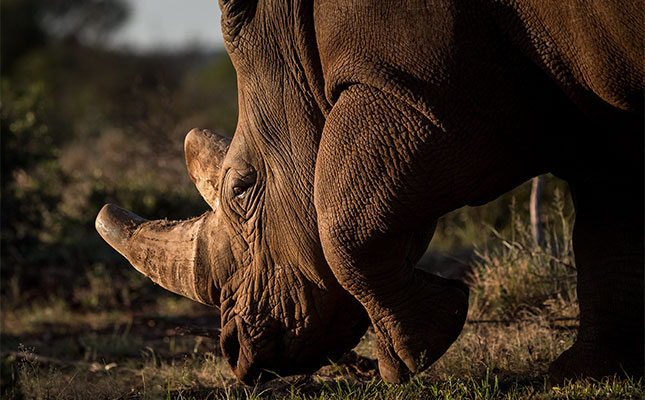
Rhino horn is highly sought after in parts of Asia for use in traditional medicine. According to Diedericks, this demand has resulted in approximately 11 000 rhinos being poached in South Africa since 2010.
He added that the trade and the profits generated from it have largely been driven by the international black market. This trade has been supplied by rhinos that were illegally and brutally killed for their horns.
“This situation has forced those who actively conserve rhinos to carry the financial burden themselves, which is extremely expensive and entirely unsustainable.
“Our hope is that government will now come to the table instead of continuing to oppose us, and that it will support the legal trade in rhino horn.
“SANBI [the South African National Biodiversity Institute] has already concluded that the current legislation has contributed to the continued poaching and killing of rhinos, and that legal trade in rhino horn would not be detrimental to rhino conservation in South Africa,” Diedericks said.
Diedericks hopes that recently appointed Minister of Forestry, Fisheries and the Environment David Maynier will listen to science, as well as to the scientists within his own department, and support the legal trade in rhino horn.
“Without sustainable funding, we are simply not able to keep our rhinos safe. It is important to preserve this species for future generations, and that can only be achieved through sustainable conservation,” he concluded.