Developing sustainable commercial farmers requires more than access to funding. Financial literacy, reliable markets, and long-term partnerships also play an important role in helping agricultural businesses grow.
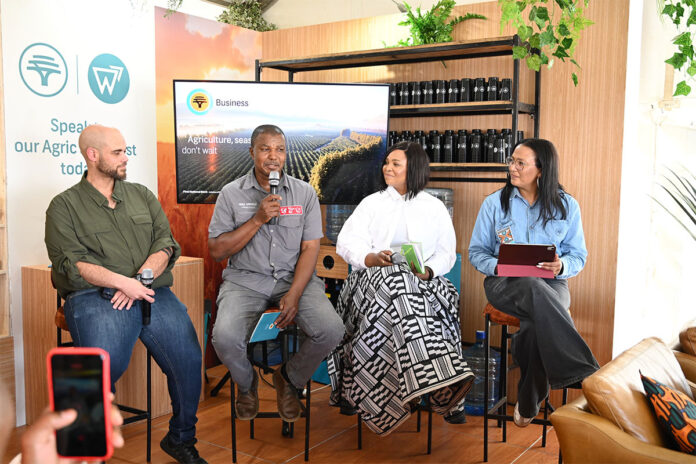
This was one of the central messages during a panel hosted by FNB at the Royal Show under the theme ‘Farming together: collaboration that builds commercial farmers’.
The discussion brought together representatives from FNB, agricultural businesses, and the KwaZulu-Natal Agricultural Union (Kwanalu).
Opening the proceedings, Greg Sparrow, FNB’s head of agriculture in KwaZulu-Natal, emphasised the bank’s commitment to working with farmers across the province.
He said FNB’s agriculture division in KwaZulu-Natal serviced approximately 27 farming commodities and maintained relationships with agricultural organisations to better understand the challenges facing producers.
Financial literacy and commercial development
Kwanalu CEO Sandy La Marque outlined the organisation’s efforts to develop rural entrepreneurs through its agricultural and business development programmes, including its Women and Youth in Rural Entrepreneurship initiative.
According to figures presented by Kwanalu, the organisation’s combined development initiatives have trained 7 607 participants, facilitated 750 agricultural employment placements, and supported the establishment or development of 6 480 businesses over nearly a decade.
Kwanalu also reported that these initiatives had supported the creation of 20 190 jobs and affected 199 600 livelihoods, with more than R1 billion reportedly channelled into the rural economy.
La Marque said the objective was to help rural entrepreneurs develop profitable businesses capable of operating commercially rather than remaining dependent on external assistance.
She also presented findings from a follow-up assessment of 45 entrepreneurs conducted two to three months after training.
Among those assessed, financial literacy increased from 25% to 58%, while the proportion regularly preparing budgets increased from 67% to 96%.
“One voice, one vision: we have to stand together. We have to work together within the agriculture sector,” La Marque said.
What banks look for
Janice Robson, FNB’s head of SME business development, said banks considered several factors beyond production volumes when assessing agricultural financing applications.
She explained that financial records, cash flow projections, access to markets, and an understanding of business risks were important indicators of whether a farming operation could sustain additional debt.
“In my view, success is increasingly determined by who can manage margins and cash flow,” she explained.
Robson also emphasised the importance of separating personal and business finances, maintaining accurate financial statements, and demonstrating a reliable market for agricultural products.
“A better funding conversation really starts when the farmer can connect that production plan to a credible route to market.”
Bertram July, sales lead for FNB’s regional inland KwaZulu-Natal team, encouraged farmers to establish relationships with banks before they needed finance.
He said agricultural businesses differed considerably, and farmers should not assume they were ineligible for assistance simply because their operations did not meet every conventional lending requirement.
“If you don’t fit a box perfectly, come and have a chat with us and let us see, because everyone is unique,” July said.
Partnerships in practice
Livestock farmer Shakes Shabalala, from Dundee in KwaZulu-Natal, shared how his relationship with an established commercial farmer helped him expand his farming business and ultimately purchase his own farm.
After leaving the South African Defence Force in 2017, Shabalala began expanding his livestock operation on leased land.
He subsequently secured a weaner supply agreement with a commercial farmer, which provided a market for his cattle and helped him generate income towards purchasing agricultural land.
Shabalala said he initially struggled to obtain bank financing because his financial records were not up to date.
He subsequently arranged to pay towards the purchase of a farm through a series of weaner deliveries, eventually settling the agreed amount and obtaining ownership.
He also diversified into goats and sheep, while members of his family became involved in poultry and vegetable production to generate additional income.
“Farming needs dedication and an understanding of what you’re looking for. For me, I had a vision. I had a dream. I wanted to live my dream. And I lived my dream with discipline,” Shabalala said.
Sandy Gumede, co-founder of Zulu Girl Wines, based in Gauteng, similarly emphasised the importance of managing finances and building relationships with experienced business partners.
“Sales don’t necessarily mean cash in the bank. You can have 200 likes on social media; I t doesn’t mean cash in the bank,” she said.
Gumede explained that although Zulu Girl Wines was initially self-funded, securing the support of a producer helped the business obtain stock and establish itself in the market.
Prospects for women and young agripreneurs
The discussion also addressed opportunities for women and young agripreneurs, including FNB’s financing and business development initiatives.
Robson said commercially viable agricultural businesses needed sound financial planning, market access, and the ability to manage risks, while relationships with experienced farmers, financial institutions, and other industry participants could provide important support for their growth.