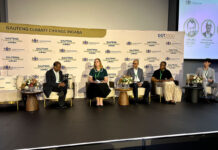

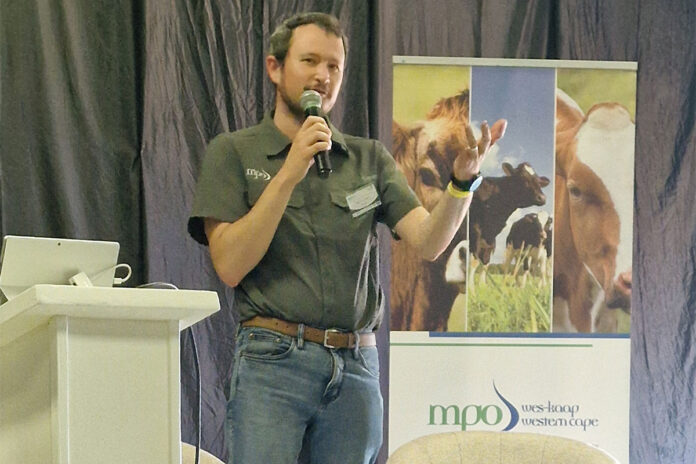
South Africa’s dairy industry will have to learn to live with foot-and-mouth disease (FMD), while ensuring that it does not result in production losses. This was one of the key messages delivered during the Milk Producers’ Organisation (MPO) Western Cape’s annual general meeting recently held during Nampo Cape in Bredasdorp.
Ben van Greunen, chairperson of the MPO Western Cape and a dairy farmer from George, said producers faced another unpredictable year, with operational difficulties compounded by the threat of animal disease.
“I had rain, then no diesel, then rain again. But the big focus for the industry the past year was on FMD,” he said.
FMD dominated the meeting as speakers considered the implications of the disease for milk production, biosecurity, vaccination and the long-term protection of dairy herds.
Van Greunen said it had been a challenging year for his own farming operation, as well as for the wider dairy industry, with producers having to manage numerous pressures while maintaining milk production.
Milk demand continues to grow
Luke Gibbs, chairperson of the MPO board and a dairy farmer from KwaZulu-Natal, said demand for milk continued to grow faster than production.
According to Gibbs, milk production increased by approximately 30 million litres between January and June this year. Demand, however, grew by about 98,6 million litres, leaving a shortage of roughly 68,5 million litres. The shortfall was met by last year’s surplus as well as imports.
Gibbs said the data showed that there was opportunity for further growth in milk production, but added that FMD remained a pressing concern in this regard.
Maintaining herd resistance
Dr Dietmar Holm, chief veterinarian of the MPO and a member of the ministerial task team on FMD, said the industry’s initial response had focused on vaccinating animals to establish herd immunity.
“We focused on vaccination to build herd immunity. That has been done, but from here we must ensure that the cows maintain that resistance,” said Holm.
He encouraged farmers to consult their veterinarians about the next phase of vaccination and develop long-term disease management plans appropriate for their herds.
“Farmers must have the conversation with their veterinarians about how we keep going. We cannot simply vaccinate every six months, so we need to determine how we are going to maintain that resistance in the herd,” advised Holm.
He said FMD management would increasingly need to become part of routine animal-health planning, alongside other vaccination and biosecurity programmes.
Holm also stressed the importance of reporting FMD cases and contributing to the industry’s broader surveillance and disease control efforts.
“FMD is not going away. We have to learn to work together and learn to live with it, but it must not lead to production losses,” he said.
He said co-operation between producers, veterinarians, industry organisations and government would be essential to maintaining herd protection and limiting the effect of future outbreaks on dairy farms.
Resilience
Gibbs said the dairy industry needed to strengthen its ability to withstand disruptions while remaining competitive.
“The goal is not simply to manage foot-and-mouth disease. The goal is to build a dairy industry that is resilient enough to absorb shocks, competitive enough to seize new opportunities and trusted enough to access the best markets,” he said.
He added that the key for the dairy industry is to maintain the confidence of domestic and international markets.
“If we get those fundamentals right, the future of the South African dairy industry is extremely positive,” Gibbs said.