

Voluntary foot-and-mouth disease (FMD) vaccination remains the biggest operational weakness in South Africa’s response to the disease, according to Dewald Olivier, CEO of the Red Meat Industry Services (RMIS).
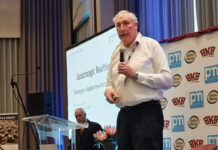
Speaking during the Agri in Conversation panel ‘Determining our own success’ at Nampo Cape in Bredasdorp on 10 September, Olivier said the industry had made significant progress in vaccine access, traceability and coordination, but some livestock owners were still choosing not to vaccinate even when the vaccine was available.
“The biggest operational issue is that the vaccination of animals is still voluntary,” he said, adding that this remained the industry’s biggest single operational risk.
Johann Kotzé, CEO of Agri SA, said South Africa would achieve only limited disease control if vaccination remained optional: “If you don’t make it compulsory and make sure you push this thing down, you’re going to have limited outcome.”
However, Kotzé noted that mandatory vaccination inevitably raised the question of whom bore the financial responsibility. He said sustained vaccination over several years, including more frequent vaccination in feedlots according to their production cycles, would carry a substantial cost if government were expected to fund it.
He added that the challenge had often been less about physical access to vaccines than access to paid-for vaccines.
Kotzé also pointed to the revised Section 9 FMD control measures and the Section 10 Routine Vaccination Scheme as important changes in the industry’s ability to manage the disease. The Section 10 scheme provides for voluntary private-sector vaccination under state veterinary oversight.
Despite the remaining gaps, Kotzé cautioned against overlooking progress already made.
“We emphasise the 5% we don’t have and forget about the 95% we do have,” he said.
Biosecurity
Niel Venter, COO of Sparta Group, said feedlots had experienced the cost of FMD directly. Earlier outbreaks had brought major financial losses, while stricter biosecurity (including quarantine, all-in, all-out systems and vehicle and personnel controls) continued to require substantial infrastructure and expense.
“A lot of those biosecurity practices come at a great cost,” Venter said. Vaccination, however, had made outbreaks more manageable and given feedlots greater confidence that business could continue.
Venter also linked traceability to export growth, saying access to high-value international markets was important for the long-term sustainability of the red-meat industry. Without reliable traceability, he said, South Africa would struggle to maintain the confidence of importing countries.
Traceability
Hendri Truter, CEO of Deli-Co, said traceability and compliance were likewise becoming commercial requirements further along the value chain. He said processors supplying export markets would increasingly demand reliable information from suppliers.
“It’s going to be non-negotiable when we buy as an export plant,” he said.
The panel also returned to the division of responsibility between government and industry. Olivier said government remained responsible for key animal-health functions, but industry could not wait indefinitely for additional state capacity before acting.
“Do we need more extension officers? Yes. But can we wait for them? No. We need to take responsibility for ourselves,” he said.
The discussion also highlighted uneven provincial implementation as a weakness, with national and industry strategies potentially undermined when provincial political and administrative structures did not align with operational plans.
A recurring theme was that FMD had nevertheless forced historically fragmented parts of the red-meat value chain to work more closely together. Olivier described the crisis as a catalyst for co-operation, while Venter said the industry had become better at identifying common risks before they became problems for individual businesses.
The challenge now is to retain that co-operation and use the systems developed during the FMD crisis to strengthen South Africa’s broader animal-health capacity and red-meat export ambitions, he said.