South Africa’s agriculture sector stands as a beacon of economic resilience and opportunity within the country’s economy and a lever for global competitiveness. Just recently, South Africa overtook Spain to become the world’s largest citrus exporter by volume, shipping a record 2,9 million tons of citrus fruit in 2025.
This is a sign of South African farmers’ ability to anticipate risks and adapt amidst an unpredictable economic and political global landscape. At the Nampo Harvest Day in May 2026, former agriculture minister John Steenhuisen said this milestone reflects the sector’s resilience and compliance with global standards. It, however, also shows that success in agriculture is no longer just about growing crops or raising livestock. To survive and thrive in today’s global arena, farmers must be business strategists, technology adopters, and market analysts.
The world is entering a new era of global trade shaped by rising tariffs, shifting global alliances, and uncertain trade preferences.
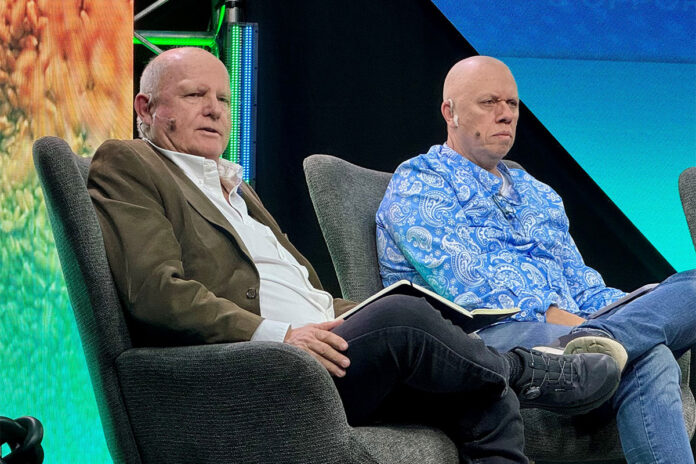
Binedell emphasised that farmers are dealing with multiple complexities that affect farming operations on a continuous basis.
“Farmers’ ability to be resilient and flexible is a key catalyst for success. Understanding market fluctuations, trade dynamics, and economic shifts can help farmers and industry players make informed decisions that protect their livelihoods while remaining competitive in a global market,” Binedell said.
Competitiveness stands as a prerequisite for economic resilience. This means opportunities to maintain and increase competitiveness should be identified continuously.
“South Africa is exposed to global market shifts. Farmers should determine how they can add value to products and look for niche markets. The middle class in the many areas of Asia is growing, opening up opportunities for products beyond rice, such as fresh fruit.
“Market access, however, is not a given. The agriculture sector, and therefore farmers, need to seek opportunities. Repositioning requires investment in fundamentals – from local value addition and trade infrastructure to smarter trade policy and regional coordination,” Binedell said.
He recommended that the agriculture sector should work with the Department of International Relations and Cooperation, and the Department of Trade, Industry and Competition to help the industry to open up markets.
“Trade and diplomatic relationships are extremely important, and this is something that needs to be kindled if t the country wishes to increase global trade.”
According to Binedell, although the US remains an important market to some industries and products, it is imperative to open up more opportunities and strengthen ties within the Middle East as well as China, India, South East Asia, and Japan.
“Although Japan is a difficult market to enter, it is a very lucrative one.”
He acknowledged that nobody knows what lies ahead with regard to the current situation in the Middle East and oil supplies.
The recent conflict situation in the Middle East is, however, creating significant implications for global supply chains, as many trade vessels used the now closed Strait of Hormuz. The result is longer shipping routes. Maersk has rerouted its ships via the Cape of Good Hope and suspended all passages through the Strait of Hormuz until further notice, adding eight to 15 days to Asia-Europe container transit times.
“Oil inventories and emergency reserves are rapidly depleting, raising the risk of supply shortages. We must remember that even if the situation improves, it will take several months for the supply chain to return to some kind of normal,” Binedell pointed out.
Infrastructure and logistics remain important and should be improved to enable the agriculture sector to benefit fully from trade and market opportunities locally, regionally, and internationally, Binedell warned.
In summary, Binedell pointed out the following constraining factors that can inhibit growth and trade:
- Infrastructure including ports, rail, and roads;
- Crime;
- Global politics and tension;
- The decline in local government structures and infrastructure;
- The lack of capacity within government;
- Economic growth;
- The unemployment rate;
- Education and training;
- Unpredictable weather patterns.
He said the opportunities lie in opening up new markets and trade areas as well as diversifying into niche products and value-addition.