Phase Two of the master plan was formally signed on 10 April in Durban, KwaZulu-Natal, marking what government and industry leaders described as a pivotal moment for an industry grappling with rising imports and structural pressures.
It builds on Phase One, introduced in 2020 to stabilise the industry. However, the focus has now shifted to long-term sustainability through diversification and stronger trade protection.
Sugar import surge deepens industry crisis
At the centre of industry concern is the sharp increase in sugar imports. According to the South African Sugar Association (SASA), by the end of February 2026, deep-sea imports had exceeded 197 000t for the 2025/26 season, resulting in revenue losses of approximately R1,5 billion, with the season still ongoing.
Stakeholders have described the surge as a crisis threatening the industry’s sustainability, particularly as the dollar-based reference price, used to trigger tariff protection, has remained unchanged since 2018.
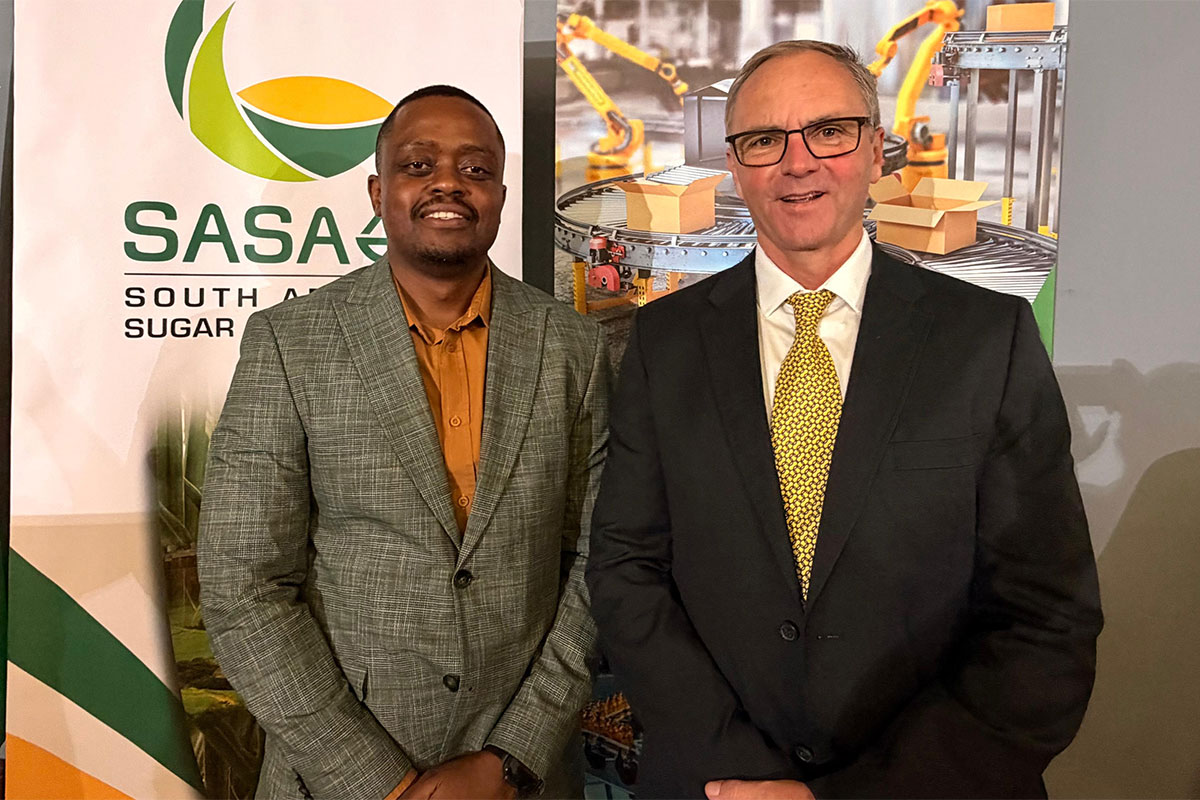
Speaking to Farmer’s Weekly, SASA CEO Sifiso Mhlaba said current tariff measures are no longer effective.
He added that SASA is engaging the International Trade Administration Commission to urgently review the reference price.
“The reference price is the key lever to unlock stability and sustainability in the industry. The current levels are no longer adequate.”
Diversification push intensifies
While tariff protection remains an immediate priority, phase two of the master plan places strong emphasis on diversification, expanding the industry beyond traditional sugar into a broader sugar cane-based value chain.
Speaking at the signing ceremony, Deputy Minister of Trade, Industry and Competition Zuko Godlimpi said the shift is essential to future-proof the industry.
“There is a need to reposition sugar cane from being seen purely as an agricultural product to an engineered one that can drive future employment opportunities and enable progress towards more sophisticated outputs such as fuel resources,” he said.
He added that government aims to increase domestic fuel production from 40% to 55%, with sugar cane expected to play a growing role in biofuel development.
Some of phase two’s key priorities include optimising the local market and developing clearly defined pathways to extract greater value from sugar cane.
Small-scale growers most at risk
Despite these strategic ambitions, the immediate impact of import pressure continues to fall hardest on small-scale growers. Mhlaba said the current revenue losses pose a disproportionate risk to these farmers.
“When we talk about a R1,5 billion loss, it affects everyone, but small-scale growers are the most vulnerable, as it can wipe out their entire income,” he said.
To mitigate this, the industry has implemented support mechanisms such as price transfers and premium payments aimed at cushioning smaller producers.
Calls for coordinated action
Rex Talmage, acting chairperson of SASA, said the success of the master plan depends on alignment across the value chain.
“What we are building rests on the understanding that the whole is greater than the sum of its parts,” he said, adding that, without an appropriately calibrated tariff framework, the plan’s objectives could be compromised.
South African Sugar Millers’ Association CEO Jenna Govender said the signing signals a renewed commitment from government and the sugar industry to protect rural livelihoods and strengthen the sugar value chain.
“The master plan provides a platform to stabilise and reposition the value chain in the face of rising input costs, global price volatility, and shifting domestic demand,” she said.
She added that the industry’s resilience will depend on disciplined implementation of the plan and sustained collaboration.