

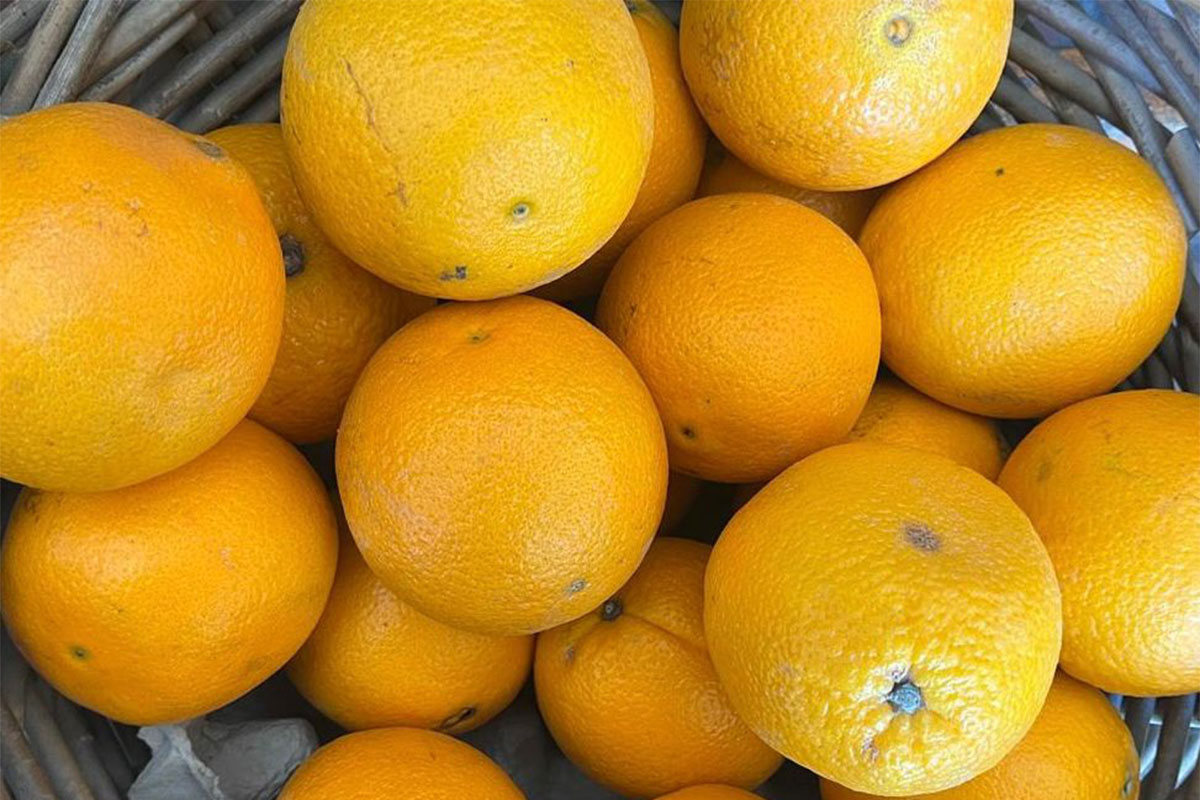
Speaking to Farmer’s Weekly, Citrus Growers’ Association of Southern Africa (CGA) CEO Dr Boitshoko Ntshabele said the industry is projecting exports of up to 215 million cartons, up from the 203,4 million packed in 2025, driven primarily by favourable production dynamics.
“[The projection is] largely driven by exceptional growing conditions and new plantings coming into fruit,” he said, adding that while weather patterns had generally supported production, the influence of La Niña conditions had been mixed.
“We saw some rainfall delay the picking of fruit in the northern regions, but it did not affect the fruit itself.”
Improvements at ports, but constraints remain
On the logistics front, Ntshabele said the 2025 season marked a turning point in port performance.
“The 2025 season saw improved port performance, and Transnet deserves credit for the effort put into increasing efficiency.”
However, he said it was too early in the current season to provide a definitive assessment. “One factor we are excited about this year is that it will be the first season that our fruit will move through the new Durban Gateway Terminal [at the Port of Durban],” he said.
Ntshabele said the joint venture between Transnet, the state-owned company responsible for South Africa’s ports, rail, and pipelines, and International Container Terminal Services Inc., a global private port operator, represents a positive step towards greater private-sector participation in port and rail logistics.
Geopolitical risks and market uncertainty
According to Ntshabele, geopolitical instability, particularly in the Middle East, remains a key concern for exporters.
“Currently, we have not seen diversions of Middle East volumes in any significant way. However, we expect the war to have some impact on demand, although the extent remains uncertain,” he said.
He said that around 19% of South Africa’s citrus exports are typically shipped to the region, underlining the industry’s exposure to demand-side shocks.
Efforts to diversify markets, particularly into Asia, are ongoing. “We were looking forward to government’s imminent trade deal with China, which could eventually lead to improved access for growers,” Ntshabele said.
He added that potential developments such as a new in-transit cold treatment protocol for India and amendments to existing protocols with China could significantly enhance export opportunities for South African producers.
Greater expenses squeeze growers
Rising input costs continue to weigh on producer margins. “Higher diesel, fertiliser, and shipping costs will most likely have an impact this season,” Ntshabele said.
Although government’s R3/ℓ fuel levy relief was welcomed, he said it provides limited insulation against broader economic pressures. “Ninety-five percent of our citrus is moved to ports by trucks, and fuel costs will bite.
He added that expanded freight rail capacity is needed, as smaller producers are particularly vulnerable to these pressures.
“Private-sector involvement in rail is progressing, but it needs to happen at a much greater scale and a much faster pace.”
Industry strengthens risk management strategies
To manage evolving risks, the CGA has intensified its focus on data-driven decision-making and coordination across the value chain.
“The CGA remains focused on aspects within its direct control, including ensuring growers have rapid access to market intelligence to guide fruit to markets in a predictable and stable manner,” Ntshabele explained.
He added that the organisation had worked closely with the Fresh Produce Exporters’ Forum to monitor developments in the Middle East and provide growers with weekly updates.
“The global environment will likely require a high level of responsiveness and adaptability, but the industry has weathered similar challenges in the past,” he said.
From a broader agricultural perspective, Thabile Nkunjana, senior agricultural economist at the National Agricultural Marketing Council, said the citrus industry is a cornerstone of South Africa’s export-led agricultural growth.
“South Africa is the world’s second-largest citrus exporter, with the [citrus industry] bringing in at least R40 billion from exports in 2025,” he said.
He added that the industry plays a critical role in supporting rural livelihoods, particularly in the Eastern Cape and Limpopo.
“However, the high concentration of citrus exports to few markets poses a risk to these provinces and the industry as a whole.”
He added that market diversification is important in mitigating external shocks. “The government continues to prioritise market diversification, particularly given recent disruptions to global trade,” he said.