
Climate risk planning is no longer a future consideration for South African farmers but an immediate operational necessity shaping decisions across the agriculture sector.
Daniel Stevens, executive head of AgriCrop & Heavy Haulage, says the unpredictability of modern weather systems had fundamentally changed how farmers approach production, investment, infrastructure, and financial planning.
“Climate risk planning in agriculture is how farmers now operate in an environment where historical weather patterns are no longer reliable predictors of future outcomes,” he says.
Stevens adds that climate risk planning has evolved into a continuous process that affects every layer of farming operations, from crop production and infrastructure to financing and long-term investment strategies. What was once largely seasonal planning has now become embedded in daily operational and financial decision-making.
Farmers are increasingly being forced to adapt to a production environment where weather events can rapidly shift from one extreme to another within a single season.
South African agriculture has always been exposed to climatic uncertainty, but Stevens believes the sector is now experiencing a different level of volatility altogether.
“The shift has been in scale, duration, and frequency,” he says.
Instead of isolated droughts or occasional floods, farmers are now facing repeated climate shocks that affect multiple regions simultaneously and disrupt production systems on a far larger scale.
Technology changing the way farmers respond
Stevens explains that the growing use of advanced technology has significantly changed the way farmers manage climate risk.
“This shift has been made possible by the rapid expansion of technologies once out of reach for most farmers,” he says.
Technologies such as satellite monitoring, soil moisture tracking systems, and real-time weather intelligence are increasingly being used to guide operational decisions at farm level.
He adds that satellite monitoring technologies are allowing producers to track crop stress and soil moisture at field level, helping farmers improve resource allocation and climate-related planning.
The use of data has become increasingly important in helping producers react quickly to changing conditions and make more informed decisions around planting, irrigation, fertiliser applications, and crop selection.
“Data-informed decision-making at farm level is a reality,” says Stevens.
He adds that many producers are now relying on seasonal forecasts, satellite data, soil moisture monitoring systems, and in-season weather intelligence to determine planting dates and irrigation schedules. The ability to respond quickly to changing conditions has become critical in protecting yields and reducing financial losses.
However, Stevens points out that access to these technologies remains uneven across the agriculture sector.
“Larger commercial operations tend to have more advanced systems in place, while smaller producers often face constraints in access, affordability, and technical capacity,” he says.
This gap in access to climate intelligence tools could further widen inequalities between commercial and smaller-scale farmers, particularly as climate-related risks continue to intensify.
Multiple climate threats
South African farmers are increasingly being forced to manage several climate-related threats at the same time, often within a single production cycle.
“Farmers are dealing with droughts, floods, hailstorms, heatwaves, unseasonal rainfall, and high wind events, often within the same production cycle and across different regions simultaneously,” says Stevens.
These events are no longer isolated incidents but form part of a broader pattern of instability affecting production systems, logistics, and farm profitability. Stevens says the unpredictability of weather patterns is narrowing already unreliable planting windows while also placing pressure on supply chains and transport systems.
“The system is becoming more volatile, not only in intensity but in timing,” he says.
For many farmers, the timing of weather events has become just as destructive as the events themselves. Rainfall arriving too early, too late, or in excessive quantities can severely disrupt planting schedules and reduce production potential. The uncertainty is also making long-term planning increasingly difficult, particularly for producers already operating within tight financial margins.
From an insurance perspective, Stevens says the scale of climate-related risk had become too significant for private insurers to absorb fully across the agriculture sector.
“From a risk perspective these are simply too high for a private insurer to carry across the board and therefore farmers are forced to manage these risks,” he explains.
As a result, producers are increasingly having to invest directly in climate adaptation measures, improved infrastructure, and risk mitigation strategies to protect their businesses.
Growing pressure on crop production
Changing weather conditions are already having a visible impact on crop production across South Africa. In crop farming, Stevens says prolonged dry spells, extreme rainfall, and hailstorms were not only reducing yields but also affecting crop quality and marketability.
“The timing of events is critical; a single disruption during flowering or pollination can fundamentally affect production,” he explains.
Extreme weather during sensitive growth stages can significantly reduce the quality of produce destined for both local and export markets.
In some cases, farmers may still harvest crops, but the quality may no longer meet market standards, reducing profitability.
Heatwaves are also increasing water demand while placing additional pressure on irrigation systems and water availability.
At the same time, erratic rainfall patterns are making it increasingly difficult for farmers to predict optimal planting periods. This uncertainty affects everything from seed selection and fertiliser use to labour planning and financing.
Stevens says climate volatility is no longer simply an environmental issue but a major operational and economic challenge for producers. The agriculture sector’s dependence on weather-sensitive production systems means farmers are often forced to make high-cost decisions without certainty around rainfall patterns or future climatic conditions.
Livestock farmers under strain
Livestock producers are also facing growing pressure linked to rising temperatures and worsening climate conditions.
“With livestock, rising temperatures, reduced grazing capacity, water stress, and disease, operational costs and biological pressure on herds are increasing,” says Stevens.
Higher temperatures and prolonged dry conditions are reducing grazing availability in many parts of the country, forcing farmers to spend more on supplementary feed and water infrastructure. Water scarcity has become another major concern, particularly in areas already vulnerable to drought conditions.
Stevens adds that climate-related stress on livestock is also increasing the risk of disease outbreaks and biological pressure on herds.
He cites the ongoing foot-and-mouth disease outbreak as an example of the challenges currently confronting the livestock sector. Disease outbreaks not only threaten animal health and productivity but can also disrupt exports and place further financial pressure on producers already dealing with rising operational costs.
For many livestock farmers, adapting to climate change now requires a combination of improved grazing management, stronger biosecurity measures, water conservation strategies, and long-term infrastructure investment.
Early warning systems
As climate-related risks intensify, early warning systems and seasonal forecasts are becoming increasingly important tools for agricultural planning.
“They do not remove uncertainty, but they may improve preparedness,” says Stevens.
Access to advance information allows farmers to make critical operational adjustments before extreme weather events occur. These adjustments may include changing planting dates, protecting infrastructure, adjusting irrigation schedules, or reducing exposure to costly inputs during high-risk periods.
“In a highly climate-sensitive production environment, the value of early information is material,” says Stevens.
While forecasts cannot eliminate risk entirely, they can provide farmers with valuable time to prepare and reduce potential losses. Stevens says climate risk planning will continue to play an increasingly important role in determining the long-term sustainability of South African agriculture.
As climate shocks become more frequent and severe, producers are being forced to rethink how they operate, invest, and plan for the future. For many farmers, adapting to climate volatility is no longer optional, but essential for survival in an increasingly unpredictable agricultural landscape.

Some industries face greater exposure
While climate risk affects the entire agriculture sector, Stevens says certain industries are significantly more vulnerable due to the nature of their production systems and market requirements.
“High-value horticulture is particularly exposed due to the direct impact of weather on quality and export standards,” he says.
Export-focused fruit industries are especially vulnerable because even minor weather damage can affect appearance, shelf life, and compliance with international market standards. Hailstorms, excessive rainfall, and heat stress can therefore result in substantial financial losses even where yields remain relatively stable.
Dryland grain production also remains highly sensitive to climate variability.
“Dryland grain remains sensitive to rainfall variability and temperature extremes, particularly during key reproductive stages,” Stevens explains.
Maize, wheat, and sunflower producers are particularly dependent on timely rainfall patterns during pollination and grain-filling stages. Delayed rainfall, prolonged dry spells, or heatwaves during these periods can significantly reduce yields and profitability.
Stevens adds that livestock systems are becoming increasingly vulnerable as climate pressure intensifies across grazing regions.
“Livestock systems are increasingly vulnerable due to feed availability, water stress, and heat-related production losses,” he says.
As grazing conditions deteriorate under prolonged dry periods, producers are often forced to reduce herd sizes or increase expenditure on supplementary feeding, placing additional pressure on already strained farm finances.
Practical adaptation measures
Despite the growing risks, farmers across South Africa are implementing a range of practical adaptation measures aimed at improving resilience and protecting long-term sustainability.
“Practical adaptation measures include improved water management, precision agriculture, the development of climate-resilient cultivars, and greater diversification,” says Stevens.
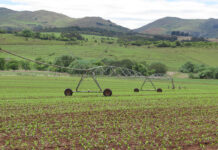
Water management has become one of the most important focus areas for producers, particularly in drought-prone regions. Farmers are increasingly investing in water storage infrastructure, efficient irrigation systems, and technologies that allow for more accurate monitoring of soil moisture and crop water needs.
Stevens says many producers are also investing heavily in precision agriculture technologies to improve efficiency and reduce unnecessary input costs. The use of climate-resilient crop cultivars is also becoming increasingly important as farmers attempt to manage exposure to heat stress, drought, and unpredictable rainfall patterns.
Diversification is another strategy gaining momentum within the sector. By spreading production across multiple crops, livestock systems, or income streams, farmers are attempting to reduce the financial impact of climate-related losses in any single area of the business.
“Producers are also investing in hail nets and irrigation upgrades, while others are adjusting planting calendars to manage exposure,” says Stevens.
In certain horticultural industries, hail netting has become an essential investment rather than an optional expense due to the rising frequency of damaging storms. At the same time, Stevens says crop insurance is increasingly forming part of broader climate resilience strategies.
Rising costs placing pressure on farmers
The financial cost of climate adaptation is also becoming increasingly significant for both farmers and agribusinesses. According to Stevens, producers are already operating in an environment of rising operational costs while simultaneously being required to invest more heavily in infrastructure and technology.
“Farmers are operating under pressure from rising input costs such as energy, fertilisers, insurance, and infrastructure investment including roads and logistics, as well as the need for ongoing technological upgrades,” he says.
These pressures are further intensified by repeated climate-related losses that weaken cash flow and reduce financial flexibility. “Repeated weather-related losses further tighten finances,” he adds.
For many producers, climate adaptation now requires balancing immediate operational demands with long-term investments needed to improve resilience and sustainability.
Stevens adds that insurance remains one of the key financial tools available to farmers facing increasing climate volatility. Crop insurance is one of the key mechanisms because it protects the financial position and enables recovery,” he says.
Without financial protection mechanisms, many producers may struggle to recover from severe weather events, particularly after consecutive seasons of losses.
Food affordability becoming a growing concern
Climate-related disruptions are also expected to have broader implications for food systems, consumer prices, and economic stability in South Africa.
“Climate-related disruptions reduce production, increase input costs, and place strain on distribution,” says Stevens.
These disruptions can affect food supply chains at multiple levels, from production and transport to storage and retail pricing.
“This translates into greater price volatility and increased pressure on food security, particularly for lower-income households,” he explains.
However, Stevens believes the greater long-term concern may not necessarily be food availability itself, but rather affordability.
“We don’t think food security is a major concern, but rather the affordability of food due to factors such as rising unemployment,” he says.
As production costs rise and climate shocks become more frequent, consumers may increasingly feel the impact through higher food prices and greater market instability.
Stevens adds that agriculture’s role within the broader South African economy means climate-related disruptions could have consequences beyond farming communities alone.
“Given agriculture’s role in employment and exports, the broader economic implications are significant,” he says.
Need for stronger partnerships and financial support
Stevens believes strengthening climate resilience within agriculture will require stronger collaboration between government, financial institutions, insurers, and the private sector.
“What is required is improving access to finance and insurance, which enable farmers to recover from weather-related shocks,” he says.
Access to affordable finance remains a major challenge for many producers, particularly smaller-scale farmers who may lack the financial reserves needed to recover after severe climate events. Stevens says public-private partnership models had proven successful internationally and could play an important role in strengthening long-term agricultural sustainability in South Africa.
Improved collaboration between stakeholders could help expand access to climate intelligence tools, insurance products, infrastructure investment, and adaptation technologies across the agriculture sector.