Speaking during a webinar hosted by FairPlay, Izaak Breitenbach, general manager of the South African Poultry Association’s Broiler Organisation, warned that unreliable electricity and water supplies were increasingly affecting poultry production, particularly in rural areas where most operations were situated.
He said South Africa had become one of the world’s most competitive poultry producers, with production costs lower than those of all major competitors except Brazil. However, the country’s infrastructure shortcomings threaten to erode this advantage.
“We are becoming more competitive, but if infrastructure continues to deteriorate, we will lose ground against international producers. This will lead to increased imports, to the detriment of the local industry,” Breitenbach said.
He explained that the financial consequences of service interruptions extended well beyond the duration of an outage.
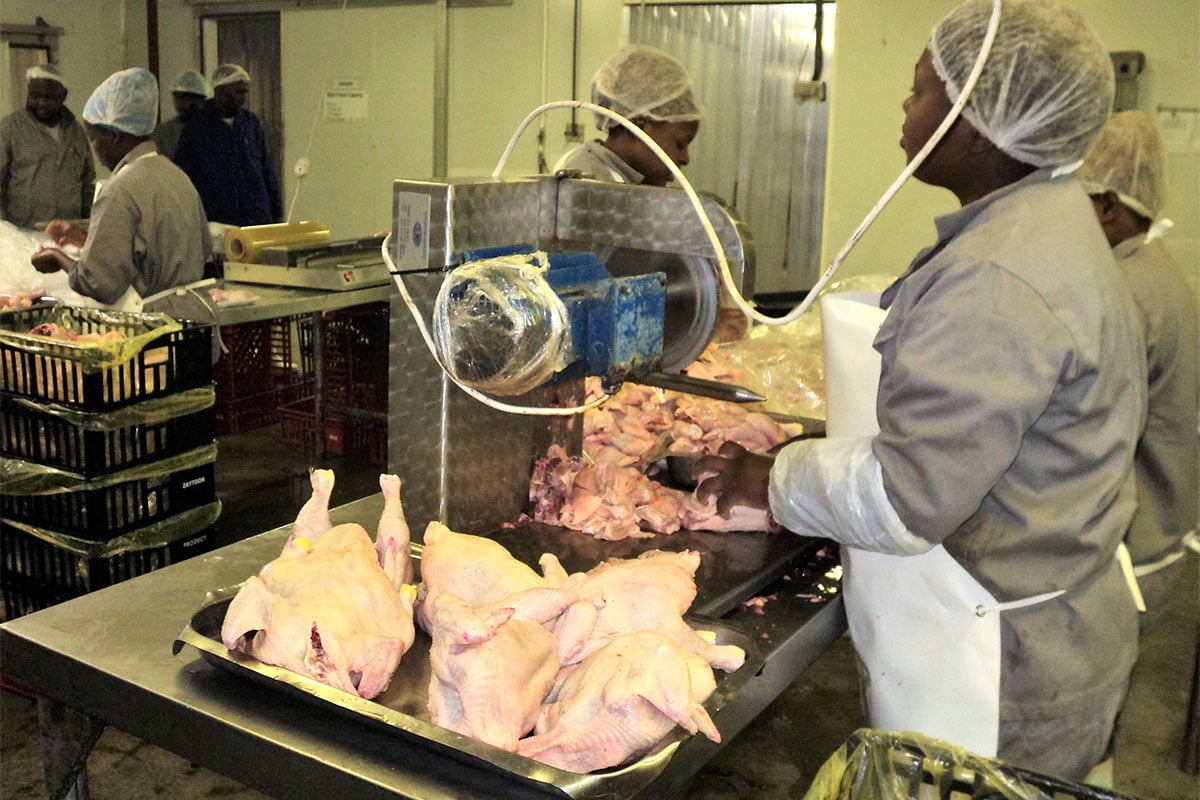
For an abattoir processing one million birds a week, losing access to water or electricity costs approximately R100 000 per hour in production losses. Even a disruption lasting only a few hours could result in an entire day’s lost production because of the time required to restart operations.
Modern poultry houses also depend on automated water supplies and electricity to maintain climate-controlled environments.
Breitenbach said smaller producers were particularly vulnerable, with approximately 800 small-scale farmers accounting for between 5% and 10% of national poultry production.
He identified Lichtenburg in North West and Lekwa Local Municipality in Mpumalanga as areas experiencing significant infrastructure problems, particularly regarding water quality, water availability and electricity supply.
Municipalities critical to industry growth
Francois Baird, founder of FairPlay, said infrastructure had become as important a production input as feed, yet many poultry operations were located in municipalities struggling to deliver basic services.
He highlighted the geographical spread of broiler production, with 24% of farms situated in North West, 20% in Mpumalanga, 17% in the Western Cape and 12% in Gauteng.
Baird called for poultry production corridors to be mapped to identify where infrastructure investment was most urgently required.
Breitenbach also questioned the absence of municipalities as signatories to the Poultry Sector Master Plan, arguing that local government participation was essential to achieving the industry’s objectives.
He said greater collaboration between municipalities and poultry businesses was needed, alongside the appointment of technically competent officials and improved accountability for infrastructure spending.
The consequences of continued deterioration extended beyond poultry production, he warned. The industry supports 110 000 jobs, while increased production would stimulate demand for maize and soya beans and create employment in rural communities.
Elections an opportunity for accountability
Chris Campbell, CEO of Consulting Engineers South Africa, said the approaching local government elections presented an opportunity for communities to demand greater accountability.
He urged voters to assess whether prospective councillors had the competence to ensure effective service delivery and hold municipal administrations accountable.
Campbell also emphasised that residents had a responsibility to pay for municipal services, ensuring that non-payment did not become an excuse for poor performance.
Baird concluded that restoring municipal functionality was essential not only for the poultry industry’s future, but also for the wider economy.