A healthy honeybee colony is a busy, well-organised community, with workers foraging, caring for brood and maintaining the hive. But when something goes wrong, subtle changes in behaviour, brood pattern or bee numbers can provide an early warning.
Recognising these signs can help beekeepers identify potential problems – although in some cases, by the time you see them, it is already too late. Babylonstoren entomologist Arné Stander outlines what to look for when assessing the health of a colony.
Signs of a healthy colony
A healthy honeybee colony should display the following characteristics:
- Steady hive activity: Workers move purposefully in and out of the hive, with many returning carrying pollen.
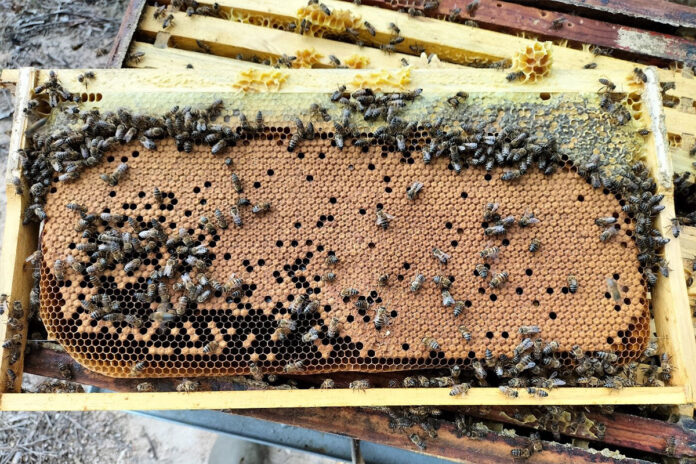
- Strong brood pattern: Eggs, larvae and capped brood form a compact, orderly pattern, indicating a productive queen and healthy colony.
- Plenty of adult bees: Enough worker bees are present to cover and care for the developing brood.
- Adequate food stores: The hive contains sufficient honey and pollen reserves.
- Clean combs: Combs should appear well maintained, with no unusual odours.
- Alert, active bees: Healthy bees are focused on foraging and hive maintenance rather than appearing weak or disorientated.
- Evidence of a functioning queen: The queen does not always need to be seen. Fresh eggs and a neat brood pattern usually confirm that she is present and laying normally.
Warning signs that something is wrong
These symptoms may indicate disease, pests or queen problems and warrant immediate inspection:
- Irregular brood pattern: Scattered brood, dead or discoloured larvae, or sunken and perforated brood cappings.
- No fresh eggs: This may indicate queen loss or a failing queen.
- Multiple eggs in a cell: Often a sign of laying workers after the colony has become queenless.
- Declining bee numbers: A sudden drop in the adult bee population or large numbers of crawling bees.
- Pests: Excessive numbers of varroa mites, hive beetles or signs of wax moth damage.
- Robbing or fighting: Persistent fighting at the hive entrance can indicate robbing by other colonies.
- Dead bees outside the hive: Large numbers may signal pesticide poisoning or disease. By the time you see dead bees, it is already too late, making communication between farmer and beekeeper essential.
- Sudden behavioural changes: Colonies that become unusually aggressive or unexpectedly quiet should be investigated promptly.
See Farmer's Weekly first on Google
Add as Preferred Source
Follow Farmer's Weekly on Google News
Follow on Google News