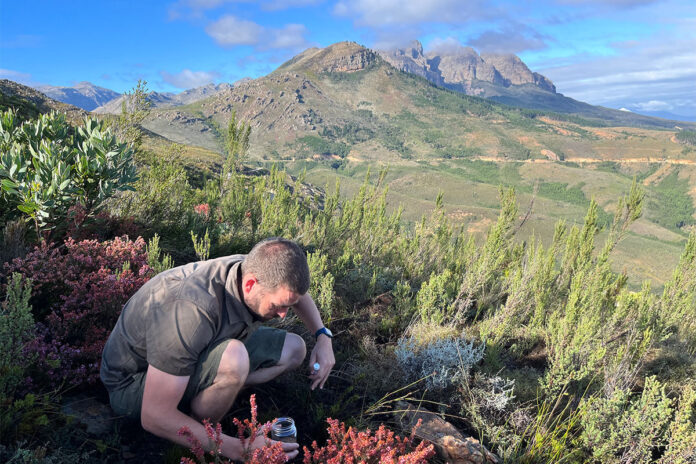
Fungi are an essential part of productive agricultural soils, as they decompose organic matter, cycle nutrients, and maintain the biological balance that crops depend on, says Visagie, recipient of the Oppenheimer Memorial Trust (OMT) 2026 New Frontiers Research Award.
To better understand this largely hidden world, Visagie will use the award’s R7,5 million research grant, spread over five years, to lead a project called Mapping Unseen Fungi Across South Africa (MUFASA). The project will seek to find, culture, describe, name, and genetically map hundreds of novel fungal species, creating a valuable new resource for future research.
The untapped value of fungal diversity
According to a statement by the OMT, the project could unlock new opportunities in medicine, agriculture, environmental sustainability, and climate resilience, while positioning South Africa at the forefront of one of the world’s most exciting and underexplored scientific frontiers.
Visagie says many fungi produce compounds that naturally suppress agricultural pests and diseases. Trichoderma is perhaps the best-known example, with species in this genus widely used as commercial agricultural biocontrol agents around the world.
“Significantly, our culture collection already contains many undescribed Trichoderma species from South Africa. This material represents a direct pipeline for future biocontrol research and development.
“Our collection also includes entomopathogenic fungi, which parasitise insects and can be used to control agricultural insect pests, and here too, much more awaits discovery,” he explains.
“South Africa’s extraordinary fungal biodiversity means we are likely sitting on a vast, largely undiscovered library of species with biocontrol potential. MUFASA builds the foundation that makes those discoveries possible by systematically finding, culturing, and characterising fungal species across South Africa.”
Although these fungal species are thought to number in the millions and play a fundamental role in every aspect of human life, only a fraction of them have been described, and the functions of most remain unknown.
A global fungi hotspot
Visagie explains that South Africa is considered one of the world’s fungal hotspots, supported by its exceptionally rich plant biodiversity, which is partly used to estimate fungal diversity. There are an estimated 2,5 million fungal species worldwide and around 200 000 in South Africa.
However, only about 155 000 species have been described globally. Among these is Cryptococcus, one of the most dangerous fungal pathogens known to humankind, which is believed to have originated in Southern Africa.
“Many fungi form partnerships, known as mycorrhizal associations, with plant roots, which help plants absorb nutrients more efficiently. Beyond this, certain fungi have the ability to solubilise phosphate, making it available to plants in a form they can absorb directly. Penicillium bilaiae is a well-known example, and it is already used commercially as a biofertiliser in some parts of the world.
“South Africa’s undescribed fungal diversity may harbour many more species with this capacity. Identifying them is one of the most practically valuable things MUFASA can do for agriculture,” says Visagie.
“The full benefit of this research will unfold over years and decades, but the foundation we build now – the cultures, the DNA data, the species descriptions – is what makes all of it possible.”
Accelerated biodiversity research
“We’re on the cusp of technological changes that allow biodiversity discovery to be quicker and more effective. If we don’t use this opportunity now, South Africa and Africa will be left behind. It’s our job to do this,” says Visagie.
“It’s the perfect time for South Africa to record its own biodiversity and, in turn, make a huge contribution to international biodiversity knowledge.”
According to OMT Chairperson Rebecca Oppenheimer, Visagie’s work “has the potential to positively impact a dazzling array of matters that impact humanity, from health and cleaner agriculture to environmental sustainability and addressing climate change”.
“South Africa’s unique advantage is that it is home to one of the most biodiverse plant kingdoms in the world. Given this natural endowment, the research that [Visagie] and his colleagues are doing is not simply a nice-to-have; it’s a must-have.
“We’re exceptionally proud to support work like this, which holds enormous promise for a better world and brighter future, and which will place South African academia front and centre on the global stage,” she said in the statement.
For more information, email [email protected].