
“The war in the Middle East influenced exports to that market, both in lower demand and disrupted shipping routes.
“The Middle East usually accounts for about 19% of all of South Africa’s citrus exports. South Africa also experienced extreme weather, specifically flooding in the Western and Eastern Cape. This has influenced export figures,” Ntshabele told Farmer’s Weekly.
His concerns were echoed by Pieter de Jager, CEO of the Fresh Produce Exporters’ Forum, who said that exporters were facing difficult conditions across virtually all major destinations.
“All markets are under pressure. Low demand, competition from countries like Egypt, and high volumes are putting prices under pressure,” he explained.
The combined impact of weaker demand, increased competition, weather disruptions, and geopolitical instability has prompted the Citrus Growers’ Association of Southern Africa (CGA) to revise its export forecast from 209,4 million to 205,2 million 15kg cartons for the 2026 season.
Logistics improving, but pressure remains
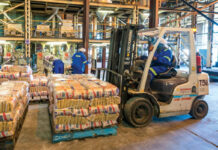
While the industry has welcomed progress at some export facilities, exporters say logistics remains a critical challenge.
“There have been no significant disruptions at the Port of Cape Town this season. We have noted some efficiency issues at the two ports in the Eastern Cape, which have impacted growers, as well as some bottlenecks emerging with the run-up to the middle of the season at Durban [Container Terminal] Pier 2,” Ntshabele said.
He added that slower demand in destination markets was also affecting movement through the supply chain.
“The offtake from the ports to markets is slower than last year, which means fruit is being held up in the ports a little longer,” he explained.
De Jager painted a similar picture from an exporter perspective.
“Ports are under pressure, and the Durban Gateway Terminal [DGT] is currently hampered by a number of issues, including limited empty containers from shipping lines and breakdowns affecting performance. This results in low throughput and a stock build-up,” he said.
Ntshabele highlighted the significance of logistics reform in his latest CGA CEO newsletter, where he cited a Bureau for Food and Agricultural Policy study estimating that inefficient logistics cost the citrus industry around R5,3 billion over the 2024 season.
He welcomed the recent public-private partnership initiative at the DGT, describing it as an important step towards long-term efficiency improvements.
“The CGA believes that expanding similar public-private partnerships in South Africa’s port system is essential for driving the sustained efficiency improvements required over the long term,” he said.
New us tariff adds another challenge
The industry is also assessing the impact of the new US tariff regime that came into effect on 24 July, when that country increased tariffs on certain South African exports from 10% to 12,5%. While oranges remain exempt, mandarins, lemons and grapefruit are among the citrus categories affected.
De Jager noted that the direct impact is largely limited to exporters serving the US market.
“Only Western Cape producers can supply the US,” he said.
The new tariff is expected to place additional pressure on returns from affected citrus exported to the US, although Ntshabele said the impact should be viewed in context.
“While this tariff will indeed have an impact on our growers – who will have to adapt to the tariffs, making their citrus less competitive in the US – it will not be a severe impact, as a significant number of our competitors will also face these 12,5% tariff increases,” he explained.