
Farmer’s Weekly (FW) spoke to Craig Lewis (CL), Pig Improvement Company’s (PIC) commercial director for Northern Europe, about how AI is being applied in pig breeding, and what it can realistically deliver for farmers.
FW: How is AI currently being used in genetic selection programmes, and how does it differ from more traditional breeding and data analysis methods?
CL: AI is being used in breeding programmes in two areas: how data is captured and how that data is handled. There have been major advances in digital observation platforms that allow far more detailed and consistent data to be collected than was possible through human observation alone.
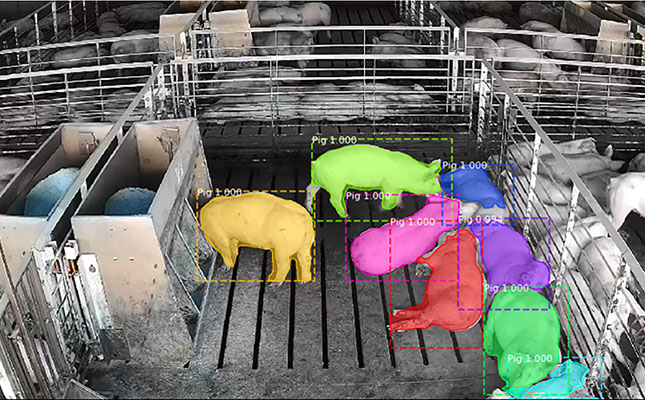
At PIC, for example, instead of humans, we are using AI-enabled cameras to observe the pigs and record the data. Automated data capture allows monitoring to happen around the clock and at a lower cost than relying on human observers.
Over time, this creates a rich dataset that can be layered with genetic information to better understand how animals perform under different conditions, and which traits should be prioritised in selection programmes.
One of the biggest advantages of AI is the removal of subjectivity from scoring. Traits such as leg structure have traditionally been assessed visually by trained staff, using scoring systems that still vary between observers, farms, and regions. This leads to scoring ‘drift’. AI-based image analysis eliminates this variability by applying consistent metrics across all animals and locations.
This consistency improves accuracy and allows selection decisions to be made with greater confidence. Because the data is more precise, breeders can also increase the intensity of selection, which speeds up genetic improvement within the limits set by natural reproduction cycles.
The key difference from traditional breeding lies in the volume and precision of information that can now be matched with genetic data. AI allows breeders to analyse multiple traits simultaneously, link physical performance to underlying genetics, and work backwards from outcomes such as meat quality or longevity to understand which production methods and genetic combinations influenced those results.
This moves selection away from assumptions and subjective scoring towards evidence-based decisions built on large, consistent datasets.
FW: What kinds of data inputs are most important for AI-driven genetic selection, and how is that data collected at scale?
CL: A wide range of data inputs can be used, including carcass traits, leg structure, behaviour, feed efficiency, and health indicators. At PIC, image analysis plays a central role. Cameras and imaging systems continuously collect data in pig pens, while ultrasound imaging measures backfat and loin depth more accurately than manual assessment.
Leg scoring is one of the clearest examples of the benefits of this technology. Leg structure is critical for sow longevity, reproductive performance, and welfare, and leg problems are a major cause of premature culling. When leg scoring was based on human observation, the heritability of leg issues was estimated at around 10%.
By using camera-based image analysis, we can identify structural issues more accurately and deselect affected animals earlier. This has significantly improved the ability to select for stronger leg traits, resulting in longer-lasting animals and measurable improvements in commercial production.
AI-driven ultrasound imaging has also improved selection for optimal backfat and loin depth, further accelerating genetic progress.
FW: How do you ensure AI models do not unintentionally narrow genetic diversity or amplify undesirable traits while optimising productivity?
CL: This risk is not new in animal breeding. Care should always be taken not to place too much emphasis on selecting for a specific trait, because there will be consequences for other traits. What changes with AI is the speed at which outcomes, good or bad, can be achieved. If selection is poorly designed, undesirable results will emerge faster.
However, AI also allows breeders to monitor a much broader range of traits simultaneously. By layering data on health, longevity, behaviour, and welfare alongside productivity traits, breeders can avoid focusing too narrowly on a single outcome.
Breeding for one trait in isolation, such as piglets per sow, inevitably leads to smaller piglets. Balanced breeding objectives remain essential, regardless of the technology used.
FW: What are the main limitations or risks of using AI in livestock genetics at this stage?
CL: The use of AI in the livestock industry is still in its infancy, and there is a need for caution and continual validation. Breeders still need to apply biological logic to the outputs, ensuring that animals selected for productivity remain healthy and functional.
Cost is another consideration. AI-driven programmes require investment in technology and expertise, but this is consistent with increasing specialisation in any industry. The long-term value depends on how effectively the technology is integrated into breeding decisions.
FW: From a producer’s perspective, how soon can on-farm benefits of AI-driven genetic selection be seen, and what gains are most realistic?
CL: Farmers are already seeing benefits, particularly through improved longevity linked to better leg scoring. Healthier animals that remain productive for longer translate directly into cost savings and improved efficiency.
PIC is working to expand camera-based monitoring beyond nucleus herds to commercial farms, including plans to introduce the system in South Africa within the next year. This broader data collection is critical for breeding animals that are robust across different regions and climates.
This will become increasingly important as climate variability intensifies, requiring animals that can perform consistently under changing environmental conditions.
FW: Looking ahead, how do you see AI reshaping genetic improvement in the global livestock industry, and what should commercial producers be paying attention to now?
CL: The biggest shift will be in how data is captured and used at commercial farm level. Data collection will no longer be limited to elite breeding herds, and producers will need to become more comfortable with digital systems and data-driven decision-making. Farmers who work with breeding partners that are actively engaged in this space will be best positioned to benefit from it.
Beyond productivity gains, improved monitoring has the potential to enhance animal welfare, reduce antibiotic use, lower carbon footprints, and ultimately deliver more affordable protein.
AI therefore represents a significant opportunity for producers and consumers, provided it is used thoughtfully and responsibly.
For more information email Craig Lewis at [email protected].