
According to Lourens, who farms with his father, brother, and a close friend, the growth of the enterprise has involved much more than simply increasing animal numbers.
“The most important lesson we have learned is that farming is about understanding the market as much as it is about producing livestock,” says Lourens.
While goat farming is often viewed as a production-focused enterprise, Lourens believes profitability starts with understanding who the customer is, what they want, and when they are prepared to pay for it.
“You can produce the best livestock in the world, but if you do not understand your customer and where the demand is coming from, you’re going to struggle,” he says.
Building the herd
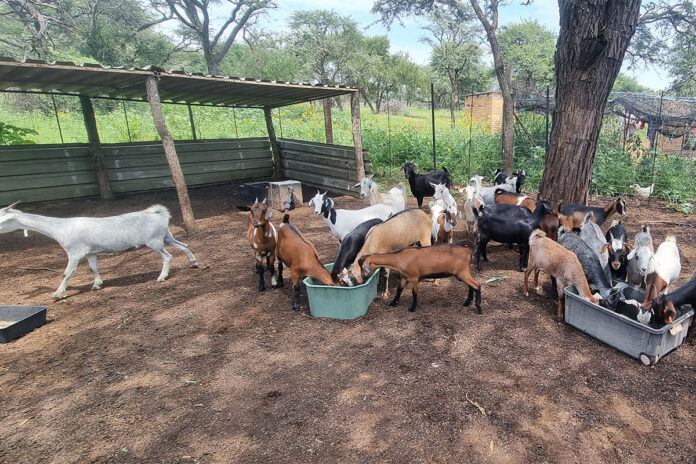
The enterprise was established as an indigenous veld goat operation and has expanded steadily through a combination of strategic purchases, incorporating animals from another struggling project, and, most importantly, natural reproduction.
“Our goat farming business started as a relatively small indigenous veld goat operation, but it has grown significantly in a short period of time. A big part of that growth has come through natural reproduction and better management of the herd rather than simply buying animals,” explains Lourens.
The reproductive performance of the herd has been particularly encouraging.
“We have seen 16 females producing twins. For us, that has been an important indication that the animals are adapting well and that our management system is working.”
However, Lourens stresses that growth in numbers alone is not the objective. The focus is on building a productive indigenous veld goat herd with strong genetics, fertility, growth, and adaptability.
“We are working towards building productive animals rather than simply increasing numbers.”
A key part of the system is rotational grazing, which allows vegetation sufficient recovery time between grazing cycles.
“We like to give areas of veld the recovery time rather than continuously putting pressure on the same grazing areas,” explains Lourens.
Beyond goat production
“The business has developed beyond simply keeping goats. We see the farm as a platform where other emerging farmers can gain practical experience in livestock production, breeding, grazing management, and the business side of farming,” says Lourens.
The long-term aim is to help aspiring producers establish viable livestock enterprises of their own.
A market built on relationships
For Lourens, understanding customer needs has become one of the most important drivers of profitability. The market for indigenous goats is very different from a conventional livestock market.
“There is a strong demand for goats for cultural and traditional purposes, as well as for meat and live animals. Customers often have very specific requirements regarding the type, size, sex, age, and appearance of the animal they want,” says Lourens.
That demand has taught him an important lesson.
“We have learned that supplying this market is not simply about having goats available. You need to understand your customers and build relationships with them,” adds Lourens.
According to him, much of the business revolves around reputation, consistency, and trust.
“A lot of the business comes from knowing what people are looking for, being able to supply animals when they need them, and building a reputation for having good quality animals.,” he says.
Price is important, says Lourens, but relationships often matter more in informal goat markets.
“Customers have very specific requirements, and farmers who understand those needs and build a reputation for reliability are usually the ones who secure repeat business and long-term profitability,” says Lourens.
Demand for goats is strong
The importance of informal markets is reflected across the broader South African goat industry.
According to Rauri Alcock of the Goat Agribusiness Project (GAP), informal and traditional markets dominate the country’s goat sector. GAP is a KwaZulu-Natal-based initiative that works with thousands of smallholder farmers to commercialise indigenous goat production and improve market access.
“We estimate that about 80% of South Africa’s goats are in African hands. Most are kept in relatively small homestead herds under extensive conditions. We estimate there are around six million goats in this environment,” says Alcock.
Importantly, he says, approximately 99% of these animals are traded as live goats for cultural, traditional, and ceremonial purposes. “Speculators move them from rural areas to markets,” he adds.
According to Alcock, formal marketing channels play only a minor role.
“There are no formal markets, apart from breed auctions for goats.”
Alcock’s estimates suggest that around two million goats are sold through informal channels annually, while only a tiny fraction enters formal marketing systems.
“There’s more buyers than sellers,” notes Alcock. That strong demand helps explain why many goat producers continue to find opportunities in informal markets.
Diversifying market opportunities
One of the biggest lessons Lourens has learnt is that relying on a single market can expose farmers to unnecessary risk.
“An important lesson for us has been that you should not depend on one market.”
He sees opportunities across several different segments.
“The goat enterprise has potential across live animal sales, cultural and traditional markets, meat markets, and eventually breeding animals,” Lourens mentions.
He says developing multiple market channels creates flexibility.
“Diversifying these markets gives the farmer more options and reduces dependence on one buyer.”
This is particularly important as the enterprise continues to improve the quality of its herd.
The goal is not only to sell goats into traditional markets, but ultimately to develop a breeding programme capable of producing animals with improved genetics and production characteristics.
Our indigenous veld goats are particularly suited to these markets because they are hardy, adaptable, and able to perform under local conditions,” says Lourens.
Understanding profitability
According to Lourens, profitability is determined by a combination of market dynamics, production efficiency and cost control.
“Price is influenced by much more than simply the weight of the goat.”
Different buyers are often looking for different things.
“The customer’s purpose plays a major role. Breed or type, age, sex, size, condition, appearance, health, and the time of year can all influence what a buyer is prepared to pay,” says Lourens.
For breeding stock, genetics become increasingly important.
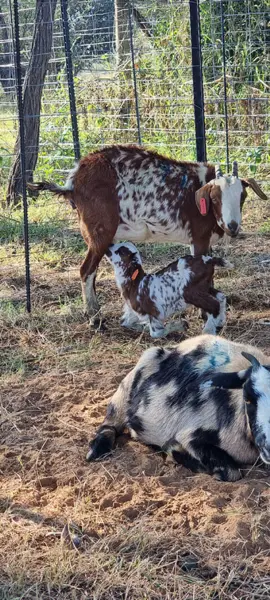
“A good breeding animal has a different value from an animal being sold simply for slaughter or a traditional event.”
This is one of the reasons the farm is increasingly focusing on selection and breeding rather than merely increasing animal numbers.
“We are putting more emphasis on improving the quality of the herd rather than just growing numbers,” says Lourens.
At the same time, controlling production costs remains critical.
“Profitability also comes down to controlling costs. Feed, animal health, labour, transport, infrastructure, fencing, and losses are all inputs that affect the bottom line, he says.
Indigenous veld goats offer some advantages because of their adaptability and ability to utilise natural grazing resources effectively, but Lourens is quick to point out that this does not make them a cost-free enterprise.
“Good grazing management is particularly important.”
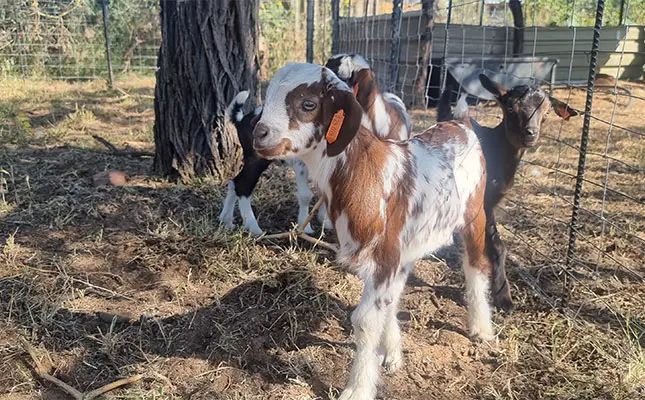
He believes every additional healthy kid produced from the existing breeding herd contributes significantly to future growth and profitability.
Indigenous veld goats offer some advantages because of their adaptability and ability to utilise natural grazing resources effectively, but Lourens is quick to point out that this does not make them a cost-free enterprise.
“Good grazing management is particularly important.”
He believes every additional healthy kid produced from the existing breeding herd contributes significantly to future growth and profitability.
Managing growth
Building a successful goat enterprise has not been without challenges. One of the biggest obstacles has been ensuring that management systems keep pace with herd growth.
“Rapid growth can create problems if infrastructure, fencing, handling facilities, grazing management, and record-keeping do not grow with the herd,” says Lourens.
Like many emerging livestock enterprises, access to capital has also been a constraint. “You cannot always build everything you need or buy all the animals and equipment you would like to have from the beginning.”
As a result, the farm’s expansion has been approached carefully. According to Lourens, they had to grow progressively and make decisions based on what would have the greatest impact on the enterprise.
Market access has presented another learning curve.
“Producing an animal is only half of the business,” says Lourens.
He says farmers also need a clear understanding of who their buyers are, what they want, and what they are willing to pay.
Lessons for other farmers
If there is one lesson Lourens wants other producers to take away from his experience, it is to know your market before you increase your production.
He believes many farmers make the mistake of focusing exclusively on production before understanding demand.
“A lot of farmers concentrate on producing as many animals as possible and only afterwards ask who is going to buy them. It should be the other way around,” Lourens believes.
He also emphasises the importance of selecting productive animals, maintaining records, and managing businesses professionally. “Don’t confuse having many animals with having a profitable business.”
Perhaps most importantly, he believes informal markets reward trust and reliability. “Informal and traditional markets are relationship-driven markets. Reputation matters.
“If customers know that you have healthy, well-managed animals and that you will deliver what you promise, they come back.”
If a family comes back to buy more goats, that repeat business is one of the most valuable assets any farmer can build,” he emphasises.
“The most important lesson for me is that farming must be approached as a business. You need to produce something that the market wants, at a cost that allows you to make a profit, while continuously improving the quality and productivity of the enterprise,” he adds.