
As sheep producers face mounting challenges such as climate variability, predation, and fluctuating grazing conditions, the debate around intensive versus extensive lambing systems continues to shape management decisions on farms across South Africa.
According to Erasmus, the key difference between the two systems lies in the level of management and control farmers have over the lambing process.
Erasmus explains that intensive lambing systems rely on specialised infrastructure and scientifically formulated nutrition programmes to optimise both ewe and lamb performance.
“Intensive lambing systems use lambing pens and scientifically formulated feed to ensure that the lambing process and ewe recovery can be closely monitored,” he says.
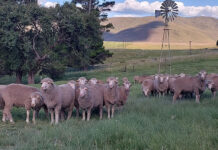
By contrast, extensive lambing systems depend largely on the natural mothering ability of the ewe and the farmer’s selection of suitable grazing areas.
“Extensive lambing systems use the natural abilities of a ewe and the quality of the selected grazing areas to complete a low-cost lambing process,” he says.
Meeting modern production demands
Erasmus adds that modern sheep production places greater demands on animals than in previous generations, as is the case for every generation, making nutrition management increasingly important.
“The physiological stage of production that a ewe is in is absolutely crucial. At every stage, ewes have different nutritional requirements, and farmers need to meet those needs,” he says.
While natural grazing can often provide much of the required nutrition, Erasmus says today’s sheep are expected to produce significantly more than their predecessors.
“We are producing more lambs than ewes did a hundred years ago, and we are producing a different wool. This is not a completely natural system,” he says.
He explains that intensive systems aim to provide animals with the precise nutrients needed at specific production stages, helping them achieve their genetic potential.
“If we want to produce more lambs and more wool, we need to ensure that the ewe is properly looked after by providing the nutrients she requires. In an intensive lambing system, you use modern knowledge to make sure your production reaches the level that the genetics of the animal allows,” says Erasmus.
He adds that external factors such as drought, heat stress, predation, and nutritional shortages can significantly limit production performance.
“If you allow those factors to influence production, you never get to your animal’s genetic potential. Farmers invest heavily in breeding and selecting quality genetics, so it makes sense to create an environment where those genetics can perform,” he says.
Designed for survival and efficiency
On Erasmus’s own farm, the intensive lambing system has been designed around two key objectives: labour efficiency and high lamb survival rates.
The farm is situated approximately 1 560m above sea level, where harsh weather conditions frequently threaten lambing success.
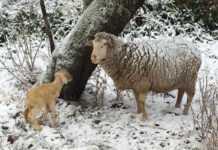
“It gets very cold in our area, and we often experience snow. We also get severe thunderstorms with hail and periods of prolonged drought where everything becomes dust,” he says.
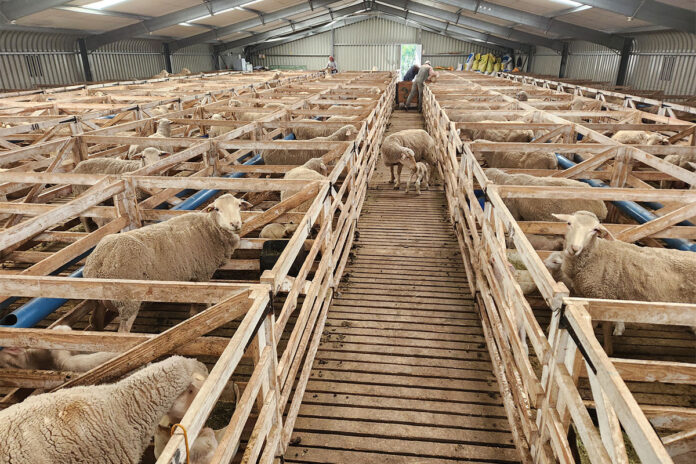
To minimise these environmental risks, all ewes lamb indoors in a purpose-built facility.
“To take those external factors out of the equation, we developed a system where all animals lamb inside under a roof, with hygiene and biosecurity at the forefront,” says Erasmus.
The facility uses an elevated slatted-floor design, allowing manure, urine, and other waste to fall through to ground level, where it is collected and composted.
“This system helps maintain a cleaner environment for the animals. Even during summer, when flies, mosquitoes, and midges can become disease vectors, they are largely absent from the lambing facility,” he says.
Balancing costs and benefits
While intensive lambing systems require significant investment in infrastructure, nutrition, and management, Erasmus believes they can offer substantial benefits in challenging production environments.
By reducing exposure to adverse weather, disease pressure, and predation, farmers can improve lamb survival rates and make better use of superior genetics. However, he says that there is no one-size-fits-all solution.
“The right system depends on the environment, available resources, and the goals of the farming enterprise. Both systems have a place in the industry, but farmers need to understand what they are trying to achieve and then build a system that supports those objectives,” says Erasmus.
For producers operating in high-risk environments, intensive lambing may provide an effective strategy for protecting valuable breeding stock and improving overall flock productivity.
Data-driven management
Beyond improving lamb survival, Erasmus says intensive lambing systems provide farmers with an opportunity to gather accurate production data that can be used to improve flock performance over time.
“The lambing period allows us to do proper data capture. You can link progeny with the dams and sires at a very high level of accuracy and very easily,” he says.
Because animals are housed in a controlled environment during lambing, farmers can identify ewes and lambs electronically without the stress associated with handling animals in extensive grazing systems.
“With an electronic scanner, you scan the ewe, apply the new tag to the lamb, link the two, record weights, and note any milk production issues, etc. It allows you to make sure you have data available to analyse, where further improvements can be made,” says Erasmus.
Accurate record-keeping is becoming increasingly important as the livestock industry adopts greater traceability requirements and technology-driven management systems. According to Erasmus, intensive lambing systems make it easier for producers to collect the information needed to make informed breeding and management decisions.
Lower costs favour extensive systems
Erasmus says intensive systems offer significant production advantages; he emphasises that extensive lambing systems also have important benefits, particularly when it comes to production costs.
“The major advantage of extensive lambing systems is that your cost of production is lower, and that’s significant,” he says.
With global market volatility frequently affecting feed, fuel, and other agricultural inputs, extensive systems can provide producers with greater flexibility.
“When external factors that might be a world away suddenly push your input costs up by 20%, an intensive system has to absorb those costs. In an extensive system, the cost of production is much lower, so the impact is not as severe,” says Erasmus.
He cautions farmers against overlooking the importance of controlling production costs. “That is massive. You cannot lose sight of it. The moment you do, you’re going to be in trouble,” he says.
Survival rates depend on management
Erasmus says that intensive lambing systems generally achieve higher lamb survival rates, provided the infrastructure is well designed and management practices are correctly implemented.
“In an intensive system, when everything works well, everything works well. But if something doesn’t work, then the consequences can be significant,” he says.
Potential risks include problems with water supply systems, poor feed adaptation, and disease outbreaks within confined facilities.
“If you have issues with water reticulation, feed adaptation, or disease in an intensive environment, those things can cause major problems. In an extensive system, those risks are often less concentrated,” he says.
Erasmus acknowledges that establishing an intensive lambing system involves a learning curve.

“At this stage, we understand what we’re doing, but we definitely paid school fees along the way, especially with feed adaptation,” he says.
He explains that sheep have highly sensitive digestive systems and require time to adjust to dietary changes.
“The stomach of a sheep is extremely sensitive, and it takes time to adapt. There are shortcuts that people try, and we’ve tried some of them too, but there’s a reason a shortcut isn’t the main road,” says Erasmus.
Higher weaning percentages
The higher lamb survival rates achieved through intensive management generally translate into improved weaning percentages.
“Because you have a higher survival rate in an intensive lambing system that should carry through to weaning,” says Erasmus.
He illustrates the difference using a simple example.
“If you have 100 ewes and produce 100 lambs in an extensive system and lose 10%, you’re left with a 90% weaning percentage. In an intensive system, if those same 100 ewes produce 150 lambs and you lose 10%, you’re still left with 135 lambs,” he says.
“Even if conditions after lambing are exactly the same, because you start at a higher level, you should end up with a higher weaning percentage.
Erasmus says the choice between intensive and extensive lambing systems ultimately depends on a farm’s environment, resources and management objectives. However, regardless of the system selected, he says careful planning, good management, and a clear understanding of production goals remain the foundation of successful sheep farming.
Different health risks
Erasmus explains that each system carries its own set of health challenges. For all producers, predation remains a major concern.
He adds that lambing complications often go unnoticed in extensive systems because animals are spread over large areas.
“When a lamb is not positioned correctly, a prolapse, or a lamb that cannot suckle and needs assistance in an extensive area, being there in time is not always possible,” he says.
Night-time lambing further complicates monitoring.
“You can’t continuously move through animals at night because you disturb them and potentially separate ewes from their lambs. Physically, you cannot be there all the time,” he says.
Weather-related feed shortages also pose risks.
“Insufficient energy availability is a problem, especially during spring lambing. It doesn’t always rain on time, and a cold spell can delay pasture growth by weeks,” he says.
Climate shocks can amplify those challenges. “Animals due to lamb continue to lamb during a severe weather event. There is no delaying this natural process. That decision was made five months earlier at mating. Minimising the energy deficit and meeting maintenance requirements is crucial. We reach -15°C at times, and at times like those, your management needs to be on point.
Genetics become more precise
One of the biggest advantages of intensive lambing systems, according to Erasmus, is their ability to improve genetic selection through more accurate data collection.
“In my view, intensive lambing systems lend themselves more to precise future genetic development due to the ease of accurate data collection and the elimination of inconsistent environmental factors,” he says.
He explains that environmental events can often distort breeding decisions in extensive systems.
“If a ewe loses two lambs during a storm, your records may simply show that she failed to wean lambs. Without additional information, you might incorrectly classify her as a poor mother,” he says.
Similarly, factors such as long distances to water, extreme heat, or predator pressure can influence lamb survival despite the ewe possessing excellent maternal traits.
“If you eliminate those factors, over time the way you view your animals and select genetics becomes much more accurate,” says Erasmus.
Breed choice depends on the farm
When it comes to breed selection, Erasmus says there is no universal answer.
“All breeds have a place somewhere on the spectrum from pure extensive to pure intensive. It’s a farm-specific, market-related, and environmental decision,” he says.
He adds that highly fertile breeds may benefit more from intensive management because every additional lamb represents additional income.
“The more fertile the breed, the more it pays to make sure every lamb survives. That’s simply mathematics,” he says.
At the same time, producers often balance multiple income streams.
“I farm Merinos not only for lamb production but also for wool. A more fertile breed may produce more lambs, but I also receive a wool income from my Merinos,” says Erasmus.
Higher costs but faster returns
Although intensive lambing systems require significantly higher capital investment, Erasmus believes they can deliver strong returns when properly managed.
“Cost of production is much higher for intensive lambing systems. You have to build infrastructure and provide feed. There’s no getting away from that,” he says.
Erasmus says try not to assign a standard cost to building an intensive system because every farm has different infrastructure, livestock numbers, and management requirements.
“What I can tell you is that when we moved from semi-intensive lambing on pasture to an indoor elevated shed system, my calculations showed a payback period of seven years. In reality, it happened in four,” he says.
The faster-than-expected return highlighted benefits beyond the direct increase in lamb numbers. “We found moving from a more extensive system to a more intensive system was more profitable than we initially anticipated.
Climate resilience and sustainability
Looking ahead, Erasmus believes farmers will increasingly need to reduce their exposure to climate-related risks.
“With a changeable climate, relying on management rather than favourable farming conditions should be a consideration,” he says.
He explains that extensive systems are often heavily dependent on weather conditions, making production outcomes less predictable.
“Every time conditions are unfavourable, you take a knock. Sometimes it’s 5%, sometimes it’s 40%. If those conditions become more frequent, farmers need to think about how to eliminate some of that risk.”
At the same time, sustainability remains a key priority.
“Our impact on the land should be a major consideration before making any long-term decisions. For ecosystems to function properly, we need animal interaction with the land, but it needs to be planned and managed in a way that creates a positive impact,” he says.
Rather than viewing intensive and extensive lambing as competing systems, Erasmus says many producers are increasingly exploring hybrid approaches that combine the strengths of both.
“The reality is that lambing systems exist on a spectrum. Nothing is completely black and white. Farmers need to find the point on that spectrum that works for their environment, resources, and long-term goals,” says Erasmus.