
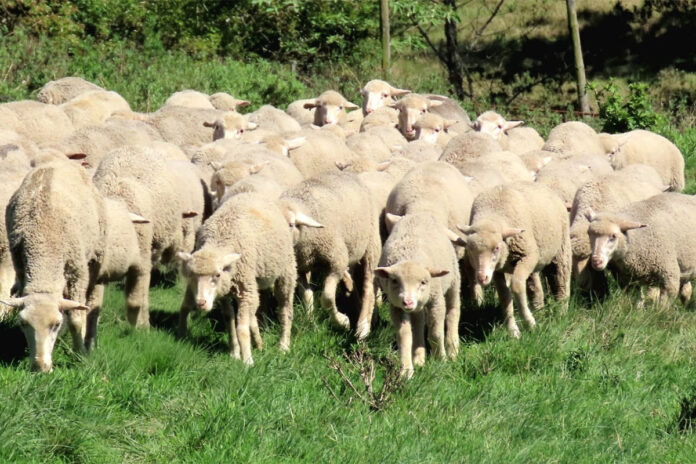
Southgate Dohne Merino Stud is situated 14km from Dohne, near Stutterheim in the Eastern Cape, where the Dohne Merino breed was developed. The stud operates on a limited budget in challenging sheep-farming conditions.
Alfred ‘Alf’ Cawthorn, later joined by his son Gerald and daughter-in-law Erna, initially farmed Kaffrarian Poll Merinos before incorporating Walrich Mutton Merino genetics into his breeding programme.
The family registered Southgate Stud, named after one of their farms, in 1980. Following Gerald’s death, Neil and Morgan Potter and their family acquired the stud from Erna in 2024, with the aim of continuing its breeding legacy.
The Potters have many years of experience farming Merino and Dohne Merino sheep, as well as Bonsmara cattle, with an emphasis on breeds suited to local environmental conditions.
Guided by their motto, ‘Bred for survival here – ready to dominate anywhere’, the Potters focus on meeting the performance recording and breeding standards of the Dohne Merino Breed Society of South Africa.
They regard their breeding programme as contributing not only to their own flock, but also to the productivity of their clients’ flocks and the continued development of the breed.
Southgate Stud reportedly won the Logix Small-Stock Flock of the Year Award in 2025. The Potters are working towards a lambing rate of 150%, which would enable them to expand their flock and apply stricter selection criteria to their breeding animals.

Southgate operates on a limited budget after the Potters lost access to much of their grazing land due to stock theft and other crime-related economic pressures.
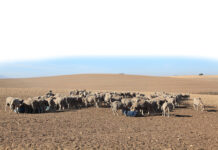
The stud is situated at a high altitude, where sheep are exposed to challenging weather conditions, including frequent mist and wet conditions. These conditions test the hardiness and adaptability for which the Dohne Merino breed was developed.
According to the Potters, tests conducted on their veld grass showed a crude protein content of just 2% in midsummer. Despite the poor nutritional quality of the grazing, they aim to breed hardy sheep that can perform with minimal supplementary feeding.
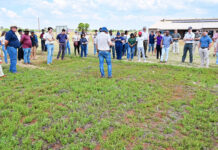
During winter, the Potters supplement grazing with planted cereal crops to meet the flock’s nutritional requirements while limiting their reliance on purchased commercial feed.
Their breeding objectives include maintaining fine wool, good clean fleece weights and desirable body weights, while selecting animals that can perform under local environmental conditions.
The Potters also draw on their experience of sheep farming in the area and their understanding of clients’ production requirements when making breeding decisions.
Accurate performance recording and information sharing are central to their approach, helping prospective buyers assess the suitability of Southgate rams for their own flocks.
The stud aims to produce productive, hardy Dohne Merinos that combine wool quality, growth and reproductive performance with adaptability to challenging farming conditions.
For more information, Contact Morgan 071 939 0784 or Neil 083 599 4794