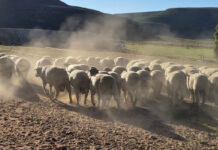

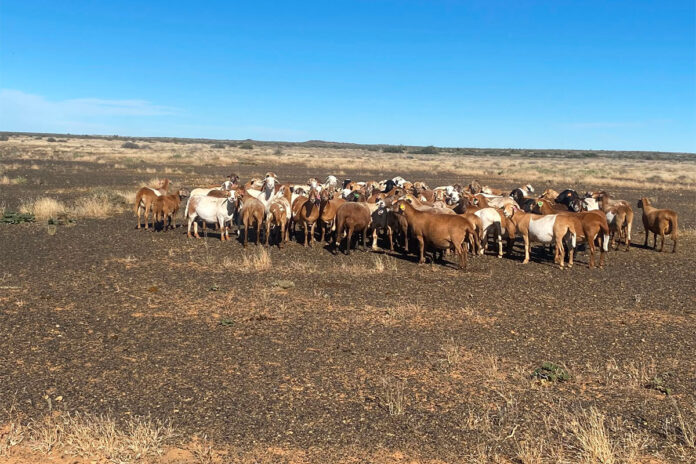
The road between Kenhardt and Brandvlei cuts through Bushmanland region in the Northern Cape, one of South Africa’s toughest sheep-producing regions. Rainfall is low, grazing is sparse and predators remain a constant challenge. It is an unforgiving landscape where every breeding decision is tested by nature rather than management.
For Wessel Fourie, whose family farms about 50km outside Kenhardt in the Northern Cape, the challenging environment is the ultimate measure of genetic merit.
“If a sheep cannot perform here, it probably won’t perform anywhere else,” says Fourie.
That philosophy guides every decision at the Nu Vino Meatmaster stud. Rather than breeding animals that excel only under ideal conditions, the Fouries focus on sheep that remain productive with limited inputs and the veld determining success.
Although Nu Vino is still a relatively young stud with about 350 breeding ewes, it has established a clear breeding philosophy by combining practical stockmanship with objective performance recording and disciplined selection. It is also a true family enterprise, with Wessel’s wife overseeing the administration and studbook recording required to maintain the registered stud.
Choosing a breed for the environment
The Fouries did not choose Meatmasters because the breed was fashionable but they considered cost-effectiveness and adaptability.
Wilhelm Fourie, Wessel’s father, previously farmed with Mutton Merinos in the Overberg, but when the father and his son expanded their sheep enterprise into the Northern Cape, they wanted animals capable of producing consistently without intensive management.
“We were looking for low-maintenance sheep that could still produce a good yield,” says Fourie.
The rapid development of the Meatmaster breed also appealed to them.
“It is a fast-growing industry that we wanted to be part of.”

Today, the family farms exclusively with Meatmasters on two contrasting properties. Their main enterprise comprises 13 000ha of extensive veld outside Kenhardt, while a second property near Boschkop, east of Pretoria, consists of 21ha of planted pasture.
Running the same genetics under these vastly different production systems has become one of the family’s greatest learning opportunities.
“This gives us the opportunity to test the Meatmaster in different conditions.”
The experience has confirmed that sheep selected under extensive conditions adapt readily to more intensive systems, while the reverse is not always true. For Fourie, that reinforces the importance of breeding functional sheep rather than selecting for appearance or performance under ideal conditions.
A breed developed for commercial farming
The Fouries’ breeding objectives closely reflect the philosophy on which the Meatmaster breed was established.
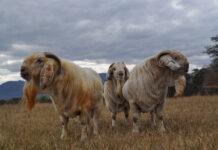
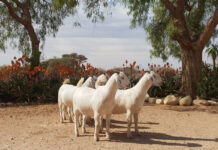
Developed in South Africa as a composite breed, the Meatmaster combines fertility, adaptability, and efficient meat production in low-input systems. Instead of selecting sheep that perform only under favourable conditions, breeders sought to develop animals capable of remaining productive on natural veld with minimal intervention.
Performance recording is compulsory for registered Meatmaster studs, ensuring breeding decisions are based on measured performance rather than appearance alone. The breed has become recognised for its fertility, strong maternal instinct, efficient feed utilisation, sound feet and legs, good walking ability, and strong flocking instinct.
Lambs typically reach slaughter weight between four and five months of age, while breeders are encouraged to select animals suited to their own production environments instead of breeding towards a single ideal type.
Fourie believes those qualities explain the breed’s growing popularity.
“It offers commercial farmers exactly what they need which is adaptability, fertility, efficiency, and profitability under a wide range of production conditions.”
He believes the breed has fulfilled the vision of its founders.
“The Meatmaster has proven itself as a productive and resilient breed that performs exceptionally well in diverse South African environments.”
Breeding for longevity
At Nu Vino, selection is never based on a single characteristic.
Instead, Fourie assesses each sheep as a complete package, balancing fertility, structural correctness, muscling, adaptability, and breed character before making breeding decisions.
“We evaluate the complete animal,” he says.
When selecting future stud rams and replacement ewes, he considers conformation, temperament, fertility, and the consistency of the bloodlines behind every animal. Performance data informs those decisions, but never replaces practical observation.
Structural soundness is essential because sheep in the Northern Cape walk long distances in search of grazing. Animals with weak feet, poor legs or structural defects rarely remain productive over the long term.
Growth and muscling are equally important, but not if they compromise functionality.
“Exceptional growth has little value if an animal cannot thrive under commercial farming conditions. A balanced sheep is always more profitable over the long term.”
For Fourie, profitable sheep are those that continue to perform without requiring increased management inputs to compensate for genetic weaknesses.
Fertility drives profitability
While structural soundness and adaptability are fundamental, fertility remains the cornerstone of the Nu Vino breeding programme.
Every ewe that conceives, lambs successfully, and rears a healthy lamb contributes directly to the profitability of the enterprise.
“Our goal is consistently high conception, lambing, and weaning percentages while ensuring healthy ewes and strong lamb survival,” he says.
Achieving those results depends on both genetics and management. Good nutrition during critical production stages, effective flock health management, and close supervision during lambing all contribute to reproductive success.
The objective is straightforward: improve reproductive performance while keeping unnecessary production costs under control.
“Those are also the characteristics commercial producers value most. Hardiness, fertility, easy lambing, strong mothering ability and low maintenance requirements remain among the breed’s greatest strengths, while fast-growing lambs improve efficiency and shorten the time to market,” he says.
“We focus on improving fertility, reducing unnecessary input costs, and continually improving the genetic quality of our flock.”
Two farms, two sets of challenges
Although farms contribute to the breeding programme, they expose sheep to very different production challenges and risks.
In Kenhardt, predators remain the biggest challenge.
“The planning around predators is probably our biggest challenge,” says Fourie.
Keeping lambing seasons short has become an important management tool. A compact lambing period simplifies supervision and reduces the length of time vulnerable lambs are exposed to predators.
“Our aim is to keep lambing seasons as short as possible.”
On the Boschkop property, the focus shifts from predators to internal parasites.
“To counter this, we select for parasite-resistant lines as far as possible.”
Testing the same bloodlines under these contrasting conditions provides valuable insight into which genetics consistently perform across different production environments.
Measuring what matters
Appearance can be misleading. Nutrition, management, and seasonal conditions all influence how an animal looks at a particular point in time, making visual appraisal alone an unreliable guide to breeding value.
For Fourie, successful selection combines practical stockmanship with objective measurement.
“Performance data is an important tool, but it complements rather than replaces visual appraisal.”
Performance recording enables breeders to identify animals accurately, maintain complete pedigree records, monitor growth, and evaluate economically important traits before making breeding decisions. The aim is to distinguish inherited performance from environmental influences, giving breeders greater confidence that desirable characteristics will be passed on to the next generation.
Even so, Fourie believes figures should never replace experience.
“We still have to understand how sheep perform in the real world,” he says.
The next step, he believes, is genomic evaluation.
By combining DNA information with pedigree and production records, genomic evaluation improves the accuracy of breeding values, particularly in young animals and for traits such as fertility that are difficult to assess early in life. Rather than replacing conventional selection methods, it enables breeders to make better-informed decisions sooner.
“Technology should support better decision-making through improved record-keeping, performance recording, and genetic evaluation, while practical stockmanship remains essential.”
For Fourie, technology is most valuable when it strengthens, rather than replaces, the judgement developed through years of working with livestock.
Progress takes patience
Livestock breeding is a long-term investment and good genetics require patience.
Fourie believes meaningful progress comes from making consistent selection decisions year after year instead of chasing fashionable traits or short-term gains.
“Consistent selection over many years produces lasting improvement far better than chasing short-term results.”
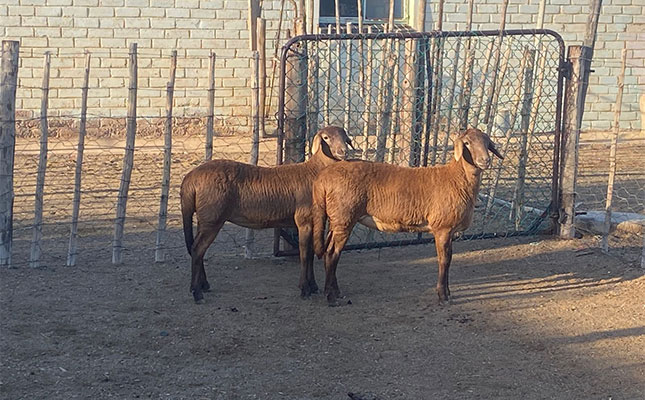
That disciplined approach has gradually produced a more uniform flock with stronger maternal traits, improved breed character and greater consistency throughout the stud. Each generation builds on the previous one, steadily strengthening the qualities the Fouries regard as economically important.
Preparing for the future
Climate variability is placing increasing pressure on livestock producers to improve efficiency while reducing production costs.
For Fourie, that reinforces the importance of breeding sheep that are naturally suited to their environment rather than relying on higher management inputs to maintain production.
“We focus on breeding resilient animals, managing grazing responsibly and selecting sheep that perform well under natural conditions,” he says.
He expects technologies such as genomic evaluation and precision livestock management to become increasingly important but believes they will remain tools that support sound breeding principles rather than replace them.
“The Meatmaster is well suited to uncertain climates because it combines resilience, fertility, and efficient production,” he says.
A breed coming of age
Fourie believes the growing popularity of the Meatmaster reflects changing priorities among livestock producers.
With rising input costs and increasing climate uncertainty, many farmers are placing greater emphasis on efficiency, fertility, and functionality than on appearance alone.
He has also noticed growing interest from younger producers entering the industry.
“They recognise the breed’s commercial value because it offers lower input costs, adaptability, and excellent production potential.”
According to Fourie, the breed has matured considerably over the past decade. Improvements in breed standards, compulsory performance recording, and more rigorous selection have resulted in greater consistency while maintaining the hardiness that originally attracted many producers.
Some critics have argued that selecting for resilience compromises carcass quality, but Fourie disagrees.
“Modern Meatmasters demonstrate excellent muscling, conformation, and commercial value while maintaining their adaptability.”
He believes the breed has shown that productivity and resilience are complementary rather than competing traits.
Learning from experience
When asked what advice he would offer aspiring breeders, Fourie does not point to a particular bloodline or management system.
Instead, he encourages newcomers to learn from experienced producers while developing a breeding programme suited to their own farming conditions.
“Use the knowledge of others and walk a path with experts and selectors in the industry, but the most important thing is to find what works for you.”
He also believes one of the Meatmaster breed’s greatest strengths is the willingness of breeders to share knowledge.
“The Meatmaster industry is a helpful community that supports one another.”
Building for the future
Although Nu Vino remains a relatively young stud, Fourie believes its direction is clear.
“We are proud of developing a consistent flock that reflects our breeding goals and produces sheep that add value to commercial farming operations.”
For him, success is measured not by achievements in the show ring but by how well his sheep perform once they leave the farm.
Every mating occasion is another opportunity to strengthen the flock. Every generation provides another chance to improve fertility, structural soundness, and productivity without sacrificing the hardiness required under extensive conditions.
Ultimately, Fourie believes good breeding is about producing sheep that earn their keep where it matters most – on commercial farms, under practical farming conditions.
Back on the veld outside Kenhardt, where rainfall remains uncertain and predators are part of everyday farming, those principles are put to the test season after season. It is there, rather than in ideal conditions, that the value of careful selection is ultimately measured.