
Latest articles
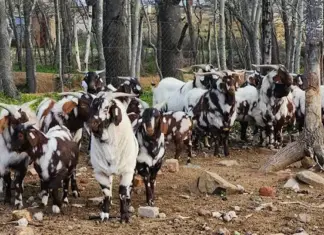
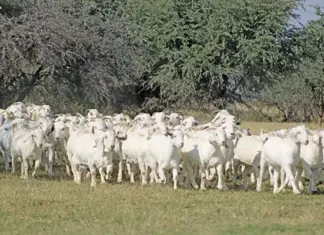
Cape Lob Ears flourish under exacting conditions in the Northern Cape’s Sneeuberg
Ronel Retief, a Cape Lob Ear indigenous veld goat stud breeder, runs her top-performing Klawervlei flock high in the Sneeuberg mountains near Richmond. The flock flourishes under extreme conditions, with winters marked by extreme cold, snow, and sleet.
Maize Valley Savanna Goat Stud rises to record-breaking success
The award-winning, top-performing Maize Valley Savanna Goat Stud, run by Andrew Roberts and Ju-mari Pretorius, came about by accident due to broken communications and poor Internet connectivity, writes Annelie Coleman.
Boer goat farming: a simple recipe for prosperity
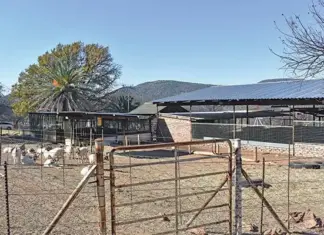
Nestled in the heart of the Vredefort Dome, surrounded by the Dome Bergland mountain range, you will find Marius Smit and Heinrich Hamman, co-owners of the Aegagrus Boer Goat Stud.

Enviable Dormer traits: exceptional growth rates and early maturity
The Dormer is one of South Africa’s most prolific sheep breeds and exhibits many highly profitable traits. Over the years, selective breeding of the Dormer has led to the development of a medium-framed sheep that produces high-quality meat and wool.
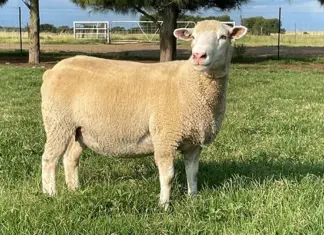
Dormer breeders’ society is dedicated to improving the breed
Despite the Dormer’s rapid growth rates and excellent carcass quality, the Dormer Sheep Breeders’ Society of South Africa is actively working to further improve the breed.
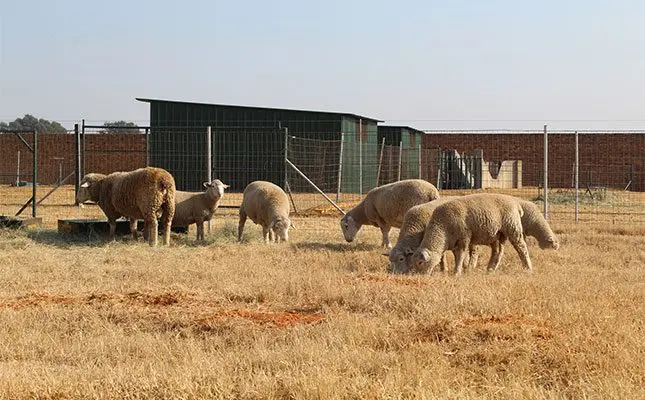
Why sheep farmers should consider the Dormer for crossbreeding
The Dormer’s ability to pass on its economic traits to its offspring makes it the ideal breed for crossbreeding programmes. The Dormer has many exceptional traits, say Liezel Grobler, secretary of the Dormer Sheep Breeders’ Society of South Africa, and Marius Eksteen, head of the society’s marketing portfolio.
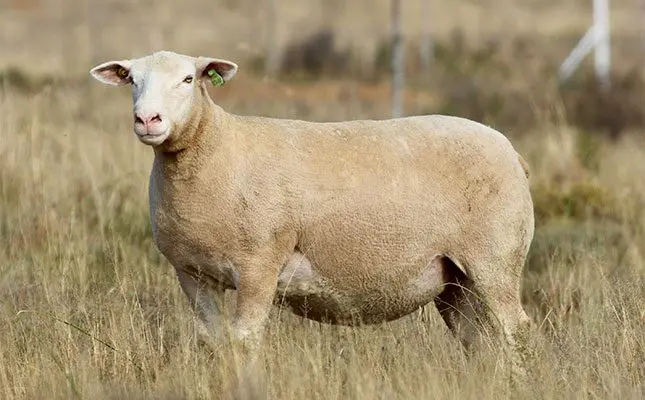
Development of the Dormer, a purely South African breed
The Dormer is a truly South African sheep, purpose bred to perform locally and compete internationally. Sabrina Dean spoke to Liezel Grobler, secretary of the Dormer Breeders’ Society of South Africa, and Marius Eksteen, head of the society’s marketing portfolio.
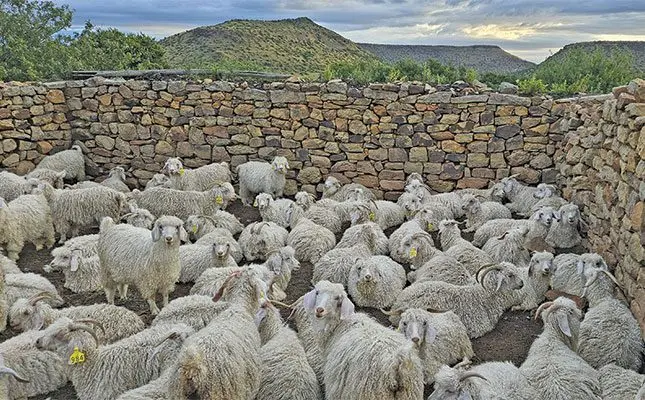
Mohair wins: practical tips from an Eastern Cape emerging farmer
Dintle Maphala has been farming Angora goats for the past nine years. Her hands-on approach, from breeding and grazing to mohair handling and marketing, offers a practical roadmap that emerging producers can adapt to improve their own production outcomes. Octavia Avesca Spandiel reports.
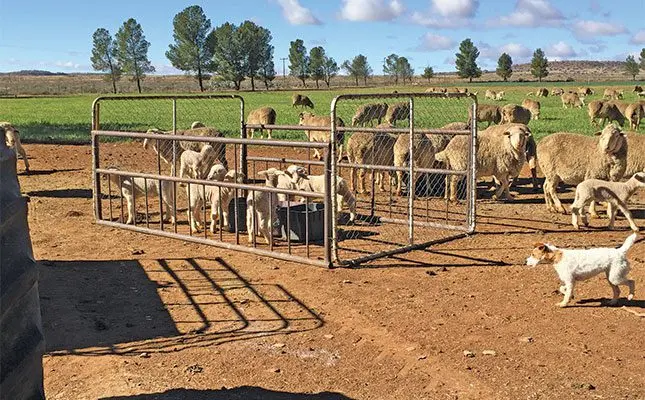
Building on a family wool farming legacy
The roots of the Battenhausen family in the Upper Karoo are as deep and meaningful as their family tree. For six generations, they have farmed sheep near Philipstown, and their contribution to the community is well known. Today, it is up to Carl Battenhausen to walk in the footsteps of those who came before him and continue building his family’s legacy.
South African goat breeds raise the bar for global meat quality
Chantelle Smit, secretary of the SA Boer Goat Breeders’ Association, spoke to Sabrina Dean about what sets South Africa’s Boer, Savanna, and Kalahari Red goats apart from their global counterparts.

Top genetics and passion drive success at goat stud
Christiaan Labuschagne established the Hakuna Matata Stud in Hoopstad, Free State, in 2024 and currently farms Boer and Savanna goats. In a short space of time, the stud has achieved numerous accolades due to Labuschagne’s investment in top genetics.

Improving goat herds through better selection
Christiaan Labuschagne, owner of the Hakuna Matata Stud, says South Africa’s Boer goats are in high demand because stud owners have strict selection criteria and the South African Boer Goat Breeders’ Association’s enforces high standards.
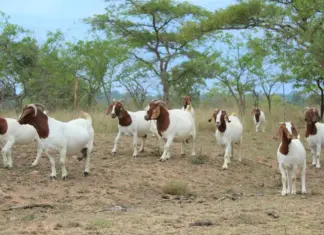
Producers can’t keep up with global demand for goat meat
Global demand for goat meat is increasing, with health, cultural, and religious practices driving the surge. Trade data company the Observatory of Economic Complexity reported that, over the past five years, the trade in goat meat has grown at an annual rate of 1,76%. In 2023, the main importers of goat meat were the United Arab Emirates (30,3%), the US (17,4%), and South Korea (9,9%).

Expert tips for emerging sheep farmers
Emerging sheep farmers can boost their production and profitability by focusing on quality over quantity. Willem Goosen, production adviser at the National Wool Growers’ Association, spoke to Octavia Avesca Spandiel about strategies for breeding productive animals and managing them effectively.
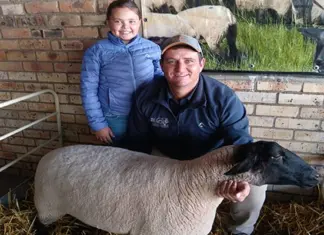
‘Choose the SA Suffolk for lucrative sheep farming’
According to RC Malherbe, the SA Suffolk sheep breed has all the characteristics needed for profitable sheep farming.
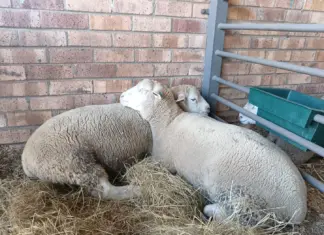
‘SA’s Ile de France sheep is the ideal choice for crossbreeding’
The Ile de France is a dual-purpose breed that improves the carcass quality of its crossbred progeny.
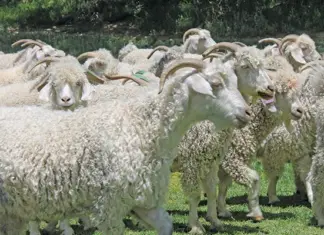
Brothers’ journey from communal farming to mohair success
Through strategic partnerships and perseverance, brothers Simphiwe, Thembinkosi, and Linda Fani have built Doornrivier Farm in Somerset East, Eastern Cape, into a thriving livestock operation. Simphiwe and Thembinkosi spoke to Octavia Avesca Spandiel about the land acquisition, infrastructure, and financial challenges they have overcome to reach a point of sustainable production.

High-tech Meatmaster farming in the Klein Karoo
Fintech entrepreneur Pieter de Wet, who farms Meatmaster sheep in the Klein Karoo, spoke to Glenneis Kriel about how he is helping to reshape the local meat industry with his Landrani brand and unique production system.

Unlocking value through livestock exports
Exporting livestock might sound like a daunting business that’s better left for big companies, but Gerrie Ferreira, who farms near Oudtshoorn in the Western Cape, has been doing it successfully for almost 30 years, sometimes in partnership with other breeders. He spoke to Glenneis Kriel about the huge potential this market holds, and offers some advice for farmers who are contemplating going this route.
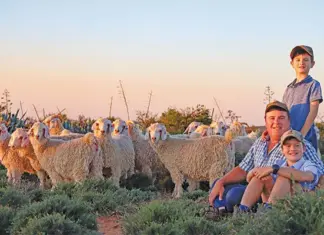
Breeding productive, well-adapted Angoras in the Eastern Cape
Pieter Jordaan runs Angora goats and Merinos on 16 000ha near Aberdeen in the Eastern Cape. The 2024 Agri Eastern Cape Young Farmer of the Year finalist spoke to Mike Burgess about how his stud, Legacy Angora, has added value to his farming enterprise by consistently producing a quality product for the market.