
Caxton Magazines

Caxton Magazines publishes 12 of the country's most loved magazines: BONA, Country Life, Essentials, Farmer’s Weekly, Food & Home Entertaining, Garden and Home, Living and Loving, people, rooi rose, Vrouekeur, woman&home and Your Family.
Latest articles

2013 national tractor sales see slight drop
New tractor sales for the year-to-date February 2013 in South Africa were 5% down on the 1 590 units sold during the same period in 2012.
Adverse weather to increase malnutrition
Climate change will be responsible for a 21% decline in food intake by 2050 in Sub-Saharan Africa (SSA).
Impact of new minimum wage on apple and pear farmers
According to South Africa’s largest apple and pear supplier, Tru-Cape Fruit Marketing, the minimum wage increase for farm workers – from R69/day to R105/day – will see some farmers exiting the sector.
About agents
We spoke about the fiduciary relationship between producer and market agent in the previous issue and focused on the producer. This week we turn the spotlight on the market agent.
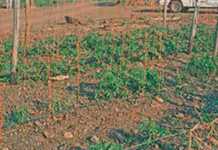
Growing tomatoes in a bacterial wilt area
Bacterial wilt can be a devastating disease in tomatoes. I’ve seen whole crops destroyed, and if you’re farming in a warm area where the disease is prevalent, it’s worth knowing how to eliminate or reduce potential damage.
Freshwater options in SA
Aquaculture is far more diverse than many realise. The practice can vary in size, technique and breeds.

The Kruger Park’s jumbo jigsaw puzzle
Ron Thomson, conservationist, hunter, former game warden and author, takes aim at the Kruger’s no-cull elephant management strategy. The plan, he argues, is not only inhumane, but a sure way to destroy the park’s biodiversity.

Sugar industry in SA faces bitter challenges ahead
South Africa’s R12 billion a year sugar industry may be one of the world’s leading cost-competitive producers of high quality sugar, but it is currently beset by challenges.
Trix Trikam, executive director of the SA Sugar Association, shares his thoughts on the matter with Lloyd Phillips.
A balancing act with goats – 3
Goats are an easy-care option able to thrive under harsh conditions,
but they need some attention, says Roelof Bezuidenhout.
Discussion on tax rebates for private security expenses welcomed
Farmers’ union, TAU SA, has welcomed the Treasury’s undertaking to discuss the possibility of implementing a tax rebate for taxpayers’ private security expenses with trade union Solidarity.
Cattle sold to settle department’s bill – DA
The Mpumalanga department of agriculture has allegedly sold 310 cattle worth an estimated R1,3 million in order to repay money owed to Dr Job Mthombeni, Mpumalanga president of the African Farmers’ Association of South Africa (Afasa).
Land reform department spends R1billion on consultants
The Department of Rural Development and Land Reform (DRDLR) spent R1 billion on consultants over three years from 2009 to 2011.
12 ways to protect the land
STEP 9: Manage fire effectively.
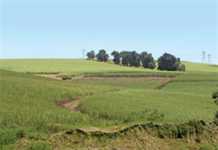
Putting theory to the test
Left to his own devices, a young sugarcane farmer from Upper Tongaat has made great headway in developing a farming model that meets his financial and sustainability goals. Robyn Joubert reports.

Health programme benefits employees
A number of illness-related deaths and low productivity in the workforce spurred poultry producer Astral to implement a wellness programme that reduced fatal illnesses and significantly improved overall health and efficiency in the workforce. Lindi van Rooyen reports.
Landownership important for smallholders to afford minimum wage
Smallholder farmers could afford to pay the new minimum wage if they were competitive and successful.
Huge increase in fuel prices for March
An increase of 81c/l in the price of petrol from next Wednesday was announced by the Department of Energy.
Foul play uncovered in SA processed meat industry
A recent study by meat scientists from Stellenbosch University revealed that there is significant fraudulent labelling of meat products on the South African market.
Afasa supports replacing of ‘willing-buyer, willing-seller’ principle
The African Farmers’ Association of South Africa (Afasa) has urged President Jacob Zuma to fast-track amendments to the Green Paper on Land Reform that will do away with the ‘willing-buyer, willing-seller’ principle used in land reform transactions.
A new meat identification twist
Results from a recent study show that the labelling of game meat in South Africa is very poor, with different species being substituted almost 80% of the time.