Latest articles
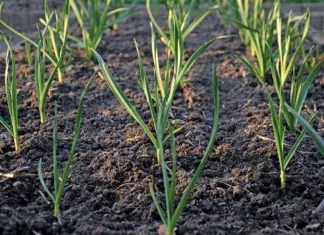
Growing garlic: a golden opportunity for SA farmers
South Africa imports most of the garlic sold in the country, but the local industry can thrive if farmers work together and produce good-quality crops. Jacques Terblanche of Graceland Garlic Seed explains to Gerhard Uys how producers can optimise garlic production.

Researchers advance in fight to control fall armyworm
Fall armyworm has caused significant damage to croplands in South Africa since first detected in early 2017. However, Dr Annemie Erasmus, a senior researcher of entomology at the
Agricultural Research Council’s Grain Crops Institute, writes that an integrated pest management strategy has been shown to be an effective weapon against infestation.

Tissue-cultured bananas: uniform and high-yielding
Establishing a healthy orchard starts with choosing the correct plant material. In South Africa’s only laboratory of its type, banana plants are cultivated from tissue culture to produce clones that offer farmers vigorous growth and high yield.
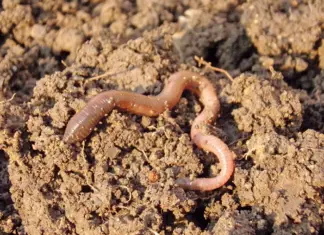
Keep earthworms to improve soil quality
Earthworms play a crucial role in improving soil quality, and every farmer should try to maintain a healthy population of these remarkable creatures.
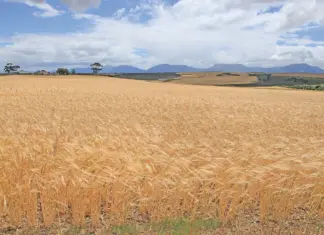
Financial planning: crucial to sustainable production
To weather the impact of market fluctuations and extreme climatic conditions, producers have to think strategically about farming. Pieter de Jager spoke to Glenneis Kriel about his strategy.
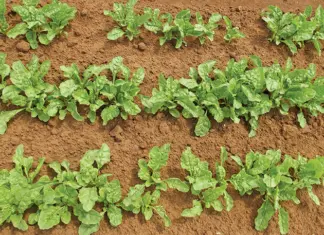
How to grow Swiss chard at home
Swiss chard can either be sown directly or transplanted. Both methods have their pros and cons.
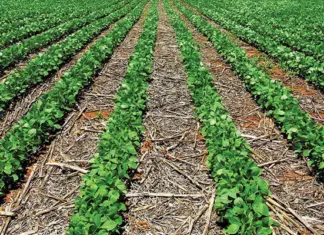
Switching to no-till? Restore degraded soil first!
It is often assumed that implementing no-till production is the immediate next step towards restoring degraded soils. Not so, says Guy Thibaud, a veteran soil scientist with the KwaZulu-Natal Department of Agriculture and Rural Development.

Nematodes’ negative impact on African leafy vegetables
Plant parasitic nematodes pose a serious threat to food security in Africa as they damage crops and hamper production. Dr Nancy Ntidi, a nematologist at the Agricultural Research Council, spoke to Annelie Coleman about the effects these pests have on African leafy vegetables, and how they can be effectively managed.
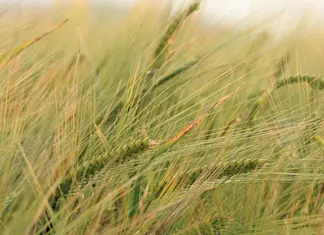
Pioneering barley in the Swartland
The availability of improved varieties, mandate contracts and storage infrastructure promise to turn barley into a lucrative option in the Swartland. Gert Claassen, who five years ago started producing barley on a commercial scale, spoke to Glenneis Kriel about this opportunity.

Getting ready to plant cucurbits
Before planting a land to any of the cucurbits, you should kill off all broad-leaved weeds nearby, preferably well beforehand.

Cotton can be more profitable than maize!
Cotton production in North West can be extremely lucrative, according to Arno Janse van Vuuren, manager of agricultural management at agribusiness NWK. A comprehensive survey by the company shows that the province is well suited to cotton cultivation if production is managed effectively.
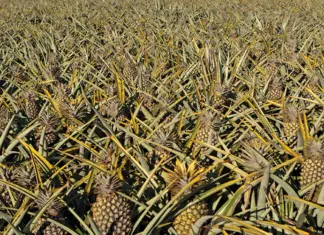
How a small farmer became SA’s biggest pineapple producer
A unique microclimate in the southern Eastern Cape has given rise to a niche cropping industry that requires intensive precision production over a five- to seven-year cycle. Sabrina Dean paid a visit to large pineapple producer Mark Harris to find out more.

Almonds: High value, huge potential
The establishment of an almond-processing facility in Robertson has the potential to turn South Africa into a leading exporter of these nuts. Stephan and Hans le Roux of Amanteco Almonds spoke to Glenneis Kriel about the opportunities and pitfalls associated with this crop.

Dramatic savings with low-flow drip irrigation
By switching from micro-irrigation to low-flow drip irrigation, macadamia farmer Dawid de Kock has reduced his irrigation water usage by 50%. With the subsequent savings on electricity, fertiliser and labour, the system has significantly improved his bottom line.

Quality and efficiency drive commercial lettuce production
Many people who enjoy lettuce in their salad may not be aware that it can be a fairly challenging crop to grow commercially. Dicky and Koshik Sitaram, whose family have been producing fresh produce for many years in KwaZulu-Natal, shared the lessons they learned with Lloyd Phillips.

New net solution to protect fruit from sunburn
Some growers in the Southern Cape are using nets that can easily be draped over tree rows to protect pome fruit against sunburn. Apart from their convenience and flexibility, the new nets cost a fraction of fixed net structures. Daan Brink of Two-a-Day and Ebbie Raubenheimer of Nulandis spoke to Glenneis Kriel about the technology, which was developed in Australia.

How old tyres can stop soil erosion in its tracks
Researchers have estimated that, over the past four decades, the world has lost a third of its arable land due to erosion or pollution. Solutions are constantly being sought. Frans Joseph and Mias van der Westhuizen of the Free State Department of Agriculture and Rural Development recently tested the mitigating effect of a simple, inexpensive method to address soil erosion.

Adaptation key to vegetable farmer’s sustainable growth
Viking Farming near East London in the Eastern Cape is a small but intensive vegetable operation that supplies supermarkets and processors across the Eastern Cape and even the Western Cape. Mike Burgess visited Valhalla farm to better understand how owner Mike Pedersen-Horn has managed to build up this adaptable and profitable business over the past 20 years.

New commercial farmer invests in asparagus
Up-and-coming commercial farmer Daniel Maqala is diversifying further by investing in asparagus. Sabrina Dean visited him to find out more about his journey so far.

No-till: increasing soil organic content
With no-till farming, you need to try to gradually increase the organic content of the soil.