South African farmers face another potential diesel price hike in November, with mid-month data from the Central Energy Fund showing average under-recoveries of R1,37/ℓ for 500 ppm diesel and R1,46/ℓ for 50 ppm diesel.
The figures, covering 2 to 14 October 2026, point to further increases at the next price adjustment on 4 November if these averages persist. For summer crop producers preparing to plant, they signal continued pressure on production finance, and the prospect of higher charges for moving inputs and produce.
An under-recovery indicates that the fuel-price component recovered locally is below the calculated import-related cost. The final November adjustment will depend on movements over the remaining review period and any changes to levies. The mid-month figures are therefore an indication of the increase, rather than an announced price.
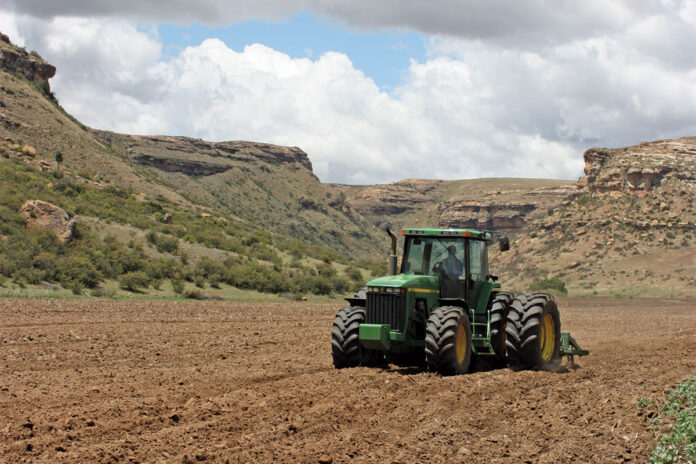
The prospect comes after a steep rise over the past year. Inland wholesale 500 ppm diesel increased from R19,34/ℓ in October 2025 to R31,95/ℓ in October 2026 (see graph). The resulting strain reaches from the tractor working a field to the truck taking the harvest to a buyer.

R946 000 more for diesel
For an illustrative 1 000ha maize farm, the October price change increases the diesel bill from about R1,45 million to R2,4 million. That’s an additional R945 855, or 65,2%, for the same fuel allowance (see table), before any changes in the cost of seed, fertiliser, labour, or crop protection are considered.
The comparison uses 75ℓ/ha and a yield of 5t/ha. It holds the farm’s area, diesel consumption, and output constant to isolate the effect of the diesel price increase.
| Cost measure | October 2025 | October 2026 | Increase |
| Wholesale diesel (R/ℓ) | 19,3435 | 31,9549 | 12,6114 |
| Farm diesel bill | R1 450 763 | R2 396 618 | R945 855 |
| Diesel cost (R/ha) | 1 451 | 2 397 | 946 |
| Diesel cost (R/t) | 290 | 479 | 189 |
A larger claim on production finance
For this maize farmer, the additional R946/ha must be accommodated within a budget already committed to establishing and protecting the crop. It doesn’t buy any extra hectares and doesn’t produce any additional grain. Unless another expense falls or revenue improves, it reduces the return from the same production programme.
The timing makes this particularly difficult. Fuel is needed as operations take place, while the income to pay for it may only arrive after harvest. Therefore, a farm could face a larger funding requirement even when its planned area and production methods remain unchanged.
Where the existing production facility has little headroom, the farmer must find additional working capital, negotiate revised terms, or reconsider expenditure elsewhere. Financing that extra requirement can itself add interest costs. Those costs are over and above the diesel increase shown in the table.
At the assumed yield of 5t/ha, the diesel component rises from R290/t to R479/t. That extra R189/t has to be recovered through a better net selling price, savings elsewhere, or a higher yield if the previous margin is to be maintained. The market doesn’t automatically compensate an individual producer for a larger fuel account.
A disappointing harvest would deepen the squeeze. At 3t/ha, the same October 2026 fuel allowance costs about R799 per ton harvested. Actual harvesting consumption can change with yield, but much of the diesel used to prepare, plant, and manage the crop has already been spent before the final output is known.
This strengthens the case for protecting yield potential while examining avoidable fuel use. Delaying an essential operation to save diesel can be expensive if it compromises crop establishment or weed control. The saving must be assessed against its effect on the whole crop, rather than the fuel account alone.
There is still value in improving efficiency. Using the 1 000ha farm example, reducing consumption by 5ℓ/ha would save R160 000 at October 2026 prices. Whether this reduction is achievable depends on the farm’s machinery and operations, but unnecessary passes, excessive idling, and poorly matched tractors and implements deserve scrutiny.
These figures are price comparisons, not estimates of seasonal expenditure. Farmers buy diesel over several months, often on different supplier terms. Their own monthly consumption and purchase records provide the best basis for revising cash flow requirements. Any diesel refund or discount would also affect the eventual net cost.
Freight carries the increase beyond the farm gate
Agriculture’s exposure continues after the farm’s own tank has been filled. Road transport brings inputs to producers and carries agricultural products to processors, markets, and export facilities. A more expensive journey can raise the delivered cost of an input or reduce what a farmer earns from a sale.
Gavin Kelly, CEO of the Road Freight Association, highlighted that vulnerability in his online article on the fuel price increase in October.
“Fuel is one of the three largest operating costs in the transport industry,” he wrote.
Kelly puts fuel’s share of operating costs at between 35% and 55%, depending on the operation. He also noted that road freight carries more than 80% of South Africa’s land-based freight.
This leaves agricultural supply chains exposed to diesel price increases across several stages of production and distribution.
Kelly warned that “some transporters will now face severe cash flow constraints”.
Operators must decide how much of the increase they can absorb and how much to recover from customers. The outcome for farmers may be a revised haulage quotation, a contractor’s fuel adjustment, or a higher delivered input price.
A fuel price increase doesn’t translate into the same percentage increase in the full transport tariff. In an illustrative operation where fuel represents 40% of costs, a 10% increase in the diesel price would lift total operating costs by about 4%, with other expenses unchanged. The final tariff would depend on the contract and the operator’s cost structure.
The effect on returns from the market
Even a modest change in a per-ton transport charge can become material across a commercial crop. An additional R20/t would amount to R100 000 on the example farm’s 5 000t harvest. This illustrates potential exposure rather than a forecast of a haulage increase, and only applies to transport costs outside of those covered by the farm’s diesel allowance.
Distance, payload, and waiting time help determine the actual burden. Producers arranging their own transport have reason to examine loading schedules and opportunities to consolidate loads. Those selling under delivered contracts need to check whether higher freight costs erode the margin on a price already agreed.
The flexibility to postpone a journey also differs between enterprises. A grain producer with suitable storage may have some flexibility over delivery time, although storage and finance carry costs. A dairy or fresh produce business has less freedom to delay collection or dispatch without putting quality, market access, or an established delivery programme at risk.
Livestock producers can face pressure through the transport component of purchased feed as well as the cost of transporting animals. The burden consequently depends on how much a farm buys, its distance from suppliers and markets, and who bears the freight cost. A maize example illustrates the direct fuel shock, but each enterprise needs to assess the journeys on which its business depends.
Higher logistics costs also affect processors and retailers. Some of the pressure may reach consumers through food prices, while businesses elsewhere along the value chain absorb part of it through lower margins. A higher shelf price therefore doesn’t guarantee that the farmer will receive enough additional income to cover rising production costs.
For producers heading into planting season, the immediate task is to bring production finance and delivery budgets into line with the new fuel price environment.
The October comparison already adds R946 000 to the diesel allowance of a 1 000ha maize farm. November’s under-recovery signals that further price pressure is still a possibility. Funding the crop on last year’s diesel assumptions could leave a substantial shortfall before the first tons is sold.