According to the Organisation for Economic Co-operation and Development’s (OECD) Agricultural Policy Monitoring and Evaluation 2026 report, published this week, South Africa’s Producer Support Estimate (PSE) averaged just 3,1% of gross farm income between 2023 and 2025, compared with approximately 13% across the 56 countries surveyed.
The OECD’s PSE measures the value of transfers to farmers arising from agricultural policies, including direct government payments and measures that influence domestic agricultural prices. The measure therefore covers more than direct subsidies alone.
The disparity was particularly pronounced when compared with countries such as Norway and Switzerland, where agricultural support accounted for around 50% of gross farm income. Peru received support equivalent to 6,4%, while Egypt’s support reached 12,6%.
South Africa’s support levels have declined considerably over the past two decades, from 7,4% of gross farm income in 2000 to 2002.
Trade-distorting support on the rise
The disparity is particularly concerning given the OECD’s findings on the impact of agricultural support policies on international trade.
The report found that nearly half of all agricultural support across the surveyed countries was provided through measures classified as potentially the most trade-distorting, including policies that raised domestic prices, payments linked to production, and subsidies for certain agricultural inputs. These measures could encourage production that would otherwise not be commercially viable, affecting international markets and trade.
Global agricultural support exceeded US$950 billion (approximately R17 trillion) in 2025, nearly 15% higher than in 2023. Market price support recorded the largest absolute increase among support measures in recent years.
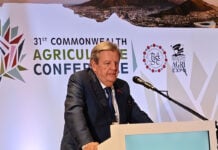
Willem de Chavonnes Vrugt, president of AgriSA, attributed the increase in agricultural support elsewhere in the world to governments placing greater emphasis on domestic food production following the COVID-19 pandemic and amid ongoing geopolitical uncertainty.
“COVID-19 was the first major disruption that made countries realise the importance of supporting their own agricultural production. With ongoing geopolitical uncertainty, there is now an even greater focus on domestic production,” he told Farmer’s Weekly.
De Chavonnes Vrugt said South Africa’s agriculture sector had benefitted from participating in international markets, generating income through exports while producing sufficient food for domestic consumption.
“South African agriculture has been able to grow because we have participated in the free market, but that ability is increasingly being restricted by the geopolitical environment,” he added.
SA agricultural investment falls short
The OECD also found that South Africa lagged in government support for services benefitting agriculture as a whole. Its General Services Support Estimate, which covers agricultural research, innovation, infrastructure, and inspection services, averaged just 1% of agricultural production value between 2023 and 2025, down from 3,9% in the early 2000s.
The organisation warned that persistently low investment could constrain sustainable productivity growth.
Despite South Africa’s relatively low overall support for agriculture, the OECD found that 97% of the assistance provided to producers came through potentially trade-distorting measures, including import tariffs on sugar and input subsidies such as the diesel rebate.
De Chavonnes Vrugt said the effectiveness of government expenditure should be measured against improvements in infrastructure, production, and exports.
“What concerns us more is the measurable outcome of the support government provides to agriculture. When we look at the budget for rural development, for example, we need to ask what we actually achieved with the money that was spent,” he said.
OECD calls for policy reform
The OECD made more than 150 country-specific recommendations, calling on governments to reduce trade-distorting support and introduce more targeted measures that strengthen farmers’ ability to manage risks and withstand future shocks.
It also urged greater investment in research, innovation, infrastructure, and agricultural knowledge to improve long-term productivity and resilience. In addition, the organisation called for better alignment between agricultural policies and sustainability goals through stronger incentives, regulations, and monitoring, as well as stable policy frameworks and open international markets.