
A respected pasture scientist, now retired, recently admitted that even learned researchers such as himself understand very little about how ecosystems really function.
It’s certainly difficult to duplicate complicated natural cycles and processes in laboratories or small field plots, especially when those cycles are often longer than a farmer’s productive lifespan. So, there’s always the temptation to fast-track an experiment to get results before time runs out.
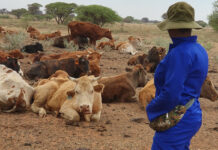
Take attempts to mimic the age-old grazing patterns of game in domesticated cattle. The idea was first suggested in the 1950s by South African veld specialist John Acocks and later taken up by grazing guru Allan Savory. A dramatic picture was painted of huge herds of buck and wildebeest periodically intensively grazing, fertilising, churning up, and rejuvenating Africa’s grassy plains for short periods before moving on, sometimes migrating, to fresh pastures and subsequently returning after good rainfall.
Predators are thought to have regularly panicked the herds, causing them to plough up and trample the veld even more. But this happened long before settler farmers started ‘taming’ the landscape with livestock.
So, no one knows exactly how long it took for the game to complete their round trip, nor do we know what the exact grazing pressure was, let alone the rainfall at the time.
Can grazing systems really replicate nature?
This raises the question of whether it’s possible to duplicate the grazing behaviour of a dozen game species, each with its own peculiar feeding needs, with one or two specially selected cattle breeds.
It’s also logical that not all the wild animals left an area, even during droughts. Many game species are highly territorial and not all are migrators. Therefore, no piece of veld could have received complete rest.
Finally, in nature, carcasses are recycled in the system, while in commercial farming, surplus animals are marketed before they die in the veld.
Some US researchers who have studied the grazing habits of bison say that, contrary to popular belief, the drier parts of the West in particular have never experienced any intense hoof action and are thus not adapted to it. They seriously question the value of high-intensity grazing strategies for these areas.
They also speculate that predation played a minor role in causing panic in the bison, because the herds were quite vigilant and learnt to avoid areas where predators could have an advantage.
In the Serengeti, too, predators cause far fewer mortalities among wildebeest than migrations do, so they have little effect on veld growth.
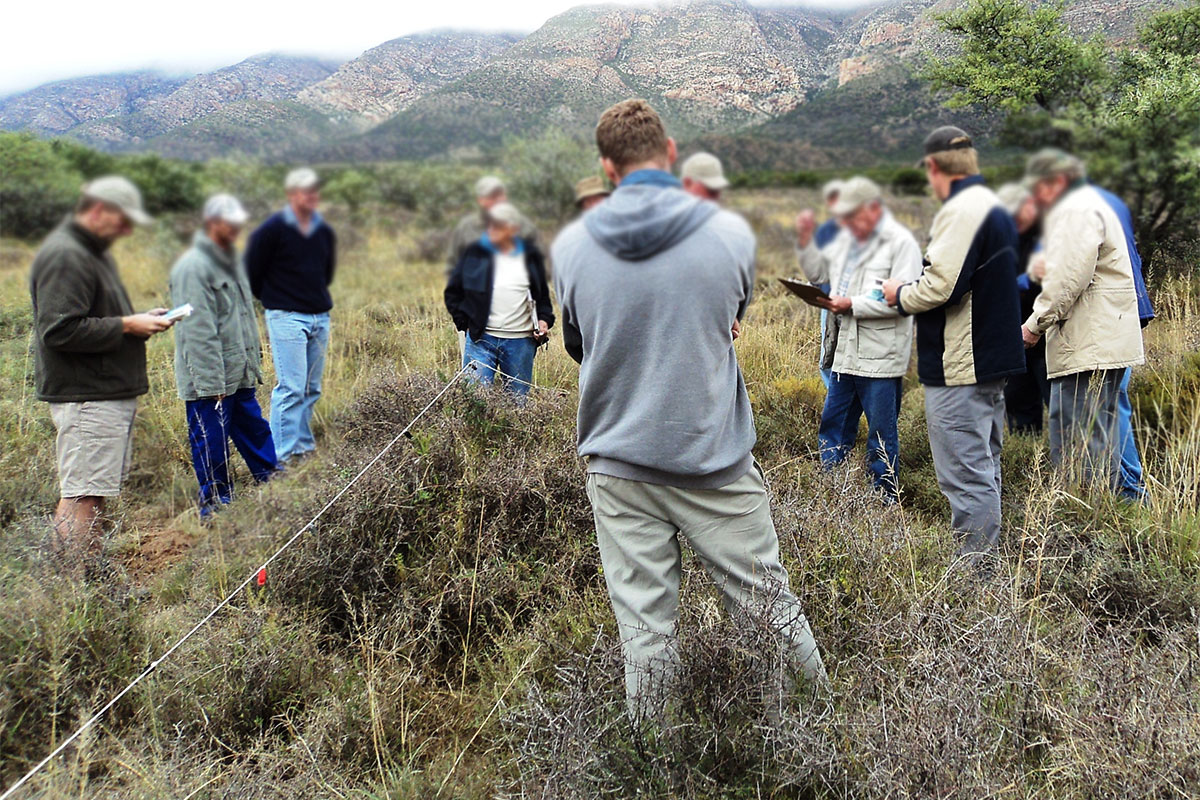
Karoo farmers who have tried high-density grazing with sheep on dwarf shrub veld say the animals lose condition very quickly, and that once the shrubs are grazed into the ground, they take decades to recover, if at all, and some can die out completely. All of this introduces a very sensible recipe for changing your veld management strategy.
In their paper ‘The grazing paradox: assessing contradictions of continuous versus rotational grazing systems in southern Africa’, published in African Journal of Range & Forage Science (2025), Katherina Meyer and Ute Schiemel of the University of Hamburg in Germany identify several points that need consideration when comparing grazing systems.
One must compare apples with apples, they say, because one can’t always transplant a system. Something that works on one farm might be a disaster on another, and not only as a result of management or finances.
Factors to weigh before changing grazing strategies
Before deciding on a new strategy, or even whether a change is necessary, take a good look at your rainfall regime, depth and type of soil, topography (slope determines run-off and erosion rates), the natural vegetation on your farm, the type of livestock, and even the history of land use on the property. Was it overgrazed or underutilised at one time? When was the last disaster-level drought?
Then, compare that with the data supporting the proposed new strategy, and try to figure out what the switch will cost and how long it will take to show results. Always remember that in South Africa, at least, rainfall is usually the main driver of veld condition.
This was not well understood 75 years ago when Acocks warned that the Karoo would expand northwards and cross the Vaal River by the year 2000 if extensive livestock farmers didn’t upgrade their veld management. Today, there are a few isolated karroid spots in the Free State, but basically the Karoo is still where it was.
When it rains well, almost anything works, but prolonged droughts tend to cancel out any progress. That’s why a veld strategy should be aimed at sustainability rather than maximum production over the short term.