
Dealing with soil compaction – part 1
Small-scale farmers often overlook the damage caused by bad tillage methods, leading to compacted soil, destroying their hard work, writes Roelof Bezuidenhout.
Maths vital for profitable farming
We can't escape maths, so learn to love it, because it's something you can't do without when it comes to running your business successfully, writes Susan Pletts.

Finance terms you need to know
Bankers and people involved in finance use many fancy words, and knowing what they mean is necessary if you want to make money, writes Susan Pletts.
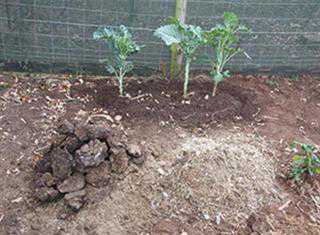
Preparing your soil – part 2
Manure will do more than just fertilise and feed soil, it will loosen it to help the roots grow better and prevent diseases.Issue date: 13 August 2010
Preparing your soil – part 1
You don't need fancy tests to check your soil to see how much fertiliser you need.
How to make a profit
Many emerging farmers struggle when working out how much to charge for their produce to cover costs and make some money too. Susan Plett's lends a hand.
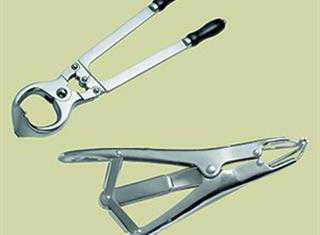
Castrating your beef calves – part 2
This issue we look at three more ways to castrate your beef calves – rubber rings, open wound and the short-scrotum method.
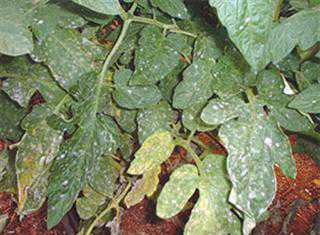
Farming hydroponically – part 4
Hydroponics is becoming a popular way to produce vegetables in South Africa because of the high quality of the produce. This week: keeping your plants disease-free.
Castrating your beef calves
Castration stops a bull calf’s testicles working so that it can’t reproduce, and also prevents the production of male hormones.
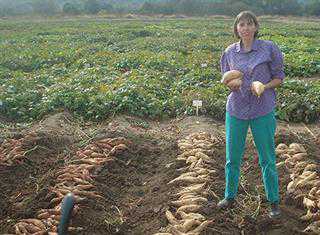
Growing sweet potatoes
Sweet potatoes originate from South America. Their heat tolerance makes them a useful summer crop for areas that are too warm for most vegetables.
How to draft a business plan – part 3
An important part of your business plan is describing where and how the product produced on the farm is to be sold and the prices that will be achieved.
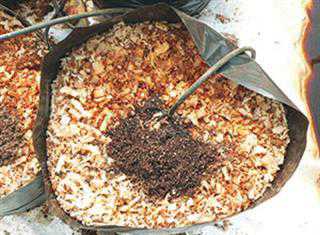
Farming hydroponically – part 1
Over the next few weeks we’ll be taking you through this interesting and potentially profitable form of farming.
How to draft a business plan – Part 2
A farmer's production plan, describing the farm’s resource potential, the type of enterprise, planned production output, and the existing output is an important part of a business plan.
Are your chickens healthy?
If you know what to look for, you can treat sick chickens, prevent diseases from spreading in your flock and select healthy chickens when buying new ones.
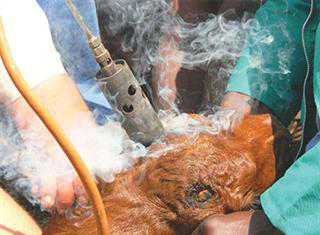
Dehorning beef cattle
Dehorned cattle are easier to work with, house and transport. The chance of bad bruising is lessened, as is the danger of injury to udders, flanks and eyes, as well as to labourers working with the animals.
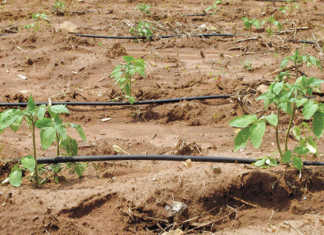
How to use water wisely
Maintain a healthy kitchen garden by irrigating at the right time and giving plants the right amount of water, says Bill Kerr.
Preventing disease in goats and sheep
Preventing disease requires good management and a programme for vaccination, deworming and dipping, explains Peter Mashala.
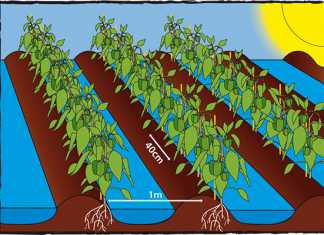
Green peppers: how to grow them
Green peppers like plenty of sunlight and moist, warm soil. If using seed, plant under a shelter about eight weeks before you anticipate the last frost in your area, then transplant.
How to grow sweet potatoes
Sweet potatoes are easy to plant, need little looking after and deliver high yields. They are usually grown in sandy soil, which makes them easier to dig up. But they also do well in most soils, even heavy clay.