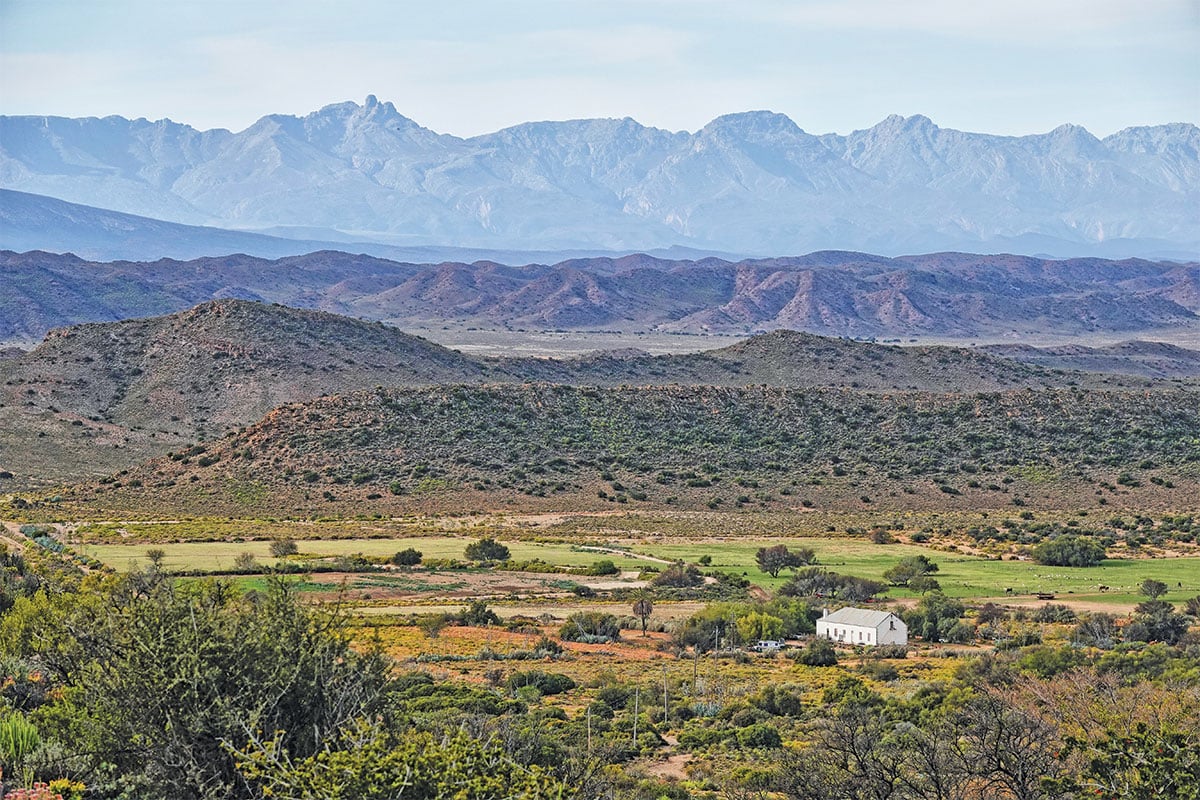
Back in 1887, Johannes Lotz sold an unusual farm east of Barrydale to his brother-in-law, Jacobus Petrus le Grange. The farm, Het Vlugt, was famed for its extraordinary hot spring, high up on a mountain called Warmwaterberg.
Almost immediately, Le Grange set about creating a bathhouse at the hot springs on the farm. He announced to the world via the Oudtshoorn Courant that “rooms are fitted with every convenience for the needs of visitors”, adding that the baths were “recommended by leading doctors”.
Perhaps this was one of South Africa’s very first agritourism enterprises.
A bit of history
Of course, long before Le Grange decided to monetise the hot spring, the local Khoi and incoming colonists had been stopping here for rest, recuperation, and no doubt, a much-needed scrub.
Scottish explorer and botanist William Paterson had been the first to write about it, in 1778. He was on a trip over the Langeberg mountains, into the region he called Channaland (now known as Kannaland). He and his companion, Sebastiaan van Reenen, spent three days at the baths.
By 1780, the hot spring was marked on early maps. The first registered owners of this land were brothers Leendert and Gideon Haasbroek. By 1849, there were four separate buildings, gardens and cultivated land.
Another traveller, known only as FR, described the springs at Warmwaterberg in a 1867 edition of Cape Monthly Magazine: “From the side of the mountain issues a strong stream of water, so hot that is it barely possible to bathe in it. The delightful sensation of a dip in this water, and thus getting rid of the Karoo dust of four days, can only be adequately described as awfully jolly.”
Through marriage and death, the farm then ended up in the hands of Lotz, who became the owner in 1868. He only sold it to Le Grange (for 2 500 pounds) when he ran into financial trouble. It has been in the hands of the Le Grange family ever since, passed down through the family in a disjointed fashion. The first Le Grange left various bits of the property to his children, and even split up the use of the hot water – some of it for irrigation, and some for “curative, domestic and purposes other than irrigation”. The bickering and squabbling went on for years.
A sanatorium was built by three of the sons and two other parties. There was a stage, later on, when shares in Warmwaterberg were held by many dozens of Le Granges. It was only when current owner Pierre le Grange bought everyone out that the Warmwaterberg Spa ship steadied.
This is a place mostly recommended by word of mouth. Yet it is almost fully booked, especially in the winter months when wallowing in hot water for hours has a certain appeal.
A Cape Town favourite
Capetonians are particularly fond of the spot. We heard rapturous reports from friends about how restful it was to stay there. We heard there were bedrooms with baths in them, with as much hot water as you could stand. Apparently one of the baths was in a kitchen, not far from an indoor braai.
It was because of these reports that we finally turned onto the dirt road to Warmwaterberg Spa, its palm trees poking out like giant mop tops in the distance.
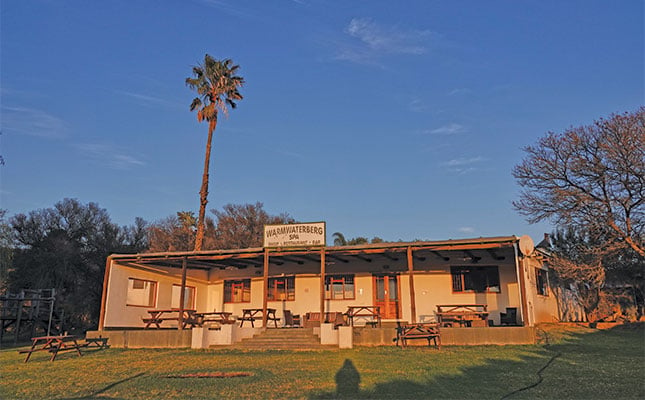
Once there, we found a thatched lapa featuring a snack shop and restaurant set among green lawns, tall trees, and wandering peacocks. There are three pools – one large and blue, the other two smaller and earth-coloured. There is a wild array of accommodation, from camping, to caravans, wooden cabins, the old sanatorium, and various types of bathhouses.
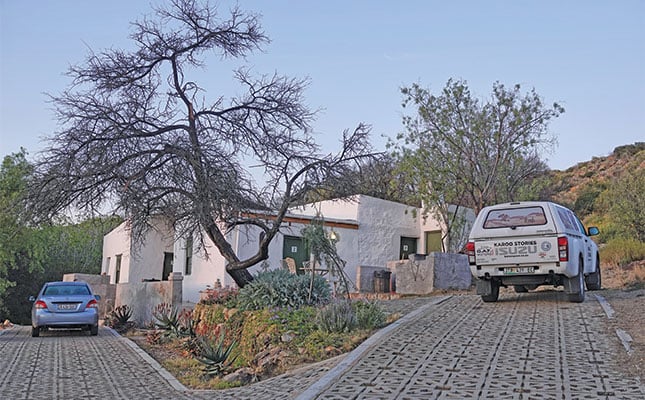
We were booked in one of the original 1887 buildings, right at the top of the hill, closest to the actual spring. Somewhere in the thick vegetation, 30 000ℓ of bath-temperature water was pouring out of the earth every hour.
We found a few signs warning visitors not to take bedding outside and not to lie down on the sheets with oily lotions. But nowhere was there a request to use water sparingly, which you’ll find at nearly every hostelry in this semi-desert Karoo.
A metallic taste
There was plenty to think about that night, back in our eccentric bedroom with its enormous tub and single tap. Time to draw a bath. The water flowed out cold at first, as it had been cooling in the pipes. Then it heated up as the fresh water from the spring came through. The water smelt metallic, like wet coins.
That’s because of natural iron and manganese deposits. But some people say it also has a little lithium in it, which gives the water a slightly sweet taste.
Apart from being an essential ingredient of modern-day mobile phones, laptops and electric vehicles, lithium in a tiny dose is known to calm and soothe, stabilise moods, reduce stress and promote good sleep. Maybe that’s why this spa is so popular.
Men and women of a certain age
It was still half-dark the next morning when we woke early for coffee. The surrounding peaks were barely visible. There was birdsong all around. It was then that we noticed men and women of a certain age heading down to the baths in gowns and slip-on shoes, including our neighbours in Bathhouse Number 1.
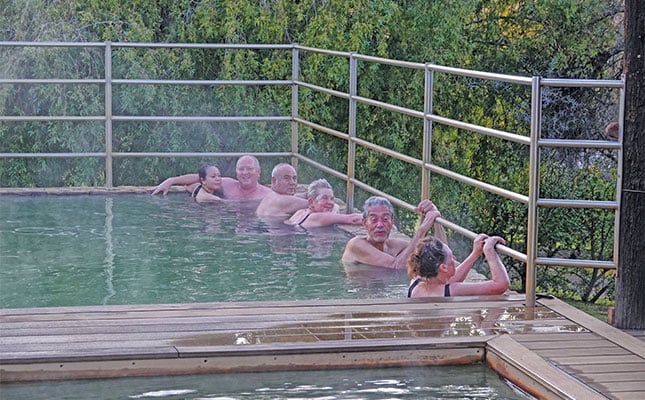
We walked down to find a chirpy little crowd of over-60s bobbing around, wreathed in steam up to their chins in the two hot pools.
Our neighbour, a retired academic from Cape Town, said she and her husband have been coming here for decades, often several times a year.
“What I love most about coming here are the distant views, the mountains all around, the simplicity, and the hot springs.”
There are no aqua aerobics classes, no massages, pedicures, or facials here. The furnishings and decor fall firmly under the category of ‘nothing fancy’. This remains a resort dedicated to lolling about in peace, maybe with a leisurely hike thrown in.
From the walking paths above the spring we could appreciate the splendid views over the Anysberg, Touwsberg, Langeberg, Rooiberg, and Swartberg ranges. We could see the dirt road that was once the old national road that went right past the gates of Warmwaterberg.
Ancient waters
There are several thermal springs popping up along the mountainous spine of the Klein Karoo: Montagu, Calitzdorp, Warmwaterberg, and another called Toorwater north of Uniondale.
Of them all, Warmwaterberg is unique because the water emerges at a considerable height instead of down in a valley. It was the second hot spring to be developed in South Africa – the first was at Caledon in 1797.
Mineral geochemistry professor Terence McCarthy explains how special these springs are in his book How On Earth?
“All South Africa’s hot springs originate from very deeply circulating groundwater, which originally fell as rainfall. Heating is due to the temperature of the deep underground rock, which here increases at between 15°C and 25°C per kilometre in depth.
“Under normal conditions, water does not emerge from such depths, but at the majority of hot springs in South Africa, deeply penetrating fractures or faults allow water both to reach those great depths and then return to the surface, heated.”
Using carbon-14 dating techniques, scientists can tell that the water rising up into the hot water springs of the Cape Fold Mountains last saw the surface of the earth several thousand years ago. We are drinking and bathing in rain that fell during Old Testament times.
Meeting Pierre
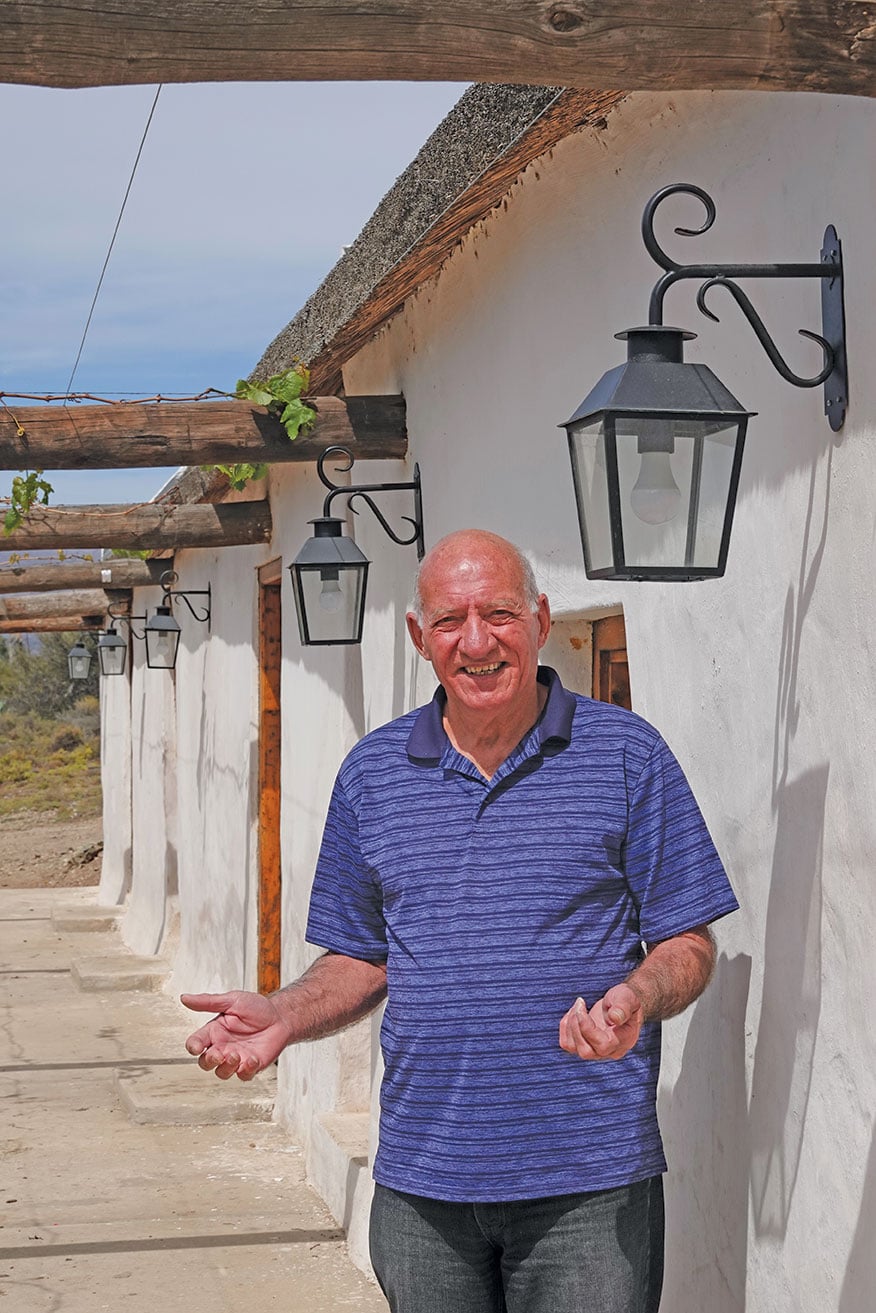
Owner Pierre is the fifth generation, a direct descendant of the first Jacobus Petrus le Grange. Pierre’s son Jacques, who manages the property, is the sixth.
Cousin Eben le Grange owns and runs the adjoining farm. We glimpsed a flock of sheep, and in the distance, carrot, onion, and celery seed crops.
Everyone in Barrydale assured us that chances of meeting Pierre were nil, since he had moved to New Zealand. But we could perhaps meet Eben, if we were very lucky. As a bonus, he was a pretty good storyteller, according to our sources.
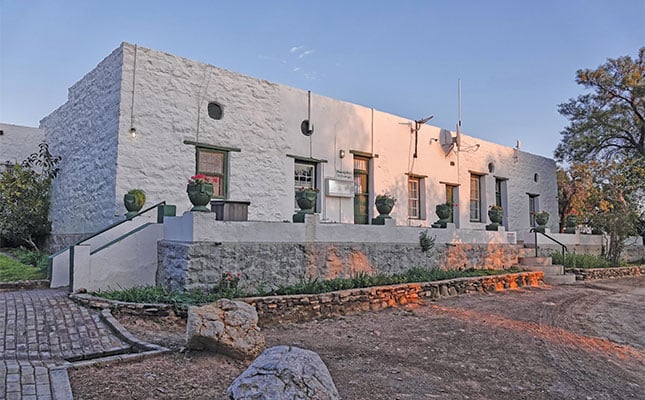
So we presented ourselves at the beautiful old building that houses reception and admin, hoping that we could contact Eben for an appointment, since Pierre was so far away.
“Actually, Pierre is right here,” said a kindly lady, bustling through from the admin office. “He came through to South Africa for a cousin’s funeral. Would you like to see him?”
In the interview that followed, Pierre gave us a glimpse of the Le Grange dynasty and its deep roots in the community.
“My grandfather was a mayor of Barrydale, started the Barrydale Wine Co-operative, and also bought and ran five flour mills.
“My father was the first person to be hit by the first motor car in Barrydale. Fortunately, he wasn’t too badly hurt,” Pierre added with the grin. His dad went on to study law, became an advocate, and later the deputy judge-president of the Transvaal.”
Keeping it in the family
The rumour mill in the hot water pool that morning had it that one of South Africa’s richest businessmen had offered Pierre ‘any price’ for this property, and that Pierre had turned him down.
“That is true,” he confirmed, adding, “I never want to be the La Grange who sold Warmwaterberg – not after six generations. And by the way, we’ve had several offers like that, not just the one.”
In parting, Pierre tells us: “And don’t skimp on the water. All the excess drains out into a dam that feeds the family farm next door.”
For more information, phone 028 572 1609, email [email protected], or visit warmwaterbergspa.co.za.