
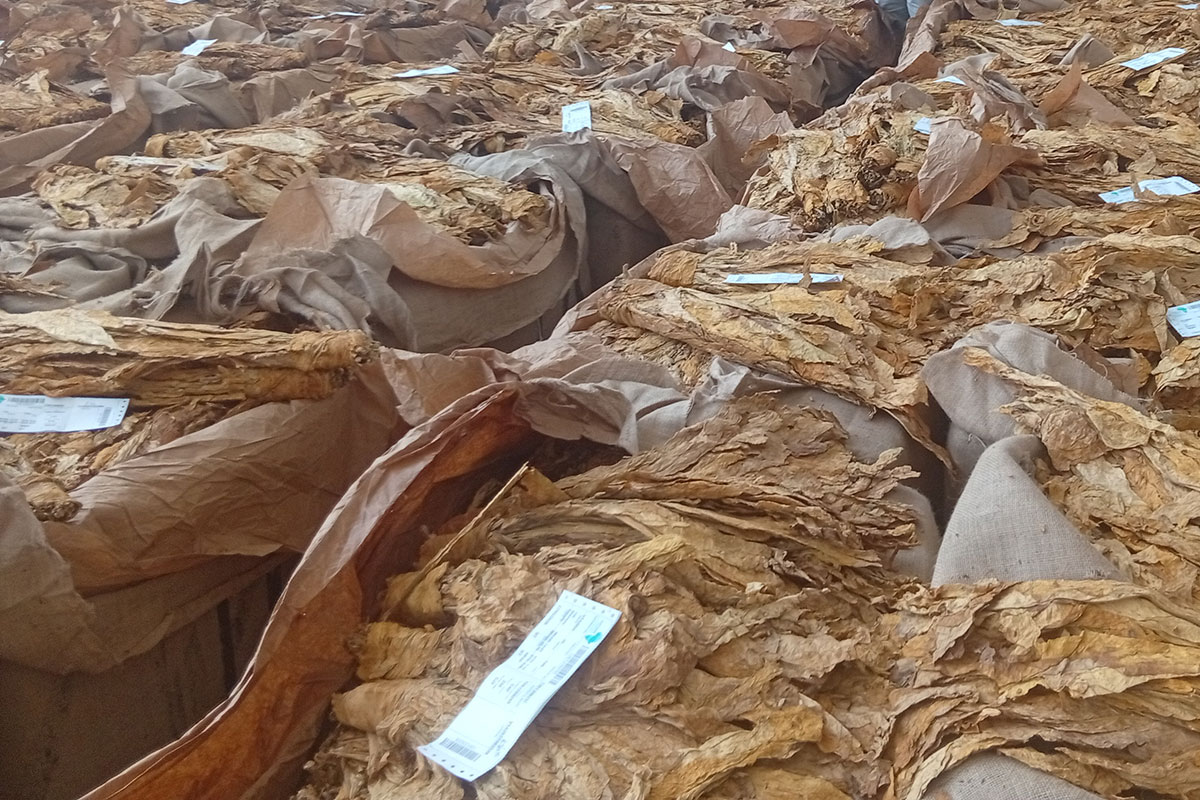
Many tobacco producers report that the market is oversupplied, pushing prices down and making it difficult for them to make a profit or prepare for the next planting season, despite the record crop they have delivered to auction and contract floors.
Forget Kasamu, a small-scale farmer from Mount Darwin in Mashonaland Central province, said he is unsure how he will pay his debts and prepare for the next season after selling his tobacco crop.
“I received far less than I expected. I’ve been a tobacco farmer for 45 years, but I can’t believe what happened today after selling my tobacco. It fetched US$1,10 (about R17,86) per kilogram,” he told Farmer’s Weekly.
Kasamu sold 10 bales of tobacco at auction house Tobacco Sales Floor (TSF) and received about US$800 (R13 000), saying the amount is not enough to cover production costs and other expenses.
“I don’t know how I’m going to get through this. I still have transport costs of US$18 (R292,30) per bale, and I have six workers who need to be paid,” he added.
He said he had invested heavily in inputs and labour throughout the season in the hope of achieving better prices. “Yes, I will bring more bales, but I don’t know how I will recoup all my expenses, including input costs.”
Farmers struggling with rising costs, low returns
Rising production costs and low prices at auction houses are a reality for many, raising questions about the long-term sustainability of tobacco farming for small-scale growers in Zimbabwe.
Farmer Charles Mutikwa from Wedza in Mashonaland East, who is contracted to agricultural contracting and tobacco processing company Northern Tobacco, said tobacco prices this marketing season have been disappointing, despite better returns from contract sales compared with auction floors.
“The prices this season are not appetising, but contracting companies like Northern Tobacco are paying better than the auction floors. Last year, I sold 60 bales and, after all deductions, I was left with a net income of US$9 000 (R146 200). Today, I brought 21 bales and I am expecting to bring another 15 bales,” he said.
Linda Chibwe from Shamva in Mashonaland Central, also a contracted farmer, said obtaining a contract had eased some of the challenges she previously faced in marketing her crop, although she remains concerned about the lower prices being offered this season.
“Before I got a contract with Northern Tobacco, I used to pay other farmers to sell my tobacco, but that was costly and demanding. Now I have my own contract, but the prices this year are not as good as they were last season. I have brought 14 bales and I am waiting to see how the sales go,” she said.
Oversupply weighs on tobacco prices
Celani Ndlovu, head of sales and marketing at TSF, said tobacco prices had fallen as low as US$0,80 (R13) per kilogram this season.
“TSF is an auction floor where farmers bring their tobacco and merchants bid for it,” he said.
“We do not impose prices. Our role is to facilitate transactions and earn a commission on sales conducted through our platform. The merchants determine the prices, and the Tobacco Industry & Marketing Board [TIMB] is responsible for grading the tobacco.”
Ndlovu added that farmers who are dissatisfied with the prices offered have the option to withdraw their tobacco from sale.
“If a farmer is not happy with the price being offered, he or she has the right to pull out their bales,” he said.
According to the TIMB, the low tobacco prices this marketing season are largely driven by global market forces and an oversupply of the crop in both local and international markets.
“Our assessment is that the current low prices are a result of prevailing supply and demand dynamics,” Chelesani Tsarwe, public relations specialist at the TIMB, said.
“This challenge is not unique to Zimbabwe. Other major tobacco-producing countries, including Brazil, Malawi, Tanzania, and Zambia, are experiencing similar market conditions due to increased production.
“The TIMB continues to monitor marketing activities at all selling points to promote fair trading practices and ensure compliance within the industry,” she said, adding that the regulator remains committed to protecting growers’ interests by addressing side marketing and enforcing regulations across the tobacco value chain.
According to Northern Tobacco, contracted tobacco farmers are generally receiving better prices than those selling through auction floors.
“Our average prices range between US$2,50 (R40,60) and US$5,50 (R89,30) per kilogram, because we are committed to maintaining long-term relationships with our farmers,” Kelvin Choga, coordinator of small-scale farmers at Northern Tobacco, said.
“As a contracting company, we provide farmers with inputs, fertilisers, pesticides, and transport assistance to ensure their tobacco reaches the selling floors. We also strive to offer farmer-friendly prices that enable growers to clear their debts and prepare for future production.”
He added that the company has recorded a significant increase in tobacco deliveries this season compared with last year, reflecting growing production levels among contracted farmers.
Sustainability concerns and market education gaps
Regarding concerns around child labour, deforestation, and sustainability, Tsarwe said the TIMB has strengthened oversight mechanisms for the 2025/26 season.
“We are enforcing mandatory monitoring of all tobacco contractors on environmental, social, and governance issues to ensure responsible and ethical tobacco production.
“These measures are aimed at promoting sustainability while safeguarding the welfare of farming communities and the environment,” she explained.
According to agricultural economist Willard Munangi, there is a need for contracting companies and the TIMB to provide greater market education for farmers, so that the latter can make informed production decisions based on expected market conditions.
“The prices are not appealing because the crop flooded the market, resulting in lower prices. Many farmers failed to make a profit this season,” he said.
He added that farmers should be provided with timely market information and production forecasts to help them align output with demand and avoid oversupplying the market.