
Dr Mokganedi Mokopasetso, permanent secretary in the Ministry of Lands and Agriculture, told Farmer’s Weekly that the relevant Botswana authorities are still investigating emails sent to the Botswana Meat Commission (BMC) to extort it for US$500 000 (around R8,3 million), and whether they are linked to the current outbreak of FMD. The sender allegedly threatened to deliberately spread the disease across all cattle ranches in the country if the amount was not paid.
At the same time, authorities are dealing with confirmed infections in key livestock areas that fall within strict disease control zones.
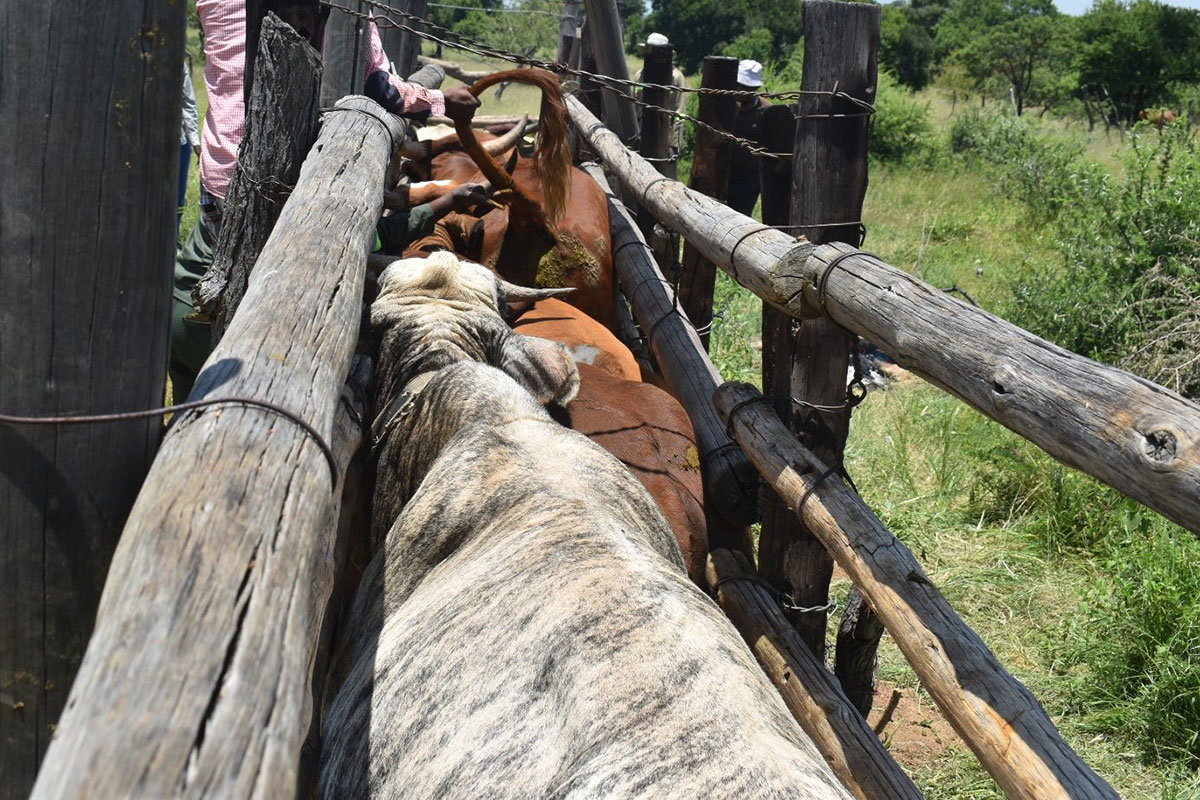
“A total of 149 clinical cases of FMD in cattle have been recorded in 10 epidemiological units [cattle-handling facilities] in Goodhope District and the Lobatse area, which are part of disease control zone 11. So far, no FMD-related mortalities have been recorded,” Mokopasetso confirmed.
While investigations are under way to establish the source of the outbreak, the ministry has issued additional disease control and prevention measures, including a total restriction on the movement and slaughter of all cloven-hoofed animals, effective immediately.
Mokopasetso said emergency vaccination efforts have also been intensified in both infected and at-risk cattle-handling facilities across affected zones, adding that just over 24 560 cattle have been vaccinated so far.
In a social media statement made on 25 April, Acting Minister of Lands and Agriculture Dr Edwin Dikoloti announced strengthened disease control measures following a meeting with the Bakwena community in Molepolole.
He said vaccination and surveillance teams have been deployed, with farmers urged to inspect their cattle daily, report suspected cases, and assist in repairing fences to curb the illegal movement of livestock.
Dikoloti also noted that the continued closure of the BMC, which handles the buying, slaughtering, processing, and marketing of Botswana’s cattle, is affecting livelihoods.
The outbreak, identified last month, has significantly affected Botswana’s beef export industry by preventing access to profitable EU markets. The EU-SADC Economic Partnership Agreement has long supported Botswana’s competitiveness in the European market, and the suspension of exports has therefore placed additional pressure on an industry that is essential to rural livelihoods and national revenue.
The government is still working closely with farmers, traditional leaders, faith leaders, and regional partners to control the outbreak through vaccination campaigns and cross-border collaboration. According to the statement, Botswana has also contributed 50 000 vaccine doses to Zimbabwe to support disease control efforts across their shared border.
Faith-based groups support fight against FMD
On 29 April, Dikoloti spoke to religious organisations at the National Emergency Operations Centre in Gaborone during an engagement themed ‘Let Us Rise and Rebuild’.
“The goal is to encourage religious leaders to work with government to protect livestock, support farmers, and help build a stronger future where Botswana can be free of FMD,” he said.
He highlighted the important role faith-based organisations play in bringing communities together and influencing positive behaviour, noting that their involvement can also help people understand and follow disease prevention measures.
Dikoloti called on stakeholders to work together to act with unity and care to help rebuild the agriculture sector.
The ministry’s efforts to combat FMD were praised by representatives from different denominations, who also suggested that policies and social research projects be developed to better understand community dynamics and strengthen support for prevention. They pledged to continue working with the government to advance food security, livestock protection, and sustainable livelihoods.
Mokopasetso added that extensive surveillance has been instituted to determine the full extent of the outbreak, noting that so far, the disease appears to be limited to 10 facilities along the border with South Africa.
He added that extensive community awareness campaigns are being conducted in affected and high-risk areas.
“Biosecurity measures have been intensified around the infected area and the entire country, which include intensified patrols of the fences, strategic disinfection, and search points,” he explained.
Mokopasetso also said relevant legal instruments are being enforced to facilitate the implementation of the control measures.
The situation has been further complicated by an outbreak of FMD in South Africa’s Northern Cape, which shares a border with Botswana’s Tsabong District, raising concerns about cross-border transmission of the virus.
As a precautionary measure, Botswana authorities have suspended the importation of grasses, including lucerne, in a bid to reduce the risk of introducing the disease through contaminated feed or materials.