According to Agbiz, South Africa’s total winter crop harvest (wheat, barley, canola, oats, and lupins) has remained broadly stable in recent seasons at around 2,7 million to 2,8 million tons, although weather-related fluctuations continue to drive year-on-year variability.
Agbiz notes that the Western Cape remains the key determinant of national winter crop performance due to its dominant share of wheat and canola production.
At market level, South Africa is a net importer of wheat, with annual imports required to meet domestic demand. Research from the Bureau for Food and Agricultural Policy highlights that global grain supply conditions, exchange rates, and international stock levels continue to strongly influence South African farm-gate returns, particularly for wheat and barley.
At farm level, producers are operating in an environment of tight margins, where input costs such as fertiliser and agrochemicals remain elevated and seasonal risk is increasing. This has reinforced a shift towards rotation-based farming systems, where soil health, disease control, and input efficiency are as important as yield potential.
The following expert insights provide a detailed, field-focused breakdown of winter crop performance and management requirements.
Heleen Viljoen, senior agricultural economist, Grain SA
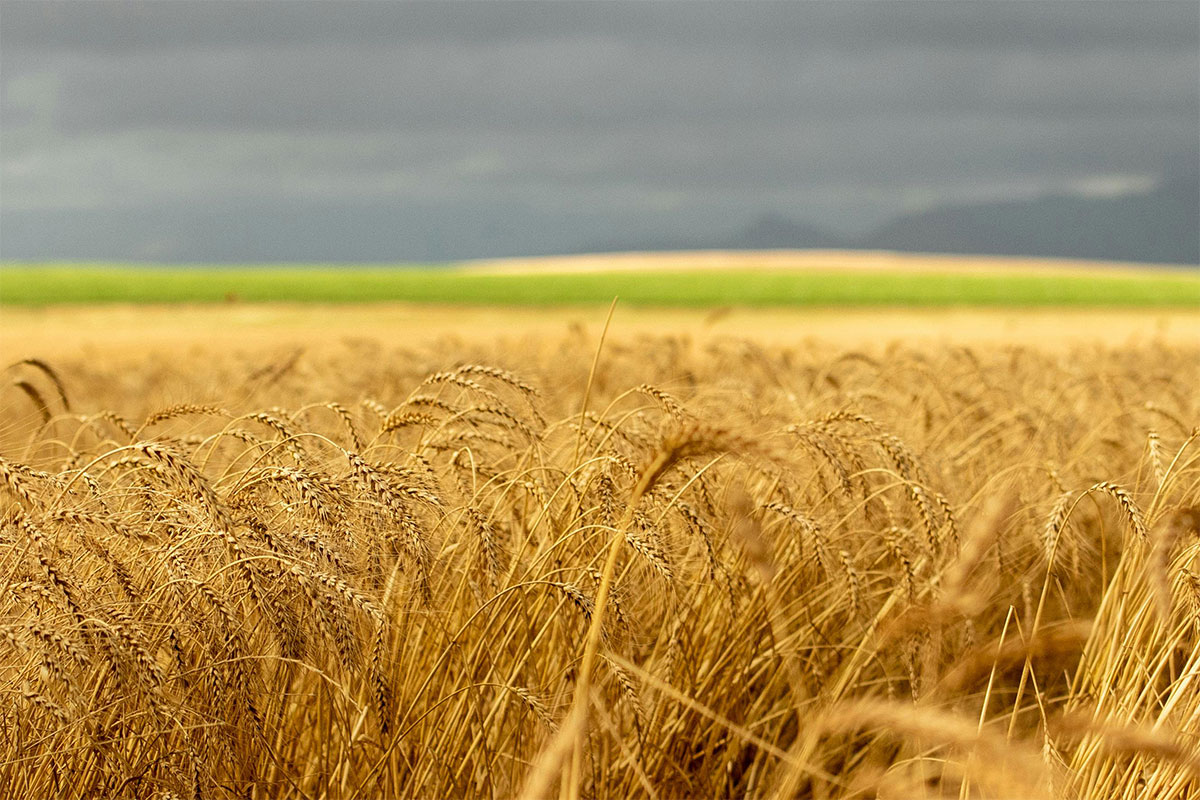
Wheat anchors South Africa’s winter grain basket and drives national food security. It remains the most widely produced winter crop in South Africa, with production heavily concentrated in the Western Cape. The province contributes approximately 980 100t annually from 363 000ha, followed by the Free State (239 000t to 260 000t from about 57 000ha), the Northern Cape (300 000t to 328 000t from around 40 000ha), Limpopo (132 000t to 176 000t from 28 000ha), and North West (83 000t to 95 000t from 11 000ha).
Wheat is produced under both dryland and irrigation systems. Dryland yields average around 2,68t/ha, while irrigated systems can reach approximately 7,17t/ha under optimal conditions. This wide yield gap highlights the importance of moisture availability and irrigation efficiency in determining profitability.
South Africa remains a net importer of wheat, although limited exports do occur to neighbouring countries such as Botswana, Eswatini, Lesotho, Namibia, Zambia, and Zimbabwe. This reflects a regionally integrated grain market, where logistics and proximity play an important role in trade flows.
Barley is the backbone of South Africa’s malting and brewing industry. It is the second most important winter grain and is mainly produced in the Western Cape under dryland conditions, covering around 107 000ha, with additional irrigated production in the Northern Cape, Free State, North West, and Limpopo. Average dryland yields are around 3,04t/ha, while irrigated yields can reach approximately 7,1t/ha.
Since production is strongly driven by demand from the malting industry, emphasis is placed not only on yield but also on grain quality and consistency. Barley that isn’t suitable for malting is typically diverted to the animal feed market, making quality segregation a key part of farm-level marketing.
Canola plantings are expanding rapidly in Western Cape farming systems, making it the most widely adopted oilseed for crop rotation. It is now firmly established in the Western Cape, with around 117 400ha planted to the crop. Smaller irrigation-based plantings are emerging in other provinces.
Dryland canola yields average around 1,88t/ha, while irrigated systems can achieve between 2,5t/ha and 3t/ha. South Africa exports approximately 39 000t of canola in surplus years, depending on seasonal production levels, with Germany and Kenya among key markets.
Oats remain a niche, albeit valuable, feed crop in cool, wet winter regions. Oats production is concentrated in the Western Cape, yielding between 47 000t and 69 000t annually from 31 454ha. The five-year average yield is approximately 1,46t/ha, and the crop is primarily used for feed and local consumption.
Lupins are specialised legumes that improve soil nitrogen and support healthy crop rotations.
Lupins remain a niche crop. They are almost exclusively produced in the Western Cape, with approximately 20 000t produced annually on 19 200ha, giving a yield of 1,05t/ha.
Broad beans are an emerging protein crop with growing potential in winter systems. Production is still limited but slowly emerging. Their primary value lies in crop rotation benefits, particularly nitrogen fixation and soil improvement in grain-based systems.
Dr James Allemann, specialist agronomist
Wheat thrives where the critical elements of soil, timing, and moisture align for strong early establishment. Production in South Africa is highly dependent on soil type, drainage, and moisture availability. The crop performs best on well-drained, fertile, medium- to heavy-textured soils such as loams and clay loams. Poorly drained or excessively sandy soils generally lead to reduced and inconsistent yields.
Approximately 20% of wheat is produced under irrigation, while the remainder is dependent on rainfall. This makes rainfall timing and distribution one of the most important yield determinants in dryland systems, particularly during establishment and grain filling.
In practical terms, wheat establishment requires uniform germination and strong early vigour. Soil that is too acidic or poorly structured can significantly restrict early growth, reducing final yield potential.
Barley demands precision drainage and quality control to meet malt standards. The crop has similar soil requirements to wheat but is more sensitive to waterlogging. Excess moisture during early growth stages can severely reduce root development and crop performance. Thus, barley performs best on well-drained soils that retain moisture without becoming saturated.
Barley is primarily grown for malt production, making quality a major driver of profitability. Protein levels, grain size uniformity, and overall consistency determine whether grain is accepted into malt markets or diverted into feed channels.
Canola delivers rotational value and system resilience for farmers in winter rainfall regions. Canola is well-suited to the Western Cape’s Mediterranean-like climate, where cool, wet winters support vegetative growth. The crop performs best on well-structured soils that aren’t prone to crusting or wind erosion.
In South Africa, canola is increasingly used as a rotational crop in wheat production. It helps reduce disease pressure, improves herbicide rotation options to manage resistance, and contributes to better biological activity in the soil. However, establishment is critical, and weak early growth can significantly reduce final yield potential.
Oats perform best under cool, consistently moist conditions with low heat stress. The crop requires at least 300mm of rainfall during the growing season. It is highly sensitive to heat stress during flowering and grain filling, which can significantly reduce yield and quality.
Rye is a hardy, low-input grain suited to marginal and sandy soils. It has several advantages over other small grains, including good resistance to leaf diseases and lower susceptibility to take-all disease and barley yellow dwarf virus than wheat and barley.
Rye has good drought tolerance and produces high yields of grain and straw, with efficient nitrogen use contributing to a lower carbon footprint.
Dr Ian Heyns, wheat breeder at the agricultural research council-small grain institute (ARC-SGI)
Wheat performs best when genetics are well-matched to the local farming conditions and on well-drained soils with a pH of between 6 and 7,5. Acidic soils can severely limit root development and early seedling growth, particularly under dryland conditions where early establishment is critical.
Planting windows are region-specific. In the Western Cape, wheat is typically planted from mid-April to mid-June, while in summer rainfall regions, planting occurs from mid-May to late July. Missing these windows can result in significant yield losses due to moisture stress or heat exposure.
Recommended plant populations are typically 200 to 250 plants/m², depending on cultivar and conditions. Achieving uniform plant establishment remains one of the most important yield determinants in dryland wheat systems.
Yield potential is strongly influenced by the interaction between genetics and environment. In the Swartland area of the Western Cape, yields range from 2,5t/ha to 4,5t/ha, while in the Southern Cape, they range from 2,5t/ha to 4t/ha, depending on rainfall and soil quality.
Climate variability remains a major production risk. Rising temperatures and increased rainfall variability are placing pressure on yield stability. Research indicates that wheat yields decline significantly under higher temperatures, particularly during reproductive stages, making heat stress management increasingly important.
Petrus Delport, oat breeder at the ARC-SGI (Stellenbosch)
Oats are a flexible crop used for feed, forage, and soil health improvement across South Africa. They are grown in all major production regions and serve multiple purposes, including grain for human and animal consumption, and forage in the form of hay, silage, and grazing. Oats are also widely used in crop rotation systems to improve soil health and disrupt pest and disease build-up in grain-based farming.
Although adaptable, oat seed production for the human food chain is mainly concentrated in the Western Cape. The region’s winter rainfall pattern aligns well with the oat growth cycle, particularly from May and June planting through to harvesting in November, resulting in more stable yields and consistent quality compared with other regions.
A key production decision is cultivar selection, which must align with the crop’s intended end use. This choice directly influences management practices and overall production outcomes.
Disease management remains important, particularly for crown rust and stem rust, which can significantly reduce yields in susceptible cultivars. Genetic resistance is, therefore, a critical factor in reducing production risks and input costs.
South Africa currently produces around 42 000t of oats annually while importing approximately 39 000t, highlighting a clear gap between local supply and demand.
To address this, the ARC launched a dedicated oat breeding programme in 2024, funded by the Department of Agriculture. It focuses on developing improved cultivars with better yield stability and stronger disease resistance, with new releases expected from around 2033.
Practical guidance for farming winter crops
Winter crop success is increasingly determined by operational precision rather than expansion of planted area. According to Grain SA production guidance and Agbiz system-level analysis, farmers are increasingly focusing on the following key practices:
- Matching crop to soil and drainage: wheat and barley require well-drained soils. Poor drainage remains one of the most common yield-limiting factors in winter grains.
- Prioritising planting windows: timely planting is critical, particularly in the Western Cape. Late planting increases exposure to heat stress and reduces yield potential. Planting decisions should be aligned with regional rainfall onset patterns.
- Focusing on establishment quality: uniform emergence is a major yield driver. Farmers are increasingly adopting precision planting practices to improve stand uniformity and early vigour.
- Carefully managing nitrogen use: for malting barley, nitrogen-use management directly affects grain quality and marketability. Overapplication can push protein levels outside acceptable ranges for malt production.
- Using canola as a rotation crop: canola is increasingly recommended in wheat-based rotations to interrupt disease cycles, support herbicide rotation, and improve soil health. Its inclusion strengthens long-term system resilience.
- Improving moisture conservation: Agbiz highlights increasing rainfall variability in key winter regions. Conservation practices such as residue retention and reduced disturbance systems are becoming more important for stabilising yields.