
Food safety hinges not only on how food is handled, prepared, and stored but also, to a great extent, on the safety of the animal feed used to raise livestock. While attention often focuses on the consumer end of the supply chain, the quality and traceability of feed remain a vital, if less visible, safeguard.
AFMA plays a central role in laying down systems to ensure livestock farmers have access to safe and quality animal feed and that the end consumer also enjoys food of the highest quality.
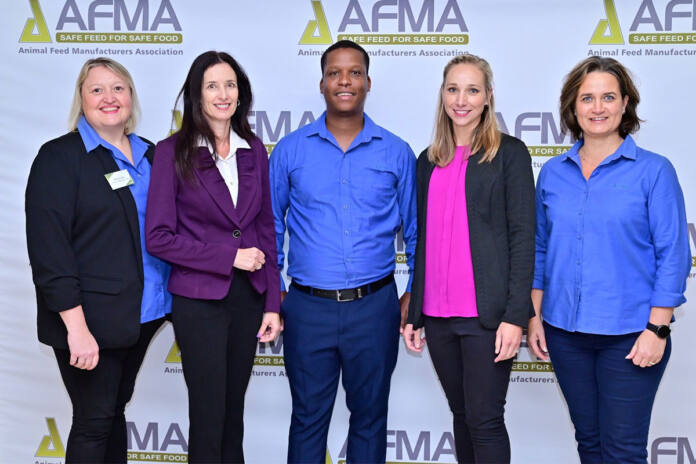
During her introduction at the information day, AFMA Executive Director Liesl Breytenbach highlighted the increasingly integrated nature of feed and food systems and emphasised the critical role the formal feed industry plays in supporting food security, animal health, and consumer confidence.
“Long gone are the days of separate feed and food chains. These chains are becoming increasingly interconnected,” she said.
According to her, the formal animal feed industry operates within one of the most prescriptive agricultural regulatory environments under the Fertilizers, Farm Feeds, Agricultural Remedies and Stock Remedies Act (No. 36 of 1947), where feed ingredients, additives, formulations, manufacturing practices, and traceability systems are extensively regulated before products enter the market.
Breytenbach explained that the regulatory requirements centre on the following:
- Animal health;
- Feed and food safety;
- Traceability and accountability; and
- Integrity.
She also noted that AFMA’s Code of Conduct has been in operation for more than 15 years and that compliance is mandatory for all association members.
“Our AFMA Code of Conduct logo represents trust, safety, and integrity, and when our members use this logo on their products, it automatically confirms that they also subscribe to our standards.”
The AFMA Code of Conduct focuses on:
- Responsible manufacturing practices;
- Feed safety and traceability;
- Legal and ethical compliance;
- Accountability and professionalism;
- Independent assurance; and
- Commitment to food system integrity.
In contrast, Breytenbach noted that parts of the retail food industry rely more heavily on food safety standards, post-market enforcement, consumer protection legislation, and common law liability once products are already in circulation. This means the feed industry focuses more heavily on pre-use quality standards.
According to her, this is why modern industry assurance systems are becoming increasingly important, not to replace government regulation but to strengthen traceability, accountability, audit consistency, and consumer confidence across integrated feed and food value chains.
Reviewing and modernising compliance systems
AFMA also confirmed that it is currently reviewing and strengthening its existing Code of Conduct framework to support a more practical, risk-based, and technology-enabled audit and compliance environment, including improved traceability, electronic audit systems, and enhanced reporting capability.
“We need to look at modern industry assurances to strengthen feed safety, regulatory efficiency, and food security,” Breytenbach stressed.
“Operating in a dynamic animal feed industry, we would like to act as a thought leader influencing food security through partnerships with all stakeholders in the protein value chain. What happens in the grain and animal industries will have an impact on the broader food industry. That is why cooperation across the value chain is invaluable.”
However, she emphasised that the world is changing on many levels; therefore systems that ensure quality and safety should also evolve.
“There will always be something new and challenging, so feed and food assurance systems must also continue to evolve to ensure these challenges are addressed appropriately.
“We need to be preventative and move beyond a baseline approach and strive for excellence. We also believe that efficient assurance systems can support innovation and food security.”
Breytenbach noted that some of the reasons for taking a fresh look at assurances are:
- Increasing traceability requirements;
- Consumers demanding greater transparency due to a growing focus on food safety; and
- The food supply chain becoming more integrated.
She remarked that modern assurance systems strengthen trust and alignment, focusing on:
- Audit consistency;
- Accountability;
- Improved alignment;
- Practical implementation; and
- Integrated value chains.
Moving towards risk-based assurance systems
Presenting on modern assurance systems and industry collaboration, Thea Laufs, managing director of LTL Group of Companies, which provides food safety audits and quality assurance, highlighted the growing shift towards integrated, risk-based, and technology-enabled approaches to compliance and assurance across the agriculture sector.
In addition, she pointed out that efficient assurance systems can support regulatory effectiveness and market responsiveness within highly regulated industries such as animal feed.
Laufs also emphasised that overly delayed pre-market approval systems can become counterproductive to innovation, competitiveness, supply continuity, and, ultimately, food security.
“Strong industry assurance frameworks provide an opportunity to support regulatory efficiency without compromising feed safety, transparency, or accountability,” she said.
One area that may require closer scrutiny is on-farm feed mixing. While any feed entering the animal feed chain is expected to meet all prescribed requirements, loopholes remain.
“This is one of the areas where we aim to have closer relationships and cooperation,” Breytenbach concluded.