According to Associated Energy Services (AES), a significant number of industrial boilers in operation in South Africa are several decades old, creating growing maintenance and operational challenges.
“There is a large fleet of boilers that are between 30 and 60 years old. Original equipment manufacturers may no longer have the software available to diagnose or solve faults, and many operate offshore, making specialist support expensive to obtain in South Africa,” Gavin Evezard, AES projects director, said in a press release.
Steam remains a critical component of food manufacturing, supporting processes such as sterilisation, cooking, cleaning, and processing across industries including dairy, beverages, milling, and canning.
As ageing infrastructure becomes increasingly difficult and costly to maintain, manufacturers are exploring ways to modernise existing boiler systems while minimising operational downtime and containing costs.
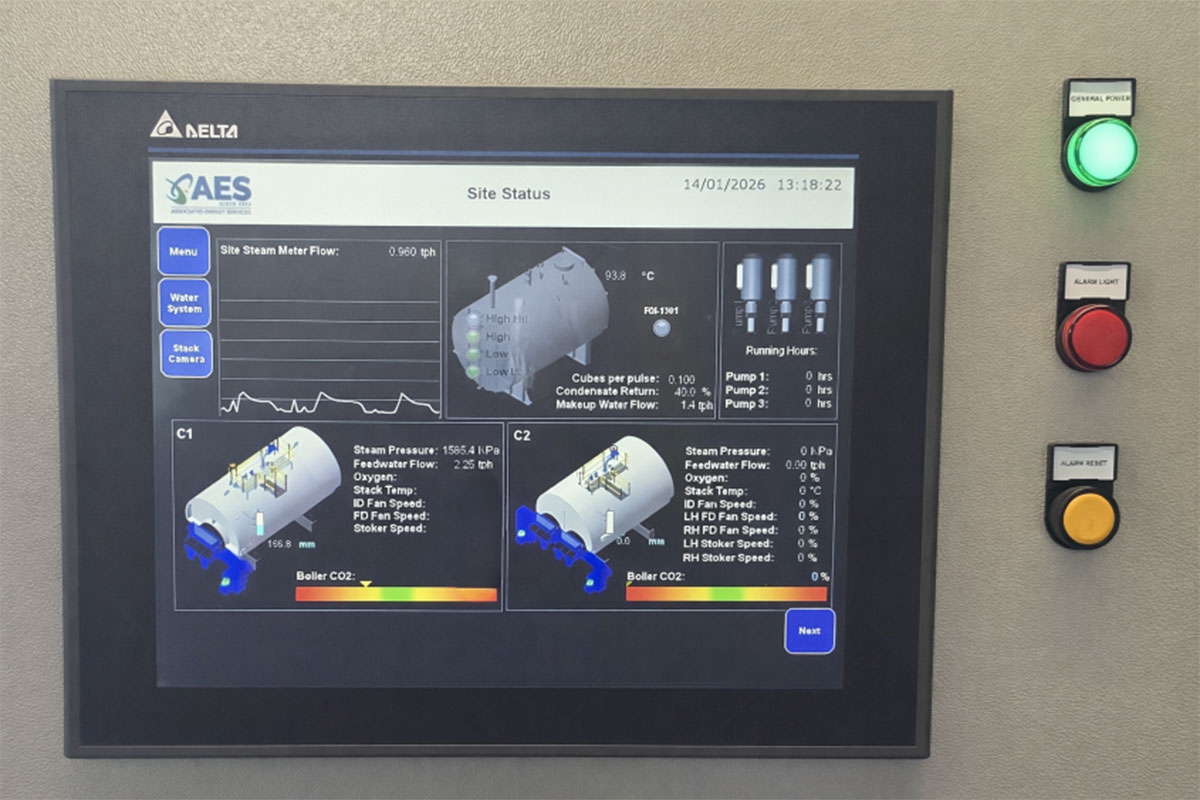
One option is the installation of modern boiler control systems and remote monitoring solutions (RMS). These technologies enable operators to monitor performance, investigate anomalies, conduct root cause analyses, and gain insight into fuel consumption, emissions, and steam supply requirements.
Systems upgraded at two facilities
The company said these challenges formed the backdrop to two recent projects in the food manufacturing industry, where boiler control and monitoring systems were upgraded to improve operational oversight and performance.
The first project involved an edible protein processing and canning facility in the Western Cape, whose outdated boiler control system had become costly to maintain.
The site operates low-pressure, saturated-steam fire-tube boilers with chain grate stokers for firing steam coal, a fairly standard configuration among South African industrial steam users, Evezard told Farmer’s Weekly.
AES was tasked with upgrading the system while retaining some existing equipment.
“A key feature of the upgrade was the implementation of load balancing across the three boilers, ensuring that no single boiler carried a disproportionate share of the load,” explained Evezard.

This not only improved efficiency but also reduced strain on individual assets, an increasingly important consideration where older equipment must remain operational for many more years.
The second project involved the installation of a fully customised boiler control and RMS solution for a Gauteng-based producer of fried and baked snacks.
AES installed a system featuring a web-based interface for real-time monitoring, performance tracking, and data analysis.
“The system was customised to include comparative fuel consumption rates and performance indicators under both manual and automatic operating modes. The client has varying steam pressure requirements at different times and in different sections of the plant. The aim was to provide the redundancy on steam that they needed.”
Upgraded RMS and control systems are often transformative, giving manufacturers far greater visibility into the boiler house and steam generation.
Balancing automation with human oversight
“Both projects highlight the importance of consistently collecting and interpreting data to optimise the productivity of boilers,” said Evezard.
“When there are issues at a plant, all the data is recorded on our RMS, allowing us to go back and see exactly what happened. This enables proper root-cause analysis and helps prevent future incidents.”
Because AES’s systems are developed in-house by local teams, the company is able to diagnose and resolve problems quickly, restoring boiler operation and reducing the risk and cost of downtime.
Despite advances in automation and remote monitoring, AES says experienced human oversight is indispensable and minimises the risk associated with combustion and steam vessels under pressure.
“The combination of specialist skills and advanced technology is pivotal. With solid fuel boilers specifically, the control system can only do so much. A human needs to do some checks and set up the boiler in line with production facility requirements,” emphasised Evezard.