
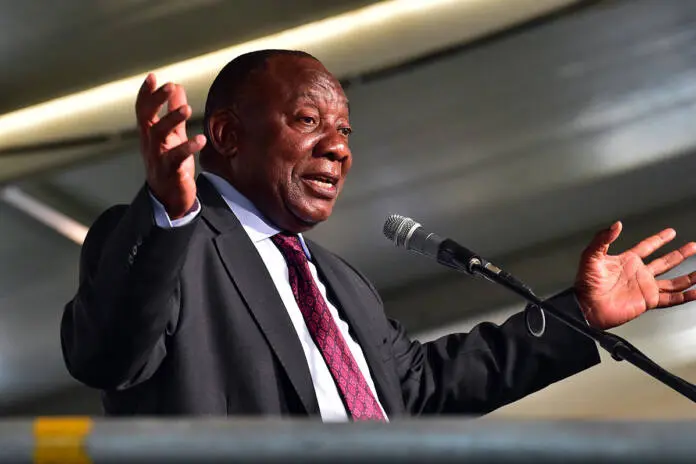
In a Youth Day message released on 15 June, ahead of the 50th anniversary of the 1976 Soweto uprising, Ramaphosa reflected on the challenges facing today’s youth and outlined government initiatives aimed at improving access to employment, training, and work experience.
He noted that while the youth of 1976 fought against an education system designed to limit their potential, young people today face the challenge of finding work in an economy that continues to struggle to create sufficient jobs.
“We know that for many young South Africans, the promise of democracy can feel distant when jobs are scarce, when opportunities seem out of reach, and when qualifications do not always lead to employment,” Ramaphosa said.
Education initiative provides work experience
Ramaphosa highlighted several government programmes aimed at providing young people with work opportunities and practical experience.
Among these is the Basic Education Employment Initiative, which in 2025 placed 200 000 unemployed young people in schools across the country, including farm schools and those in remote rural communities. The participants provided support in classrooms and administrative roles while gaining valuable workplace experience.
According to Ramaphosa, the programme has helped young people gain a foothold in the labour market while strengthening educational institutions serving vulnerable communities.
He also highlighted the Social Employment Fund, which provides part-time employment opportunities in sectors such as food production and agriculture, education, healthcare, environmental management, and community safety.
The initiative allows participants to earn an income while pursuing further training, entrepreneurial ventures, or permanent employment.
Millions of opportunities created
In addition, Ramaphosa said the Presidential Employment Stimulus, introduced during the COVID-19 pandemic, has generated more than 2,5 million work and livelihood opportunities. More than 80% of these opportunities have benefitted young people, while two-thirds have benefitted women.
The Presidential Youth Employment Intervention has connected millions of young South Africans with work through the SA Youth online platform, which seeks to remove barriers such as transport and data costs. The intervention has facilitated access to more than 2,3 million income-earning opportunities.
Meanwhile, the revitalised National Youth Service has placed more than 132 000 young people in paid community service roles, and the private-sector-led Youth Employment Service continues to provide opportunities for year-long workplace experience.
Ramaphosa also highlighted the Jobs Boost Outcomes Fund, which links training funding to successful job placements, saying the approach prioritises measurable employment outcomes.
Economic growth is key
While outlining these interventions, Ramaphosa acknowledged that long-term progress ultimately depends on stronger economic growth.
He said government is pursuing infrastructure investment and economic reforms to improve competitiveness and attract investment, noting that South Africa had secured R890 billion in new investment pledges over the past year.
However, he cautioned that economic growth alone will not automatically translate into opportunities for young people unless barriers to labour market participation are addressed.
“The scale of the challenge demands that we sustain and deepen these efforts,” Ramaphosa said, calling on companies, government departments, and organisations to help open doors for young South Africans.