Across South Africa, farmers are rethinking how land is used, managed, and valued. Driven by climate uncertainty, rising input costs, and the need to spread risk and diversify income, farmers are blending traditional livestock systems with game species.
This integration is no longer a niche practice, but is becoming a strategic response to prevailing agricultural realities. The result is a dynamic, mixed-land use model incorporating grazing patterns, while creating new revenue streams from livestock or game breeding, hunting, and tourism.
This shift, however, demands careful ecological thinking and sharp management, says Pieter Vorster, director of Corporate and Development at Mahela Group based in Letsitele, Limpopo.
“For us, the integration of livestock and game into our fruit operation is offering the opportunity to spread risk and be more resilient and flexible. The question is not whether livestock and game can coexist or be integrated with crop or fruit farming, but how we as producers can unlock the full potential of this evolving partnership.”
Vorster adds that farmers are increasingly adopting diversification strategies that tap into emerging consumer trends, sustainable practices, and unique revenue streams that weren’t available in the past.
“Diversification can significantly boost your farm’s bottom line while creating stability in an unpredictable agricultural market.”
He explains that South Africa’s farming conditions are highly variable.
“We have variability in climate, rainfall, temperature, vegetation and soils, and therefore pest pressure differs sharply across regions. That means diversification is not just about adding enterprises; it is about choosing combinations that reduce risk while strengthening resilience and profitability.”
Danie Minnaar, a farmer from the Kroonstad area in the Free State and chairperson of Senwes, stresses that diversification works best when it balances risk reduction, resource efficiency, and market opportunity, all within the realities of climate variability, soil and vegetation differences, market volatility, and production costs.
“Diversification is not only about adding enterprises, but also about how those enterprises interact. Systems where outputs from one component feed or compliment another create synergy, improve efficiency, and spread risk. This is why integrated systems often outperform simple ‘add another crop’ approach.”
In essence, Minnaar says, he is not ‘just’ a farmer, but also a risk manager.
“My job is to find ways to reduce risk on my farm, and incorporating another livestock or game component into my farming operation is one way of spreading risk.”
In addition, Minnaar points out that incorporating game into a livestock enterprise helps reduce exposure to stock theft, which remains a major challenge in some regions.
“Stock theft pressures are pushing some farmers away from traditional livestock. Introducing game into the system provides a practical way to spread risk and maintain income without depending solely on animals most targeted by thieves.”
Integration
Any integration requires careful planning to ensure that farming activities and animal ecosystems coexist without conflict.
Dr David Pretorius, wildlife veterinarian and owner of Motsumi Darts in Pretoria, says farmers have to consider carrying capacity, fencing, water availability and grazing when diversifying.
“Overpopulation or poor management can lead to land degradation and loss of productivity. Proper animal management helps maintain ecological balance while ensuring long-term profitability. Veterinary support and disease control are also crucial, especially when wildlife and livestock share environments,” he advises.
Incorporating cattle into a fruit and game farming enterprise
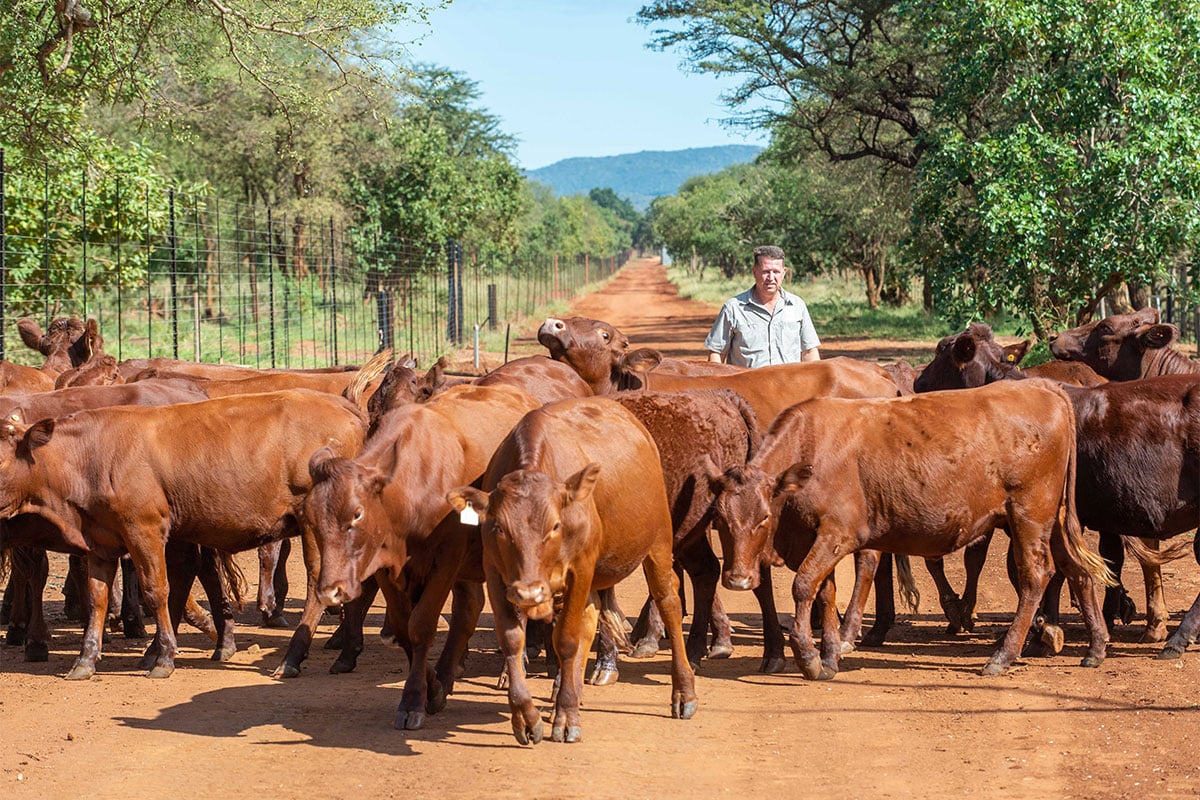
Vorster, who is responsible for the commercial Bonsmara herd at Mahela apart from his corporate responsibilities, says while their main focus is fruit production, they have always focused on wildlife conservation.
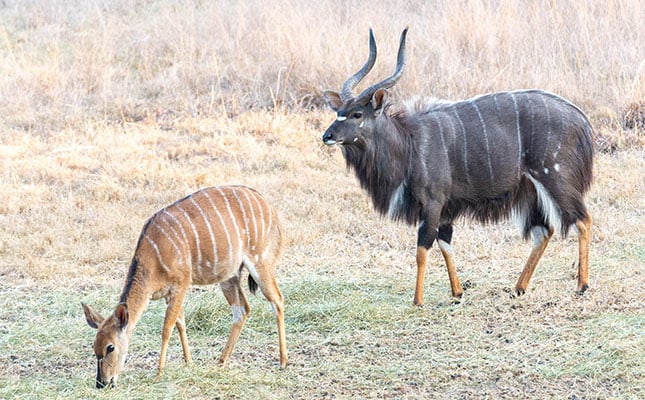
“Apart from the plains game that can be found on Mahela Group farms, we also breed some of the rarer game species, including roan, sable, reedbuck, buffalo, impala colour variants, klipspringer and bushbuck, with the aim of conserving and improving their genetics.”
Mahela Group owns and markets game under Mahela Game, as well as through a 50% partnership with BJ Vorster whom, in turn, markets game as a member of Benchmark Game Breeders. Vorster notes that as part of the Gravelotte Study Group, Mahela co-founded a sable breeding project in 1998 to improve the genetic pool of the region’s sable.
“We see ourselves as custodians of nature, whether producing fruit in an environmentally sustainable and responsible manner or by protecting our natural wildlife and nature heritage.”
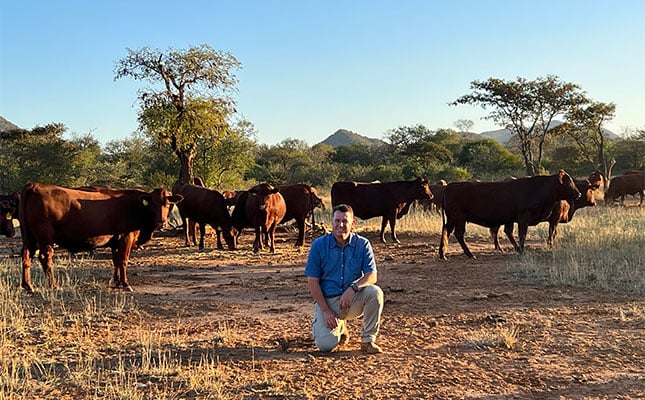
He notes that they bought an existing game farm near Gravelotte with excellent grazing potential and converted it back to a cattle farm.
“We are of the opinion that producing beef will add value to our operation with a view to the growing population that will always need meat.”
Mahela introduced a commercial Bonsmara herd on this farm.
“Choosing Bonsmara was an easy choice. At every auction, there is a premium for good-quality red cattle, and the Bonsmara is also suitable for crossbreeding, adding extra weight on the calves at weaning.”
According to Vorster, livestock-game integration works when farmers do not treat wildlife or livestock as totally separate enterprises, but as ecological and economic partners.
“The most important factors are veld ecology, species compatibility, infrastructure, disease management, and a clear market strategy.”
He argues that you farm grass more than you farm cattle.
“Overgrazing and hoof destruction can do long-term damage. The veld forms the engine of an integrated system. Understanding grazing patterns, plant succession, and carrying capacity determines how livestock and game can coexist without degradation of vegetation or soil. Mixed grazing improves veld condition when stocking rates are balanced.”
Regarding day-to-day management, Vorsters points out that livestock needs daily attention.
“Cattle need more intensive management. Livestock farming involves daily handling, feeding, dosing and close human interaction, and new calves need to be weighed daily. Game farming, on the other hand, requires minimal handling: the animals mostly forage for themselves.”
He mentions that Mahela has had to spend a great deal of time on getting rid of invasive plant species on the acquired farm.
“Many game species are browsers that utilise bushes, but cattle are mainly grazers. We focused on removing invasive bush species with the aim of restoring natural veld and grass species. Over the past couple of years, we have seen a shift in species and an increase in grass yield due to our efforts and veld management investments.”
In addition, Vorster points out that in game, farming income is derived from trophy hunting, game meat, live animal auctions, breeding of rare species and ecotourism.
“With cattle farming, the main income is based on animal sales, either on the meat market or for breeding.”
He also notes that it is easier to move cattle.
“Because many game species’ stress levels are higher than that of domesticated animals, game reacts differently to pressure and handling and therefore requires careful, low-stress management strategies. To relocate any game species, permits are also required.”
Incorporating game into a cattle or sheep enterprise
South African farmers once saw game species as competition for livestock and even as intruders on their farms.
“Today, these same animals can be managed as valuable assets and a method to diversify,” says Piet Lindeque, who operates a mixed farming enterprise between Winburg and Senekal in the Free State.
Although livestock once dominated South Africa’s rural economy, research increasingly shows that indigenous game species, such as kudu and springbok, are better adapted to marginal and semi-arid lands.
Many farmers thus began to introduce indigenous game species on their farms, and as a result, game ranching expanded rapidly, allowing farmers to use natural resources more efficiently and responsibly while creating new revenue streams. As production costs continue to rise, integrating wildlife has become a compelling alternative.
Introducing species such as impala, kudu, springbok and blesbok can generate income through breeding, controlled sales, and hunting. Ecotourism also plays a major role, as visitors are willing to pay for guided safaris, accommodation and wildlife experiences on private farmland. This creates a dual income system where land produces both agricultural goods and creates revenue from tourism.
But incorporating game into a farming operation requires careful planning and a clear understanding of not only the game, but also the natural environment.
“You need to evaluate vegetation types, water availability, fencing requirements, and local climate conditions before introducing any wildlife. Different species require different habitats,” warns Lindeque.
Game farming opens new opportunities for South African farmers who want to diversify, protect the natural environment and unlock new income streams. But, warns Lindeque, although game farming can be lucrative, it is not for those who wants to make a quick buck.
“It requires capital investment, knowledge and compliance with laws.”
It is also important to note that game farming is highly regulated in South Africa to protect wildlife. Pretorius points out that permits must be obtained for keeping, transporting, buying or selling certain wildlife species. Some species, like buffalo or roan, he warns, require additional disease control permits.
According to Lindeque, the climate in a particular area and the available resources determine first and foremost whether you will be able to incorporate wildlife into your farming set-up or not.
“You have to know the composition of your natural veld. Do you have mountainous sections on your farm, or dense bush with lots of thorn trees, or green open landscapes? These natural resources are going to determine which wildlife species you will bring in that will be able to utilise your veld. If you have a lot of trees, you’re going to look at browsers, or if you have wide open spaces, you will be looking at grass-eaters or grazers.”
According to him, the wildlife component boosts natural utilisation of the veld. Therefore, he does not keep his cattle and game in separate camps.
“Wildlife are very selective eaters, so it makes sense to keep game and cattle together. They complement each other in the veld to utilise more species.” Environmental pressure and climate are determining factors, Lindeque notes.
“The drought we experienced during the 2015/16 seasons created a major draw to wildlife. Game is not as heavy on the veld as livestock, and during drier spells the impact on game is not as profound as on livestock. Climate change definitely has an impact on the carrying capacity of the veld, and keeping wildlife helps with veld and environmental management.”
He argues that wildlife gives him a very good return on investment and underscores the decision to diversify.
“With quality animals of high value, we can generate a good income. We don’t need to keep large numbers of animals to get a return on investment. With a few high-value animals you can make money versus sheep or cattle farming where you need a larger number of animals.”
Another added benefit is that wildlife is not as labour-intensive as sheep or cattle farming.
“The day-to-day management of wildlife is simpler. In any case, the game cannot be handled as often as cattle because it causes stress. This is something that one has to keep in mind. Wildlife really wants to be handled as little as possible.”
He points out that the availability of licks and game pellets makes it possible to provide supplementary nutrition or remedies against parasites. These can be placed near water sources, and the animals ingest them without being handled unnecessarily.
In terms of challenges, game farming is like any other farming concern, says Lindeque.
“There will always be something unforeseen that you have to deal with. However, as with every farming or business venture, good management is essential for long-term success and sustainability. But with good planning and a definite goal in mind, you can handle this as well.”
He further mentions that the farming community in South Africa is generally very open, helpful and generous with advice.
“Should there be something that I need advice on, there are many fellow farmers that I can call who can help me.”
Integration increases disease complexity
According to Pretorius, the traditional divide between ‘livestock farmer’ and ‘game farmer’ is fading fast as land uses blend, borders soften, and enterprises diversify.
“As farming enterprises diversify and more properties border game reserves and conservation areas, the traditional distinction between livestock and game farmers is rapidly disappearing. More farmers also focus on multi-species farming.
“When different species share boundaries and resources, disease pressure can rise because wildlife may act as reservoirs, vectors, or amplifiers of pathogens that affect domestic herds.”
Pretorius, however, cautions against automatically blaming wildlife for every outbreak.
“The flow of infection is not one-directional. In some situations, pigs or indigenous cattle can themselves serve as reservoirs. The specific disease, local ecology, and management conditions determine the direction of risk, and each of these factors must be examined carefully during any outbreak. Identifying the source of any outbreak requires epidemiology and virus genotyping rather than assumptions.”
He names three categories that are of particular consequence: tick-borne diseases, viral diseases, and parasite infections.
Because most indigenous game species are fairly resistant to tick-borne diseases, Pretorius says that problems generally occur where animals from another area are brought into endemic areas.
He explains that ticks thrive in mixed systems.
“As a rule, wildlife maintain high tick populations, and when wildlife and domestic animals share the same resources, this may increase domestic animals’ exposure to diseases such as corridor disease (Theileria parva), heartwater (Ehrlichia ruminantium), and redwater (Babesia).
“The answer, however, does not lie in the separation of livestock and wildlife, but to rather treat the system as an interconnected animal-health management concern,” says Pretorius.
With regard to parasite infections, he notes that intensive farming of any species may give rise to parasite infections.
The solution to disease control lies in following strict biosecurity protocols adapted for mixed systems, focusing on monitoring and following vaccination schedules.
“In practice, disease can spread through simple things that farmers deal with every day. Uncontrolled animal movements, weak surveillance and monitoring, staff moving between camps and farms, shared trucks, auctions, and even feed deliveries can all play a role in spreading pathogens.”
Practical disease prevention starts with limiting exposure. Pretorius recommends controlling access to farms, keeping visitor and movement records, establishing ‘clean’ and ‘dirty’ zones, using dedicated farm vehicles, and physically separating high-risk animals. Pretorius notes that quarantine is key when introducing new animals onto a farm.
“New livestock should enter through a veterinarian-designed risk and quarantine programme. While 28 days may be a useful minimum in some foot-and-mouth disease (FMD) protocols, it is not a universal guarantee of freedom from infection.”
He explains that origin, local disease status, clinical examination, testing, and vaccination history will determine the appropriate quarantine protocol.
“When new animals are introduced into a herd, the herd should already have been vaccinated.”
The same principle applies to wildlife operations. Where buffalo and cattle have a direct FMD interface, strong fences, monitoring and regulatory compliance remain essential. During an active outbreak, reducing particular contact opportunities may be the most responsible management decision.
According to Garth Saunders, owner of Batiki Game near Gravelotte and chairperson of Benchmark Game Breeders, one part of biosecurity is proper record keeping.
“The implementation of reliable and accurate records in a data system would facilitate traceability and the prompt reporting of any suspected controlled or notifiable animal diseases.”
Saunders believes that technology will play an important role in future with regard to animal identification and the movement and management of animals. He says the use of microchips and other technology that can facilitate identification of animals may play an important role in reducing the spread of animal disease.
Vorster argues that biosecurity should be seen as a normal part of good animal husbandry, whether a farm runs livestock, game, or both.
“Keeping any herd under sound biosecurity principles and following the right vaccination programmes lower disease pressure, reduce mortalities, improve reproduction, and build a verifiable health record. Animals from such herds pose less risk to buyers and offer far greater predictability. In the end, it’s simply good herdsmanship, protecting your investment in a sustainable and responsible way.”
The future of farming in South Africa includes both domestic livestock and well- managed wildlife. Understanding both industries empowers farmers to build stronger and more resilient farming businesses.
For more information, email Dr David Pretorius at [email protected], Garth Saunders at [email protected], Pieter Vorster at [email protected], Danie Minnaar at [email protected], or Piet Lindeque at [email protected].