
Farmers often go to great lengths to produce top-quality fruit and vegetables, but those efforts count for little if the produce isn’t picked and handled properly during and after harvest.
Picking when temperatures are too high, delays before cooling, rough handling, and inadequate storage can all shorten shelf life, reduce quality, increase susceptibility to decay and pathogen infection, and leave farmers with produce that must be sold at a discount, if it can be sold at all.
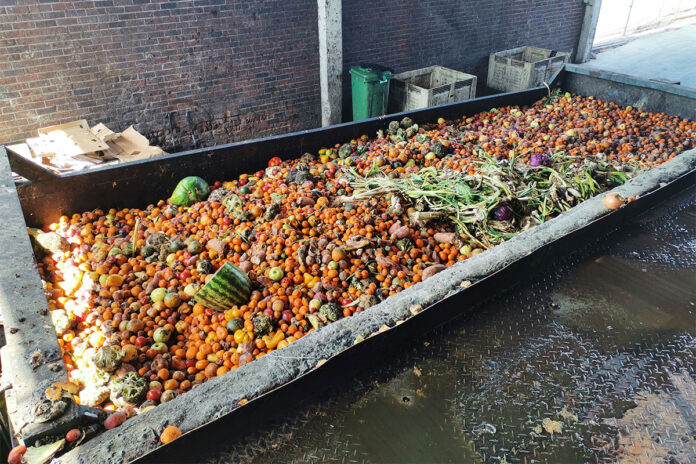
The problem extends far beyond the farm gate. A 2021 Council for Scientific and Industrial Research technical report estimates that South Africa loses or wastes about 10,3 million tons of edible food per year. Based on average food supply data from 2014 to 2018, this equates to more than 34% of local production and more than 45% of the available food supply entering the country’s food value chain.
Of the total, an estimated 868 890t (8%) of overall losses and waste occurs during primary production. Another 1,99 million tons, or 19%, is lost during post-harvest handling and storage. The balance occurs during processing and packaging, distribution, and consumption.
Grains account for 50% of overall food losses and waste by mass, followed by fruit and vegetables at 19%, milk at 14%, and meat at 9%.
The national figures do not isolate losses caused by cold chain failures, but they do show the scale of the challenge after produce leaves the field.
Where value slips away
Dr Ikechukwu Opara, a food systems researcher at the University of the Western Cape, found that between 9 124t and 17 969t of fruit and vegetables are discarded annually at the wholesale level.
He identified breaks in the cold chain as significant contributors to this waste, but says the process often begins on the farm.
He explains that fresh fruit and vegetables retain field heat after harvest. If it is not removed, the produce continues to respire, loses moisture, and becomes more vulnerable to accelerated ripening and decay.
This reduces shelf life but can also directly affect a farmer’s returns, as fresh produce is often sold by freshness and weight, and moisture loss results in a lighter, shrivelled product.
“Cold storage later in the chain might be able to slow further deterioration but will not be able to restore what is already lost,” says Opara.

Precooling is the first step in managing this risk. It involves removing field heat and bringing produce down to its recommended storage temperature before it enters a cold room, is transported, or goes to market. The process slows the biological activity that drives deterioration and prepares the produce for the rest of the cold chain.
It also protects the cold store itself. Loading warm produce into a cold room increases the refrigeration load and can cause temperature fluctuations that affect other produce already in storage.
The urgency and cold regime vary between crops. A cold regime sets out the product’s target temperature, relative humidity, airflow, and the maximum time it may be allowed to remain warm during handling.
“For this reason, farmers need to understand the requirements of their particular crop and market, and then choose a cooling and storage system that can meet them,” says Opara.
According to the University of California, Davis (UC Davis), Postharvest Research and Extension Center, strawberries, for example, should be cooled within an hour after harvest, as delays reduce the proportion of marketable fruit. Similarly, soft berries should be cooled as soon as possible to limit moisture loss, softening, and decay.
Subtropical fruit, on the other hand, may require a warmer regime. According to UC Davis, mature green avocados are generally stored at between 5°C and 13°C, depending on the cultivar and storage period. Temperatures that are too low can cause chilling injuries, including skin damage, flesh browning, and failure to ripen properly.
Where the chain breaks
According to Opara, on-farm cold chain failures can arise from gaps in knowledge, training, or supervision. Farmers and workers may not fully understand a particular crop’s post-harvest requirements, or the effect that delays, incorrect handling, and unsuitable temperatures can have on quality and shelf life.
For instance, forklift drivers and other workers may be trained to move bins and pallets but not necessarily to understand how their actions affect fresh produce.
“Then you have issues like bruising due to handling problems,” says Opara.
“You have small injuries caused by fruit rubbing on each other or rubbing on the bins. After some days, or even some hours, you start to see signs of bruises on the fresh produce.”
These injuries make produce more vulnerable to decay and pathogens.
Cold chain failures can also result from practical constraints and operational mistakes. These include insufficient cooling capacity, equipment breakdowns, delays in moving produce from the field to cooling, incorrect temperature or humidity settings, inadequate airflow, and cold room or container doors being left open.
During peak harvest periods, even farms with suitable facilities may struggle to cool incoming produce quickly enough.
The problem is, therefore, rarely the consequence of a single mistake. It is often a combination of people, equipment, and processes that allows produce to remain too warm for too long.
Opara found that produce entering wholesale facilities didn’t always move into cold storage immediately. In some instances, storage space was unavailable; in others, operations were too slow to move produce quickly enough.
“During peak spring and summer periods, when fruit and vegetable volumes are high, facilities may be full, and incoming produce can remain outside for hours or even days,” he says.
The loss is shared across the value chain, from farmers and logistics operators to packhouses, wholesalers, and retailers.
“When produce cannot be sold at a premium price, in some cases it is sold at a discounted price and, in extreme cases, it is wasted,” says Opara.
“Everybody along the value chain loses money.”
Consumers also feel the effects. Reduced availability of fresh produce can contribute to higher retail prices, while food that could have contributed to household nutrition is lost.
A flexible alternative
Opara says large commercial farms are more likely to have packhouses, precooling capacity, or access to finance for post-harvest infrastructure than smaller producers.
“The problem is that small-scale farmers generally struggle to gain access to finance and don’t have the financial muscle to afford post-harvest facilities on their farms,” he says.
Even where a permanent cold room is technically possible, it may be difficult to justify for a producer with a short harvest season or fluctuating volumes. This is where refrigerated containers can provide a flexible option, according to Mike Leppan, technical manager at Lighthouse Containers.
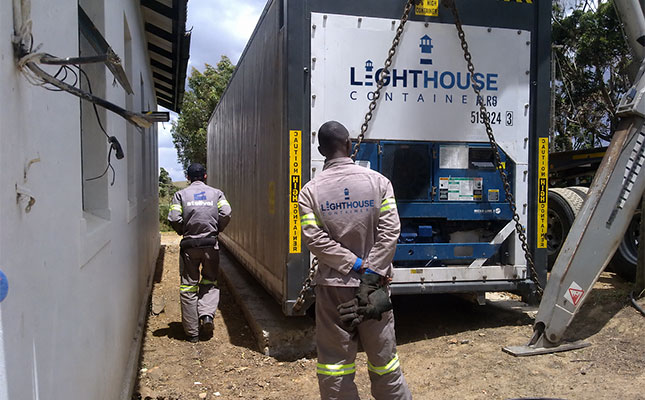
Refrigerated shipping containers, or reefers, are commonly used to transport perishables but can also serve as temporary on-farm cooling and storage facilities.
“Depending on a farm’s needs, these containers can be used to remove field heat, hold product while it awaits packing or dispatching, accommodate overflow during peak harvest, or provide emergency capacity when an existing cold room breaks down,” explains Leppan.
Reefer containers cost upwards of R150 000 each, depending on the make, model, and age profile of the refrigeration requirement. Flexible leasing and rental solutions are also available based on specific rental requirements.
“For a farmer who needs extra capacity only during a two- or three-month harvest period, leasing can preserve capital for other needs. The rental arrangement also means that maintenance remains the responsibility of the supplier,” says Leppan.
The cost can increase significantly depending on the type of technology added to the container. Some newer units, for example, can record temperature trends, settings, and alarms throughout their operation, while remote-monitoring systems can alert farmers or suppliers to faults.
This provides a record of whether conditions remained within the required range, but Leppan points out that the data still need to be interpreted and acted on.
An added advantage is that the approach is modular. A farm can lease one unit in a normal season, add another when volumes rise, and return the container once the harvest is over. It’s also useful where a farm needs temporary capacity while a permanent cold room is repaired.
“We had a call on Christmas Eve last year from a farmer whose cold store broke down, and we delivered a container that same day. We understand that cooling cannot wait,” says Leppan.
To accommodate a reefer, a level, accessible site and a three-phase, 380V/32A electricity supply are required. Electricity, delivery, monitoring, and the suitability of the unit for the intended crop should therefore all form part of the cost calculation.
Cooling is only part of the system
Leppan stresses that containers are not a one-size-fits-all answer, nor can they compensate for poor handling earlier or later in the chain.
“It is a versatile answer, but it does not suit every single situation,” he says.
The container must be suited to the commodity and used as part of a wider post-harvest system. Temperature, humidity, and fresh-air exchange (FAE) requirements vary between crops. Fresh produce continues to respire after harvest, producing heat, moisture, and gases that can affect ripening and quality if they aren’t properly managed.
Leppan recalls investigating the loss of two containers of oranges shipped to the Middle East. The refrigeration units hadn’t failed, but the FAE had been set at 80ft³/h instead of the required 80m³/h. The error allowed gases to accumulate, contributing to mould development by the time the fruit had reached its destination.
A container designed to maintain temperature also shouldn’t be treated as a blast freezer for warm produce. Loading product that has not been precooled increases the refrigeration load and may not bring it down to the desired temperature quickly enough.
The consequences can be particularly serious for animal products. Leppan recalls investigating a case in which a client loaded freshly caught fish into a container already holding fish frozen to -18°C.
The container was treated as a blast freezer, even though it was designed to maintain the temperature of already-frozen product.
In another case, warm chicken was loaded into a unit storing ice cream at -25°C.
In both cases, the refrigeration equipment was blamed when product quality deteriorated, but the problem was the handling of the product before and during loading.
“Appearance alone is not a reliable guide. Fish, meat, or poultry may still look acceptable or even appear frozen after exposure to temperatures above their required storage range. However, the higher temperatures may already have compromised quality and could create food safety risks,” explains Leppan.
For farmers, the most appropriate cooling solution will depend on the crop, volumes, harvest season, market, and available capital. It may involve investing in permanent infrastructure, leasing a reefer, sharing facilities with other producers, or simply reducing the time between picking and cooling.
What’s important is that cooling is treated as part of production, rather than an afterthought once a crop has left the field. After months of investing in producing a marketable crop, protecting its post-harvest quality is essential to protecting the income it can generate.
“Anything done to reduce the temperature after harvesting goes a long way to saving the produce along the value chain,” says Opara.
For more information, email Dr Ikechukwu Opara at [email protected], Mike Leppan at [email protected], or visit lhcontainers.com.