
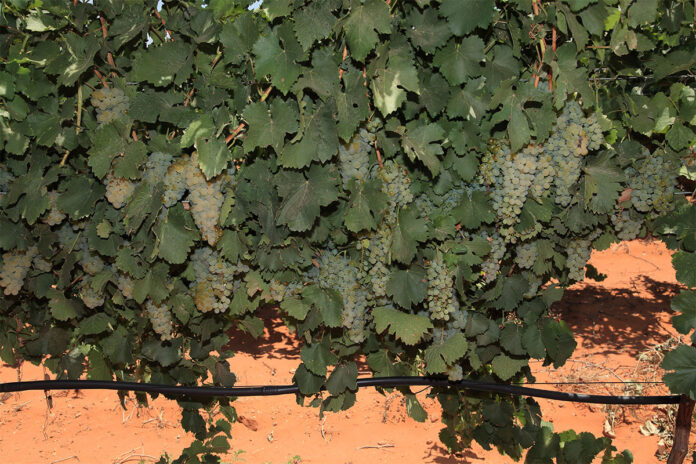
The latest Vinpro cost guide offers a glimpse of what profitability can look like when favourable growing conditions, improved yields, and moderating production costs coincide. But it should not be mistaken for a reflection of the current state of South Africa’s wine industry.
Since the data for the report was compiled, many producers have suffered severe damage from heavy winter rains, while a persistent surplus of wine continues to weigh on producer prices and cash flow. For many farmers, the improved profitability reflected in the report has already been overshadowed by a new set of challenges.

That makes the findings even more valuable. Rather than suggesting that the industry has turned the corner, it provides insight into the management decisions that helped the sector’s most resilient producers to remain profitable under difficult conditions, while highlighting the structural weaknesses that continue to threaten the long-term sustainability of wine farming.
According to Botha, one of the biggest shifts among the industry’s top performers has been a change in mindset.
“The focus of vineyard management has shifted from quality at all costs to profitability, according to a specific market objective,” she says.
That philosophy is evident through the entire report. Whether it is deciding how much to spend on inputs, when to replace ageing vineyards, or how individual blocks are managed, the emphasis is increasingly on producing grapes that are profitable rather than simply producing more or better-quality grapes.
Cost pressures
According to the guide, the average cost of producing wine grapes increased by 6,4% to R80 695/ha in 2025. Although it’s substantial, the increase was broadly in line with the long-term average annual increase of 6,2%, suggesting that the sharp escalation in production costs experienced over recent years may be starting to become moderate.
Botha ascribes this to smaller-than-expected increases in certain input costs, together with more favourable financial conditions during the growing season that eased pressure on capital expenditure and replacement decisions.
But not all costs followed the same trend.
Labour remained the single biggest production expense and increased by 9,1% year on year. Seasonal labour and contract work rose by 13,3%, while permanent labour costs increased by 7,9%.
Botha says the larger crop, vigorous vine growth that required additional canopy management, and the 8,5% increase in the national minimum wage all contributed to higher labour expenditure.
Some input costs moved in the opposite direction. Last year’s lower fuel prices reduced fuel expenditure by 6,1%, but electricity costs climbed by 14,6% as the previous tariff increase filtered through the production season.
Water costs rose by 7,3%, driven by higher pumping costs and water scheme tariffs despite healthy dam levels in the Western Cape.
Repairs and maintenance also remained a significant expense. Expenditure on non-capital repairs increased by 12,7%. Botha says this was largely because producers repaired infrastructure damaged by previous floods while also catching up on maintenance that had been postponed during years of constrained cash flow.
Ageing vineyards
The total provision for renewal amounted to R19 155/ha, which reflects an average annual increase of 6,4% since 2016.
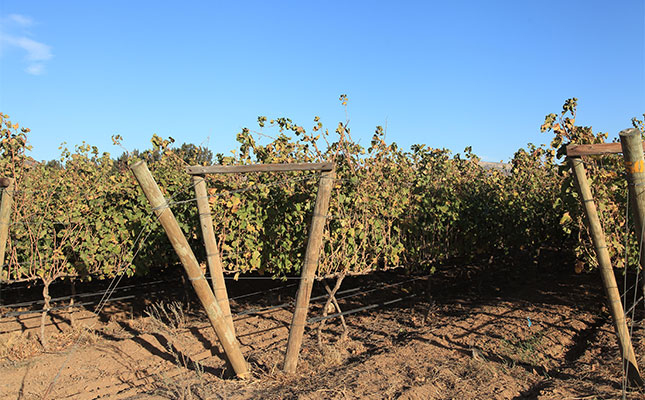
The report highlights the urgent need for planned re-establishment and block renewal to protect future production capacity and quality. Nearly half (46,9%) of the vineyards included in the survey are now older than 16 years, while vineyards older than 20 years account for 30,5% of the total area which accounts for more than double the recommended benchmark of 15%.
By contrast, vineyards younger than three years make up only 9,4% of the planted area, well below the level required to maintain a healthy replacement cycle.
Botha says that older vineyards can continue producing quality grapes, but they generally require greater maintenance and eventually lose productive potential. That reduces yield, pushes up production costs per ton, and limits producers’ ability to absorb future cost increases.
“Long-term resilience depends not only on managing annual costs, but also on investing in timely vineyard renewal,” she says.
Break-even
The report calculates an industry average break-even price of R4 265/t for the 2025 season, a decline of 9,2% from the previous year.
Botha explains that this meant that the first R4 265 earned from every ton of grapes merely covers production costs, including cash expenditure and provision for replacing vineyards, machinery, and infrastructure. It does not include interest, tax, or remuneration for the producer.
She adds that the lower break-even point was made possible by higher average yields, which spread production costs across more tons of grapes.
“This advantage has limits. Producers will lose their ability to offset rising costs through higher yields as vineyards age and productivity declines.”
Resilience mindset
The relationship between vineyard age, productivity, and cost efficiency helps explain why some producers consistently outperform others, even when farming under the same economic conditions.
According to Botha, the difference is not necessarily that top producers spend less, but that every management decision is guided by profitability.
Rather than applying a one-size-fits-all approach, resilient producers manage each vineyard block according to its production potential and the market the grapes are destined for.
This starts with pruning, where bud loads are adjusted according to vine vigour, allowing stronger vines to carry higher production.
Fertilisation and irrigation are similarly adapted to achieve specific production goals, with premium blocks managed for balanced growth and quality, while higher-producing blocks are managed to maximise profitable yields. Even deficit irrigation is only applied where the expected grape price justifies the additional investment.
Vinpro found that higher-yielding vineyards tend to share several characteristics, including thorough soil preparation, precision block layouts, well-designed irrigation and drainage systems, balanced soil fertility, suitable cultivar, and rootstock combinations, quality planting material, and nitrogen programmes tailored to the vineyard’s production potential.
Canopy management is another important consideration. According to Botha, producers increasingly aim to improve sunlight penetration and airflow while reducing unnecessary labour inputs.
Where conditions allow, many are moving towards sprawling trellis systems, which can increase yields, improve canopy efficiency, and reduce labour costs compared with conventional vertical shoot positioning systems.
Business decisions
Perhaps the clearest indication of this shift in thinking, however, is the willingness to make difficult business decisions in pursuit of long-term profitability.
Blocks that consistently produce below-average yields, or cultivars that are no longer commercially viable, are removed instead of being maintained at a loss.
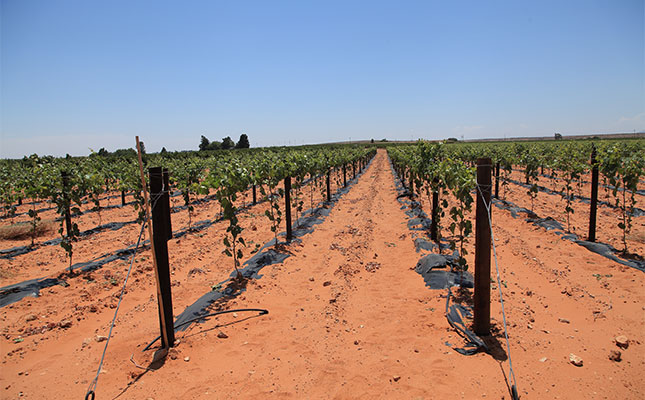
At the same time, profitable producers continue investing in new vineyards, carefully planning every aspect, from soil preparation and cultivar selection, irrigation, trellis systems, pruning, to canopy management in order to maximise the productive lifespan of each block.
Careful planning, however, is only part of the equation. According to Botha, success also depends on executing vineyard operations at the right time.
“Almost every vineyard activity has an optimum window. Delays can increase costs, reduce quality, and ultimately lower yields.”
For more information, email Yolandi Botha at [email protected]. You can also read the full cost guide on vinpro.co.za.