
From an early age, she knew she wanted to become a scientist. Although she was not sure what precisely she wanted to accomplish, she was certain that science would be part of her future.
“I was born and raised in a small town in the Northern Cape, and from a young age I was curious about what lay beyond the borders of our area. I dreamed of exploring the world and understanding how things worked. I did not know how I would get there, but when I looked up at the stars and read books and articles about the remarkable things scientists could do, such as going to the moon, becoming a scientist seemed like an exciting dream to pursue.”
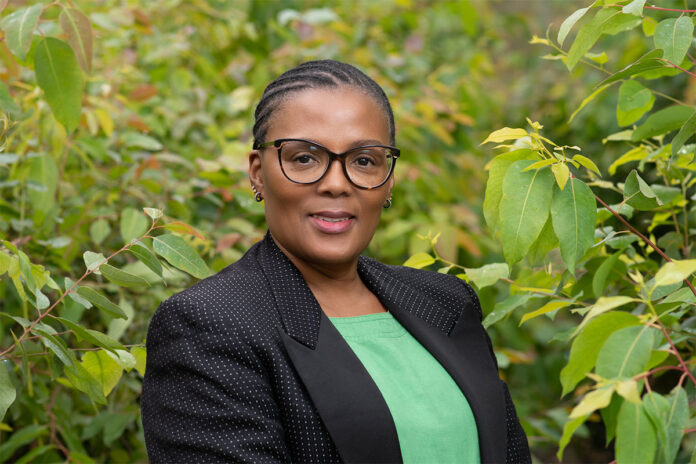
Today, Dr Marinda Visser is director of Strategic Projects and Partnerships in Agriculture at the University of Pretoria’s Innovation Africa@UP, helping young scientists to fulfil their dreams and purpose in life.
Visser has more than two decades of experience in the agriculture sector, with extensive knowledge in the field of agricultural research and policy gained from her involvement in diverse industries.
She says she did not end up in the agriculture sector by choice.
“The only plan I had for my life was to finish school and go to university to study. I wanted to broaden my horizons and go further than just the borders of the small town where I was born. I was the first in my family ever to attend university.”
She studied BSc with biochemistry and microbiology as main subjects at the University of the Western Cape.
She obtained her honours degree in food microbiology under Prof Pieter Gouws and later also her master’s degree in microbiology under Prof Jeremy Klaasen.
She received a scholarship from the Agricultural Research Council (ARC) and the US Department of Agriculture to do her PhD in plant pathology at the University of Pretoria.
“This scholarship also took me to the US, where I was able to expand my horizons even further.”
Starting as a plant pathologist
Part of the scholarship included an employment contract with the ARC where she started her career as a plant pathologist.
“At the ARC, I worked with people such as Dirk Uys and Prof Adele Mcleod, who taught me so much. I also came to appreciate the importance of soil health and the impact that soil-borne diseases can have on agriculture. At the ARC, I got hooked on agriculture for life!”
After some years in research, she decided to move into the policy environment and became director of Plant Health and later chief director of Plant Production and Health at the Department of Agriculture.
“At the department I learned a great deal about how policy can influence the agriculture sector. I also had the opportunity to learn more about the regulatory environment and framework.
“It is here where we connect applied science and technical knowledge and skills within a policy environment. This is such a crucial part of the agricultural environment. Here market access is determined. Today, I still feel very strong about supporting and creating an enabling environment within government,” she says.
She then moved from a career in government to a role in the grain industry, where she managed the Grain Research and Policy Centre at Grain SA, spearheading an initiative of building consortiums of experts from various universities, private seed companies and public research institutions for the different grain and oilseed commodities.
In her role at Grain SA, Visser focused on research and all regulatory and policy aspects of the grain industry in South Africa.
Helping to develop networks
In this role she further led the development of national research networks and platforms that connect universities, industry and government. One of these was a crop improvement consortium focused on establishing a wheat-breeding platform with the aim of revitalising the wheat industry in South Africa.
With climate change becoming a serious discussion within agriculture, she also created a crop protection consortium that focused on economically important pests and diseases, as well as a climate resilience consortium for the grain industry that brought together national, regional and international experts.
Visser remains passionate about training and developing young people to be leaders in agriculture. During her time at Grain SA, she contributed to the development of critical skills for the grain industry by spearheading initiatives ranging from bursaries and internship programmes to training smallholder farmers in a farmer development programme.
She served as a member of several industry technical steering committees for summer and winter grains. Her involvement in the different commodity forums ensures that research focuses on priorities for the grain and oilseed industry.
In her role at Innovation Africa@UP she is responsible for creating a more effective platform for the development of long-term industry-university-government partnerships.
“This unit draws on a broad base of research expertise across the university’s faculties. We aim to further develop partnerships with industry players to grow research programmes and centres that address urgent national needs, such as biosecurity and plant and animal health in general.”
Regarding biosecurity, she points out that South Africa needs a strong biosecurity system to ensure safe trade in plant and animal products, and to safeguard against the introduction of pests and diseases.
“Biosecurity is a system and it works best when all the stakeholders are communicating with one another,” she says.
In 2025, Visser was also recognised by the Future Agri Perspectives group as a woman who played a pioneering role in agriculture, laying the path for others to follow and inspiring the next wave of leaders in agriculture.
“I believe my ability to listen and build lasting relationships has been central to my career success. My advice to young people is to invest in strong working relationships. The ability to connect with others can shape your career path; without it, it is difficult to network or build meaningful professional relationships. Knowledge and experience matter, but soft skills can open doors too.”
The value of mentors
Visser adds that listening to and learning from others, especially those with institutional knowledge, is essential.
“It is always valuable to have a mentor. If possible, shadow someone in your field so that you can learn how to conduct yourself. I speak from experience. Jannie de Villiers, former CEO of Grain SA, remains my mentor, and I value being able to turn to him for advice, not only on work-related matters but also on life in general.”
She mentions that her parents created an environment in their family where she and her siblings were able to thrive.
“They taught us about discipline and responsibility, and that laid a solid foundation for growth in me as a person but also in my career.”
Looking at the future, she believes agriculture is the lifeline of South Africa.
“Agriculture can heal this beautiful country of ours. Agriculture is a growing sector with a contribution to the GDP that is rising constantly. We need a stable industry where relationships between the various subsectors and role players are conducive to taking the industry forward. These relationships between the different groups must be enforced and treasured.”
She also stresses the need to create opportunities for skilled young people.
“If South Africa wants to become more export-oriented, we must keep improving our methods and find better ways to bring young people into agriculture. I am concerned about the ageing skills base in parts of the sector, especially in regulatory roles. Industry advisers and government decision-makers must work together to train capable young teams and strengthen succession planning in regulatory and trade environments.”
For more information, email Dr Marinda Visser at [email protected].