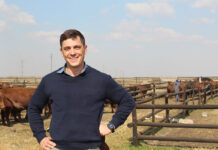

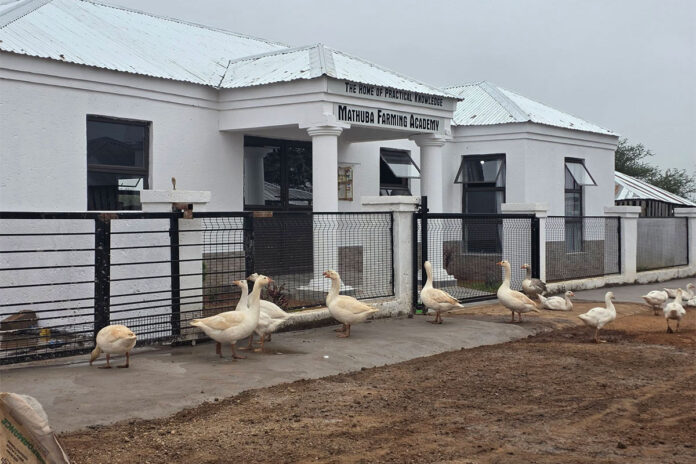
Opened in early May 2026 by livestock breeder Emmanuel Mudau, the Mathuba Farming Academy builds on the success of his farm, Mathuba Genetics, expanding his work beyond livestock genetics to farmer training and development.
While his previous focus centred primarily on breeding superior livestock genetics, Mudau’s latest venture embraces a far broader vision. Beyond genetics, it aims to equip farmers with the technical knowledge, practical skills, and decision-making capabilities needed to improve productivity, strengthen farm management, and build sustainable agricultural enterprises.
According to Mudau, a self-taught livestock breeder who breeds hardy, resilient sheep and goats, developing the farming academy and its on-farm laboratory was necessary to overcome a long-standing problem within South Africa’s agriculture sector.
“I noticed that the problem facing most farmers is not a lack of animals, but rather a lack of practical information,” he explains.

“There is a huge gap between theory and the reality of farming.”
This gap was the driving force behind the planning of the academy.
“With the formation of the Mathuba Farming Academy, we hope to bridge the gap,” says Mudau.
“Farmers require training that addresses real-life situations, feed shortages, climate change, and breeding strategies, not just theories.”
From genetics to farmer development
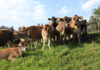
Mudau started out with no formal agricultural training, yet he built Mathuba Genetics into a livestock breeding enterprise specialising in hardy livestock suited to the harsh conditions of the Limpopo bushveld.
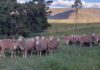
His breeding of the Bosvelder sheep, a composite breed composed of White Dorper, Van Rooy, and Pedi genetics, epitomises his approach. Rather than selecting animals for rapid growth or appearance, he prioritised adaptability, fertility, and resistance to pests and diseases.
However, as his enterprise grew, he realised that producing high-quality genetics alone would not improve livestock farming in the area.
“I realised that improving my own genetics isn’t enough if the rest of the farming community doesn’t do the same. I’m able to produce high-quality genetics, but if the farmer purchasing them cannot manage them properly, little will be achieved.
“That’s when I realised that disseminating information is just as important as producing quality genetics,” he explains.
Real-world training
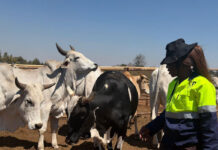
Rather than dividing instruction between classrooms and practical sessions, the academy delivers its training entirely on working farms, allowing participants to learn while carrying out day-to-day farming activities.
“Our farmers are learning under real-life circumstances, using real animals and tackling real-life challenges,” says Mudau.
Mudau believes this approach better prepares farmers for the realities of livestock production, including erratic rainfall, feed shortages, and disease challenges.
His emphasis on practical learning is rooted in his farming experience. Over decades of breeding livestock suited to difficult conditions, he has come to value resilience and adaptability as highly as productivity.
He says climate change has made it increasingly important for farmers to breed livestock that can tolerate heat, feed shortages, and the environmental and disease pressures associated with farming in semi-arid conditions.
This philosophy also shapes his approach to breeding.
“You shouldn’t seek high growth rates at the expense of survival. A balanced animal that produces consistently and survives the harsh conditions is more profitable,” he explains.
Skills with immediate application
The academy’s courses primarily teach skills that farmers can apply immediately on their farms. According to Mudau, trainees develop three essential skills: selecting breeding animals based on physical characteristics and performance, basic record-keeping, and herd management.
Record-keeping is a skill that Mudau stresses is particularly vital to a successful agricultural enterprise.
“It is important because it helps farmers make decisions based on facts, not assumptions,” he says.
Attendees learn how to keep flock and lambing records, monitor sales, record disease diagnoses and vaccinations, and track mortality rates.
An integral part of the academy is its on-farm laboratory, where animal health indicators are analysed to help farmers make more informed decisions about disease management and nutrition.
Sustainability and accessibility
Mudau’s goal for the academy is to become financially sustainable through its training programmes while remaining affordable for emerging farmers.
“Operating a centre like this requires financial investment, but our plan is to make it financially self-sufficient through training,” he says.
He acknowledges that many emerging farmers cannot afford expensive training.
“We have designedur training so that these farmers can afford it.”
Response to broader rural challenges
The academy’s launch comes amid ongoing challenges in Limpopo’s rural areas, including high unemployment, food insecurity, and limited access to agricultural training and extension services.
Beyond training participants enrolled at the academy, Mudau says the initiative is intended to benefit the wider farming community. The courses are designed for both emerging and commercial farmers, and the on-farm laboratory will also be available to farmers outside the training programme.
According to Mudau, the aim of bringing emerging and commercial farmers together is to encourage knowledge-sharing and strengthen the wider farming community.