
Minister of Agriculture John Steenhuisen said in a media statement that the ruling’s practical effect had largely been overtaken by government’s recently gazetted Section 10 animal health scheme. However, the wording of both the interim court order and the judgment suggests farmers can vaccinate independently of this framework, provided strict reporting and notification requirements are met.
The ruling, handed down by Judge Van der Westhuizen in the Gauteng Division of the High Court in Pretoria, follows months of mounting frustration among livestock producers over vaccine access and government’s insistence that vaccination remain under central control.
The urgent application was brought by Sakeliga, the South African Agri Initiative (SAAI) and Free State Agriculture, which argued that there was no lawful prohibition preventing farmers from obtaining and administering legally available FMD vaccines.
The court found that no clear legal barrier had been shown.
Pending final proceedings, the court order provides that owners and managers of cloven-hoofed livestock “shall be allowed to procure and administer lawfully imported or lawfully manufactured FMD vaccines” to their livestock, provided they comply with detailed conditions, including notifying provincial veterinary authorities at least five days before vaccination and submitting sworn proof of compliance within 14 days after administration.
The order further restrains the Minister of Agriculture, the Director-General and the Director of Animal Health from interfering in lawful commercial relationships involving imported vaccines and international suppliers.
The legal dispute
At the centre of the litigation was government’s position that FMD vaccination could only occur under state authority.
The applicants argued that state officials had effectively prevented private vaccination, despite no regulation expressly prohibiting it, including alleged interference in private vaccine supply arrangements. Government respondents maintained that disease control required a coordinated national approach and raised concerns around traceability, cold-chain integrity and veterinary oversight.
Van der Westhuizen, however, found the state respondents were “hard-pressed to show a basis” in law for the contention that only government could undertake vaccination, and held that respondents had failed to point to any prohibition carrying “the force of law” under the Animal Diseases Act or related regulations. The judgment describes this omission as “glaring”.
The court restated what it called a “trite” legal principle: “any private person may do anything that is not prohibited by law”, adding that a policy or practice “does not qualify as a law”.
In language unusual for interim proceedings, the court also criticised the state’s conduct during litigation, recording that the Minister, Director-General and Director of Animal Health had “vehemently opposed” the application while having “failed to indicate any substantive defence”, and that they had “engineered delays in having the matter heard and adjudicated upon”, conduct that “calls for some sanction from the court”. The court ordered the respondents to pay costs, including mediation costs and the fees of two counsel.
‘Section 10 scheme already provides route’
Hours after the ruling, Steenhuisen issued a statement saying the “practical effect of the matter is now largely overtaken by the gazetted Section 10 animal health scheme, which already provides a lawful framework for participation by private industry role players in the national vaccination effort.”
He said government had consistently supported a public-private approach and noted that about 13,5 million vaccine doses had been procured locally and internationally since February.
“Our objective remains to vaccinate at least 80% of the national cattle population with two doses of vaccine as swiftly as possible,” Steenhuisen said, linking vaccination to South Africa’s pathway towards regaining World Organisation for Animal Health recognition for FMD-free status with vaccination.
The wording of the judgment, however, appears to place narrower limits on the role of the Section 10 scheme.
In paragraph seven of the judgment, Van der Westhuizen noted that the scheme “does not outright prohibit privately administered vaccinations” and said that “at best” it created a framework for voluntary participation in a vaccination effort. The judgment added that where “there is no specific promulgated law against privately administered vaccinations, such private vaccinations may be undertaken”.
The court further described the gazetted Section 10 framework as “vexed” and found that it “does not provide for any controlled purpose or for the improvement of animal health”. It also stated that respondents had been “hard-pressed” to justify why private vaccination should be prohibited.
The practical implication is that the court order appears to establish an independent legal route for private vaccination, rather than merely reinforcing participation in the state scheme.
What changes, and what stays the same?
The judgment does not amount to deregulated vaccination.
Farmers do not automatically gain the right to import vaccines, manufacture vaccines or bypass disease-control obligations. Vaccines must still be lawfully imported or manufactured, and farmers must comply with extensive notification, traceability and cold-chain requirements. Existing livestock movement controls, biosecurity measures and reporting obligations remain in force.
Government also retains discretion over how state-owned vaccine stock is allocated and may continue implementing its national vaccination strategy.
What changes is that livestock owners now appear to have an interim court-backed route to vaccinate outside direct state administration, without first participating in the Section 10 framework, provided they comply with the court order.
Supply constraints
However, the practical reality of vaccine availability may limit how quickly farmers can act on the ruling.
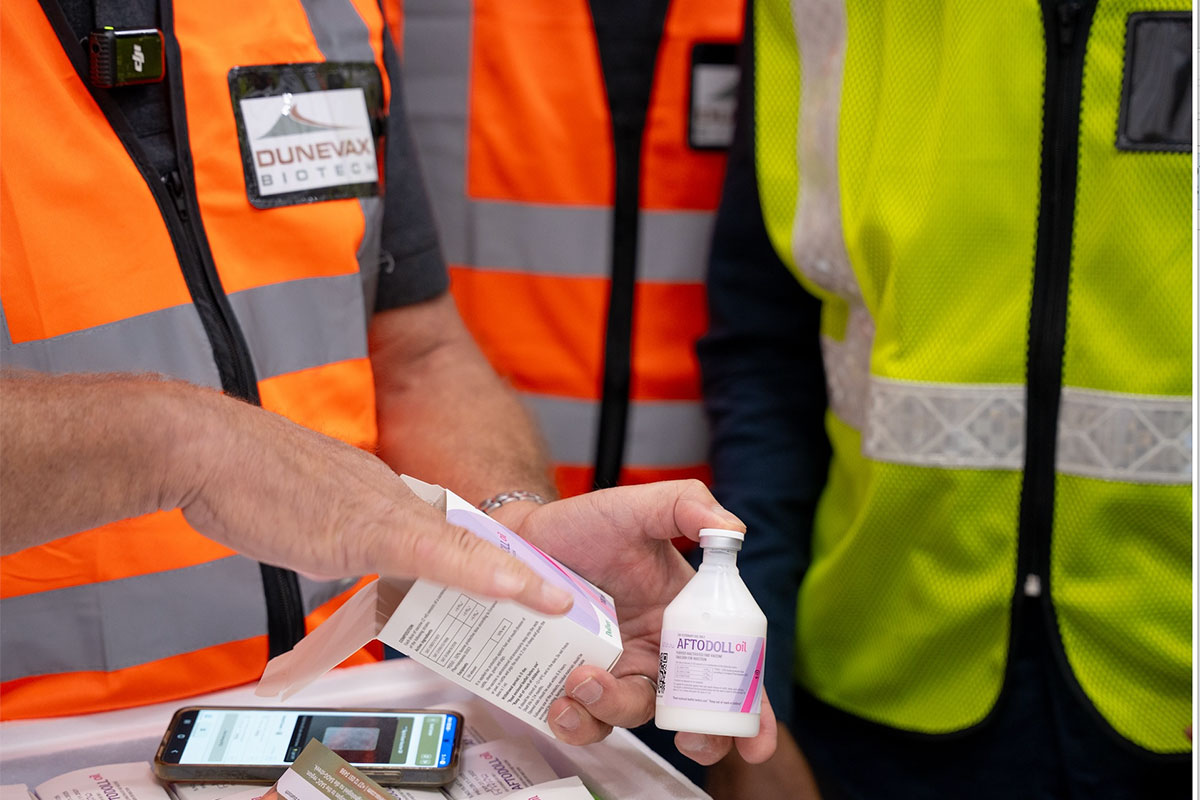
To test the operational implications of the judgment, Farmer’s Weekly spoke to Dr David Gerber of Dunevax Biotech, currently the only legal importer of FMD vaccines, apart from state procurement through Onderstepoort Biological Products (OBP).
Asked whether vaccines were immediately available for farmers wanting to purchase directly following the ruling, Gerber said supply was not yet available.
“No,” he said. “We received permits on Friday. I applied some time ago, but approval only [now] came through, and the vaccine linked to those permits still has to be manufactured, so it will take time.”
Gerber said about two million doses of the Turkish Dollvet vaccine were expected, but these had already been earmarked for government.
“There are two million doses coming, but these are earmarked for government. I don’t know what is going to happen next, but it will certainly be a game changer,” he said.
His comments point to an important distinction emerging from the court order: although farmers may now legally procure and administer lawfully imported or manufactured vaccines under prescribed conditions, the judgment itself does not guarantee immediate commercial availability.
The court order explicitly states that nothing in the ruling compels the state to provide vaccine supply and that it creates no automatic right to import or manufacture vaccines. Instead, access remains dependent on lawful import channels, manufacturing timelines and regulatory approvals.
Industry says speed remains critical
For farmer groups and industry bodies, the significance of the ruling lies largely in whether it can accelerate vaccination.
FMD Response SA, representing more than 250 farmers, described the ruling as “a critical step in accelerating vaccination efforts needed to contain the spread of the disease”.
Spokesperson Andrew Morphew argued that government’s timeline of vaccinating 80% of cattle by the end of the year will not be sufficient to stop transmission.
“An 11-month vaccination programme is too slow to achieve the simultaneous immunity required to stop disease transmission and meet the World Organisation for Animal Health standards for controlling FMD,” Morphew said, adding that vaccination should ideally occur within a “tight six-to-eight-week window” to interrupt transmission between herds.
At the same time, Morphew cautioned against interpreting the judgment as unrestricted access.
“The ruling does not create a free-for-all or give farmers an automatic right to import vaccines themselves,” he said.
“The key question now is whether lawful private importers, manufacturers and their agents will be allowed to bring vaccines into the country and make them available to farmers without unnecessary delay. The court has opened the door to private vaccination. Government and [the South African Health Products Regulatory Authority] must now ensure that lawful private vaccine channels can operate at the speed and scale this crisis requires.”
What farmers should do next
For producers considering private vaccination, legal, veterinary and record-keeping compliance will be critical.
Farmers intending to vaccinate privately will need to source vaccines through lawful channels, notify provincial veterinary authorities at least five days in advance, provide details on animal numbers and vaccine administration, maintain strict cold-chain procedures and submit sworn records within 14 days after vaccination. Movement restrictions and disease reporting rules remain unchanged.
The ruling is interim relief only. Sakeliga, SAAI and Free State Agriculture are expected to institute further proceedings within 20 days seeking final declaratory relief and a review of any legal impediments to private FMD vaccination.