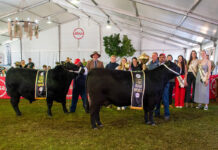

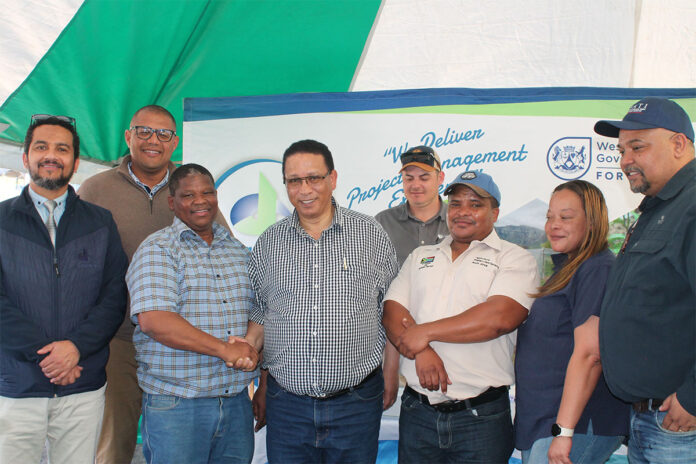
Speaking during a recent visit to the farm by Dr Ivan Meyer, Western Cape Minister of Agriculture, Economic Development, and Tourism, Abrahams said the farm’s status as a beneficiary of the Proactive Land Acquisition Strategy continued to limit its ability to access finance and unlock further investment.
“We really need a title deed to make the farm bankable. It’s always difficult when you’re farming on someone else’s land,” Abrahams told Farmer’s Weekly.
Siyazama Klipland Boerdery has recorded strong growth in recent years, increasing production from 68 443 cartons of table grapes in 2021 to approximately 164 000 cartons in 2026.
The business, which has five shareholders who are all farmworkers in the area, farms on 43ha near De Doorns, with 23,71ha currently planted to vineyards. Abrahams is the only shareholder directly involved in the daily management of the farm.
Many of the shareholders have deep roots in the local table grape industry, having either worked on farms themselves or grown up in families employed in the sector.
The farm’s growth forms part of a six-year turnaround strategy aimed at transforming the business into a sustainable and competitive export enterprise for table grape.
“When we got the farm, there were old cultivars and old implements. We had to replace large areas with varieties that are sought after in overseas markets. Between 10ha and 15ha of vineyards have since been replanted with newer varieties, including Sweet Celebration, Sweet Globe, and ARRA cultivars,” Abrahams said.
The farm also continues to carry debt associated with its redevelopment and expansion efforts.
To support its turnaround strategy, Siyazama Klipland has accessed blended finance through Hortfin and received ongoing support from the industry body the South African Table Grape Industry (SATI).
“SATI has helped us tremendously. Whether it’s conferences, short courses, or technical support, they are always available to assist upcoming farmers,” Abrahams said.
Scope for expansion
The farm still has scope for expansion, with about 5,5ha identified for future vineyard development. However, an environmental impact assessment currently permits only 3,5ha to be planted.
Abrahams revealed that he raised the issue with Meyer during the minister’s visit.
“We would like to utilise the full 5,5ha. That would bring us much closer to 30ha under production,” Abrahams said.
He added that the land earmarked for expansion is located close to an informal settlement, where a lack of fencing allows livestock such as goats to roam freely across parts of the area.
Despite these challenges, the farm has continued to expand its production capacity while creating employment opportunities in the De Doorns community.
It currently employs 25 permanent workers and approximately 120 seasonal workers during the harvesting season.
Benefits from government funding
The farm has also benefitted from about R2 million in support through the Western Cape Department of Agriculture’s Comprehensive Agricultural Support Programme, implemented by Cape Agency for Sustainable Integrated Development in Rural Areas (Casidra), the Western Cape’s agricultural and rural development implementing agency.
The funding has contributed to the acquisition of a 6,8t truck and the installation of smart irrigation technology to improve water management and operational efficiency.
During the visit, Meyer said supporting emerging farmers remained a priority for the Western Cape government.
“When we invest in emerging farmers, we are not only investing in vineyards and infrastructure; we are investing in people, livelihoods, and the future of agriculture in the Western Cape,” he said.
“Our goal must be to help farmers move from potential to production, and from production to sustainable growth,” Meyer said.
However, for Abrahams the next step is clear.
“Our production is growing and the farm is moving in the right direction, but access to ownership and bankable security remains critical if we want to unlock the next phase of development,” Abrahams said.